Drilling boom brings rising number of harmful waste spills

Spills of salty wastewater from oil extraction have surged, leaving behind fouled land and water.

The Associated Press
September 12, 2015 at 5:03AM
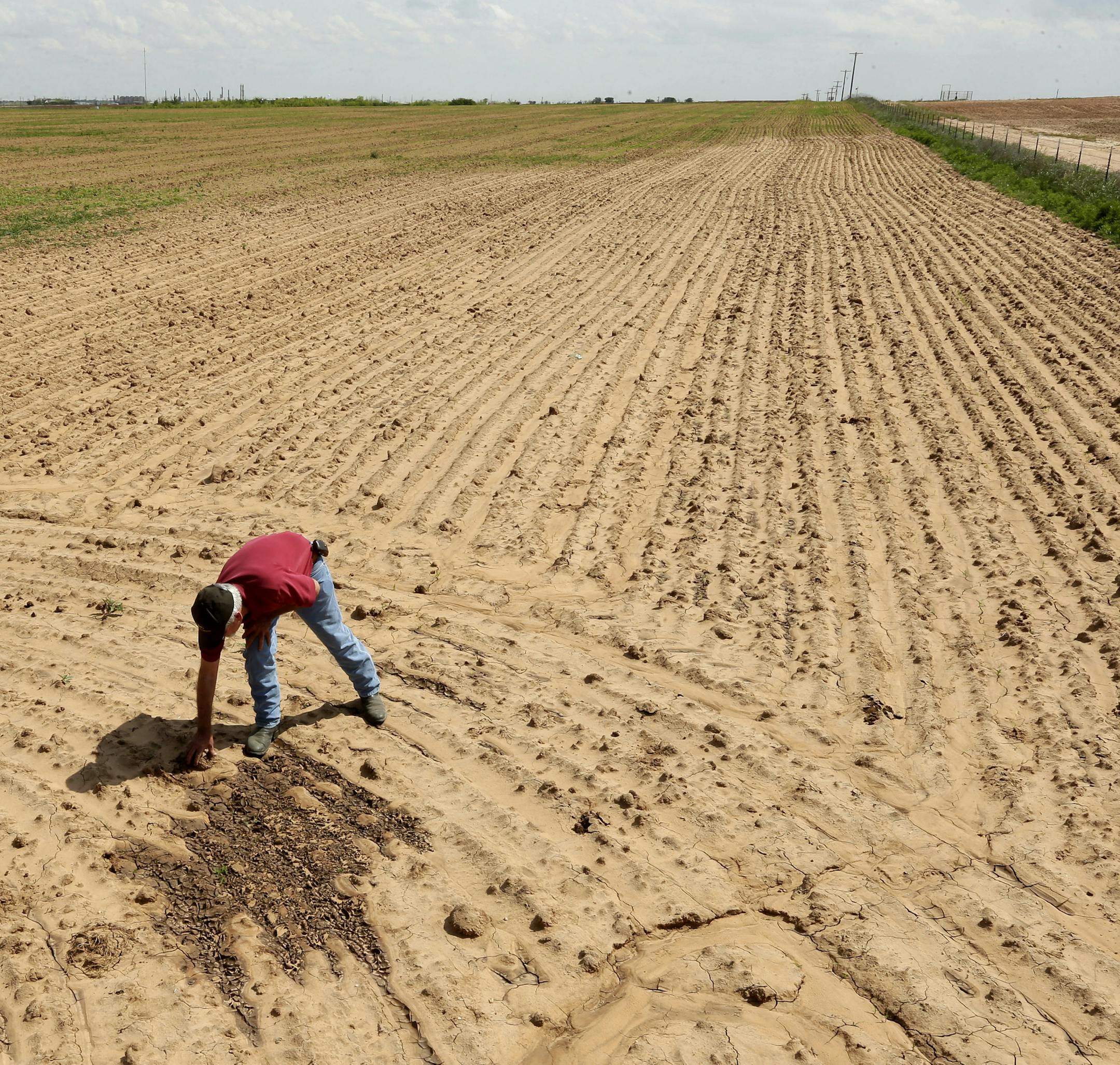
ADVANCE FOR USE TUESDAY, SEPT. 8, 2015 AND THEREAFTER - In this April 22, 2015 photo, Don Stoker looks over land that was damaged by an oilfield wastewater spill near Snyder, Texas. A pipeline joint failure in November 2012 spilled saltwater that left several acres of his farm barren and killed a stand of hackberry trees. Concentrated brine, much saltier than seawater, exists naturally in rock formations thousands of feet underground, a remnant of prehistoric oceans. (AP Photo/Charlie Riedel)
Don Stoker looks over land that was damaged by an oilfield wastewater spill near Snyder, Texas. A pipeline joint failure in November 2012 spilled saltwater that left several acres of his farm barren and killed a stand of hackberry trees. (The Associated Press)

Carl Johnson and son Justin, who have complained for years about spills of oil field wastewater where they raise cattle in the high plains of New Mexico, stroll across a 1½-acre patch of sandy soil — lifeless, save for a scattering of stunted weeds.

Five years ago, a broken pipe soaked the land with as much as 420,000 gallons of wastewater, a salty drilling byproduct that killed the shrubs and grass. It was among dozens of spills that have damaged the Johnsons' grazing lands and made them worry about their groundwater.

"If we lose our water," Justin Johnson said, "that ruins our ranch."

Their plight illustrates a side effect of oil and gas production that has worsened with the past decade's drilling boom: spills of wastewater that foul the land, kill wildlife and threaten freshwater supplies. An Associated Press analysis of data from leading oil- and gas-producing states found more than 180 million gallons of wastewater spilled from 2009 to 2014 in incidents involving ruptured pipes, overflowing storage tanks and even deliberate dumping. There were some 21,651 individual spills. The numbers are incomplete because many spills go unreported.

Though oil spills get more attention, wastewater spills can be more damaging. Microbes in soil eventually degrade spilled oil. Not so with wastewater — also known as brine, produced water or saltwater. Unless thoroughly cleansed, salt-saturated land dries up. Trees die. Crops cannot take root.

"Oil spills may look bad, but we know how to clean them up," said Kerry Sublette, a University of Tulsa environmental engineer. "Brine spills are much more difficult."

In addition to extreme salinity, the fluids often contain heavy metals such as arsenic and mercury. Some ranchers said they have lost cattle that lapped up the liquids or ate tainted grass.

"They get real thin. It messes them up," said Melvin Reed of Shidler, Okla. "Sometimes you just have to shoot them."
The AP obtained data from Texas, North Dakota, California, Alaska, Colorado, New Mexico, Oklahoma, Wyoming, Kansas, Utah and Montana — states that account for more than 90 percent of U.S. onshore oil production. In 2009, there were 2,470 reported spills in the 11 states; by 2014, the total was 4,643. The amount spilled doubled from 21.1 million gallons in 2009 to 43 million in 2013.

Industry groups said waste is often recovered during cleanups, although some can soak into the ground. "You're going to have spills in an industrial society," said Katie Brown, spokeswoman for Energy In Depth, a research arm of the Independent Petroleum Association of America. "But there are programs in place to reduce them."

Concentrated brine, much saltier than seawater, exists in rock thousands of feet underground. When oil and gas are pumped to the surface, the water comes up too, along with fluids and chemicals injected to crack open rock — the process known as hydraulic fracturing.

The spills usually occur as oil and gas are channeled to metal tanks for separation from the wastewater, and the water is delivered to a disposal site.

Equipment malfunctions or human error cause most spills, according to state reports reviewed by the AP. Though no full accounting of damage exists, the scope is sketched out in a sampling of incidents:

• In North Dakota, a spill of nearly 1 million gallons in 2006 caused a massive die-off of fish and plants in the Yellowstone River and a tributary. Cleanup costs approached $2 million. Two larger spills since then scoured vegetation along an almost 2-mile stretch.

• Wastewater seeped beneath a 6,000-acre cotton and nut farm near Bakersfield, Calif., and contaminated groundwater. Oil giant Aera Energy was ordered in 2009 to pay $9 million to grower Fred Starrh, who had to remove 2,000 acres from production.

• Brine leaks exceeding 40 million gallons on the Fort Peck Indian Reservation in Montana polluted a river, private wells and the municipal water system in Poplar. "It was undrinkable," said resident Donna Whitmer. "If you shook it up, it'd look all orange." Under a 2012 settlement, oil companies agreed to monitor the town's water supply and pay $320,000 for improvements, including new wells.

• In Fort Stockton, Texas, officials in February accused Bugington Energy of illegally dumping 3 million gallons of wastewater in pastures. The Middle Pecos Groundwater Conservation District levied a $130,000 fine, alleging a threat to groundwater, but the company hasn't paid.

The loudest whistleblowers about spills are often property owners, who must allow drilling access to their land if they don't own the mineral rights.

"Most ranchers are very attached to the land," said Jeff Henry, president of the Osage County Cattlemen's Association in Oklahoma. "It's where we derive our income, raise our families."

Some are reluctant to complain about an industry that is the economic backbone of their communities. "If they treat us right, we're all friends of oil," said Mike Artz, a grower in North Dakota who lost a five-acre barley crop in 2013 after a saltwater pipeline rupture. "But right now, it's just a horse running without the bridle."

Tessa Sandstrom of the North Dakota Petroleum Council said the industry supports research on spill prevention and land restoration. When spills do happen, she said, most are cleaned up within a year.

In New Mexico, rancher Justin Johnson said that despite a restoration effort, the site of the 2010 spill "will never, ever be like it was."


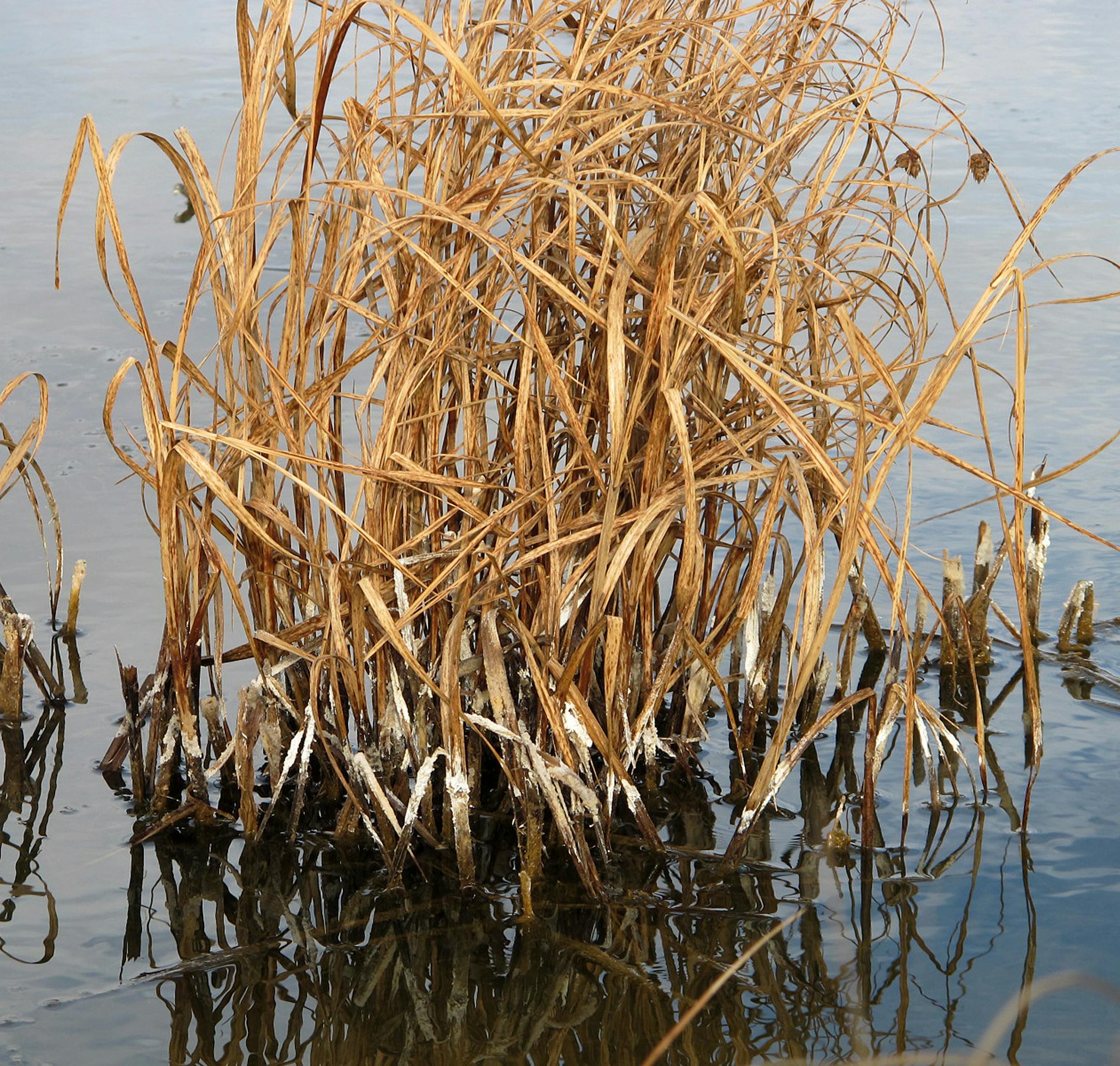
ADVANCE FOR USE TUESDAY, SEPT. 8, 2015 AND THEREAFTER - This Oct. 23, 2014 photo shows salt residue from oilfield wastewater leaks that contaminated a farm pond and killed aquatic vegetation in McKenzie County, N.D. Spilled brine from ruptured pipes, storage pits or tanks often flows into surface waterways, including streams and ponds where livestock drink. (AP Photo/John Flesher)
This Oct. 23, 2014, photo shows salt residue from oilfield wastewater leaks that contaminated a farm pond and killed aquatic vegetation in McKenzie County, N.D. Spilled brine from ruptured pipes, storage pits or tanks often flows into surface waterways, including streams and ponds where livestock drink. (The Minnesota Star Tribune)
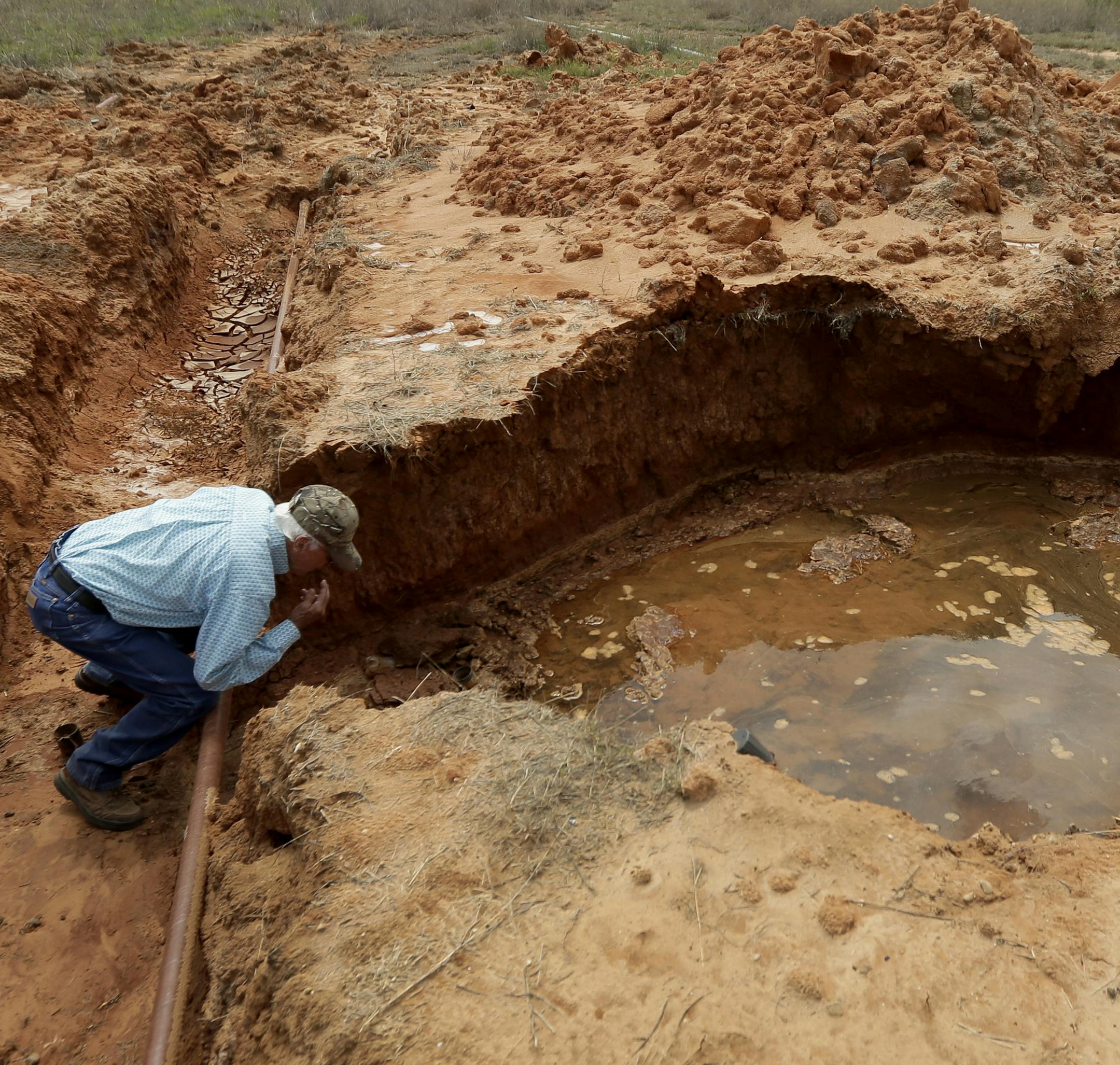
ADVANCE FOR USE TUESDAY, SEPT. 8, 2015 AND THEREAFTER - In this April 22, 2015 photo, Wesley Graves looks over a crater left after a saltwater disposal pipeline ruptured on his ranch near Snyder, Texas. Equipment failure is a major cause of oilfield wastewater spills. (AP Photo/Charlie Riedel)
In this April 22, 2015, photo, Wesley Graves looks over a crater left after a saltwater disposal pipeline ruptured on his ranch near Snyder, Texas. Equipment failure is a major cause of oilfield wastewater spills. (The Associated Press)
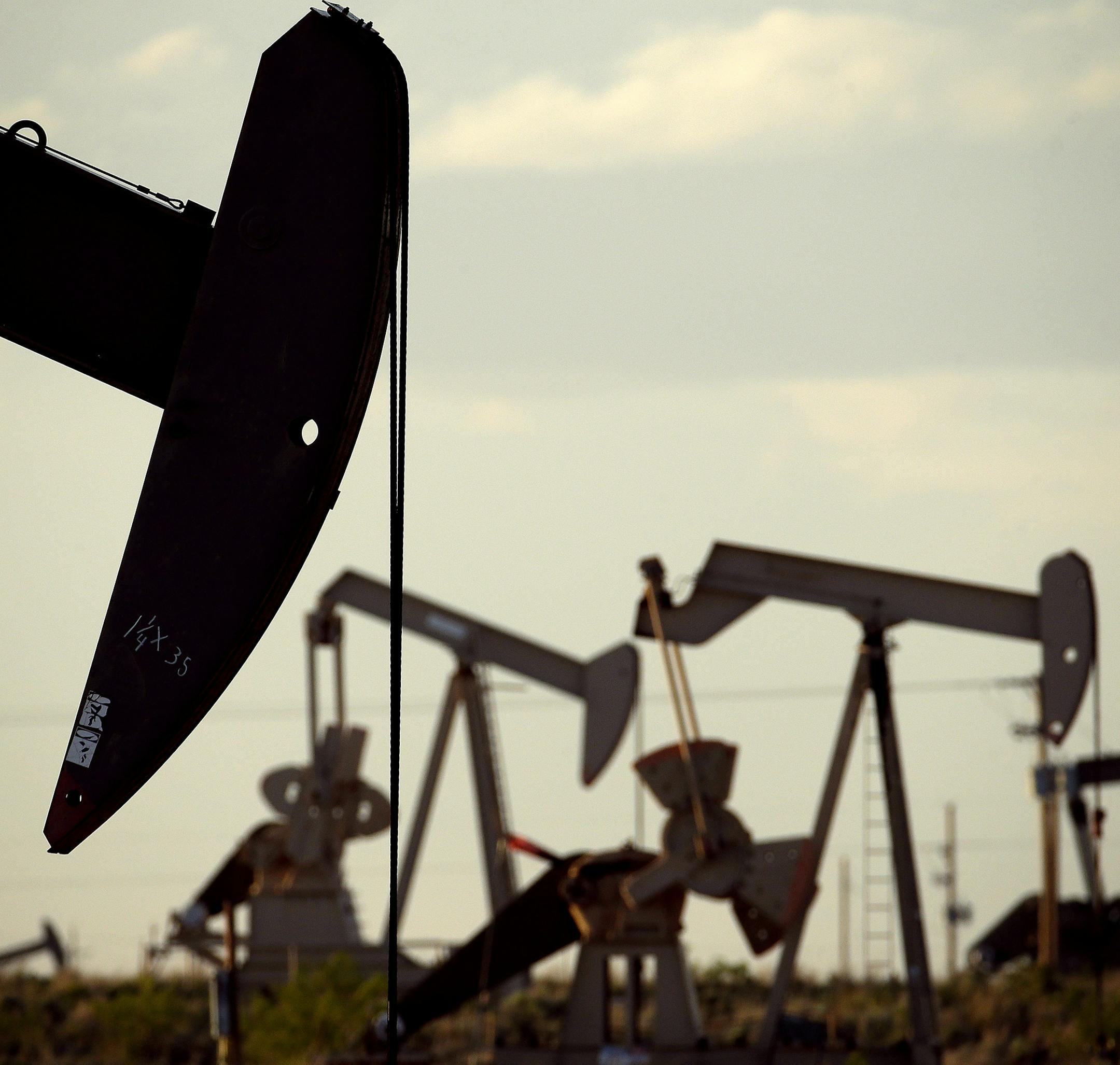
ADVANCE FOR USE TUESDAY, SEPT. 8, 2015 AND THEREAFTER - In this April 24, 2015 photo, pumpjacks work in a field near Lovington, N.M. As oil production in the United States rose in recent years, so did the spills of salty wastewater that is also pumped to the surface. A big reason why there are so many spills is the sheer volume of wastewater extracted - about 10 barrels for every barrel of oil, according to an organization of state ground water agencies. (AP Photo/Charlie Riedel)
In this April 24, 2015, photo, pumpjacks work in a field near Lovington, N.M. As oil production in the United States rose in recent years, so did the spills of salty wastewater that is also pumped to the surface. (The Associated Press)
about the writer

about the writer

John Flesher