

Something strange was going on with the phone connection. I was interviewing Lebanese artist and performer Rabih Mroué on a call to his Beirut home when I asked him about artistic freedom and the Arab Spring.
As he began to answer, the line went dead. I called him back on his cellphone. He answered promptly, and began to explain that Lebanon has relatively more freedoms than its neighbors, but that artworks still had to go through a censorship office in the Interior Department.
The word "censorship" could have triggered something, because the second connection then got funny. I could only hear a burst of sound every three or four seconds, then silence. It sounded like driving on a flat tire. I hung up and rang him again several times on both lines. No answer.
Before we lost our connection, Mroué said he no longer performs certain satirical pieces in his home country because of threats made against him.
If Mroué makes it safely out of Beirut, he will land in the Twin Cities with a multimedia performance piece, "Looking for a Missing Employee." It is about graft, corruption and the value of a life in a place that looks like his home country.
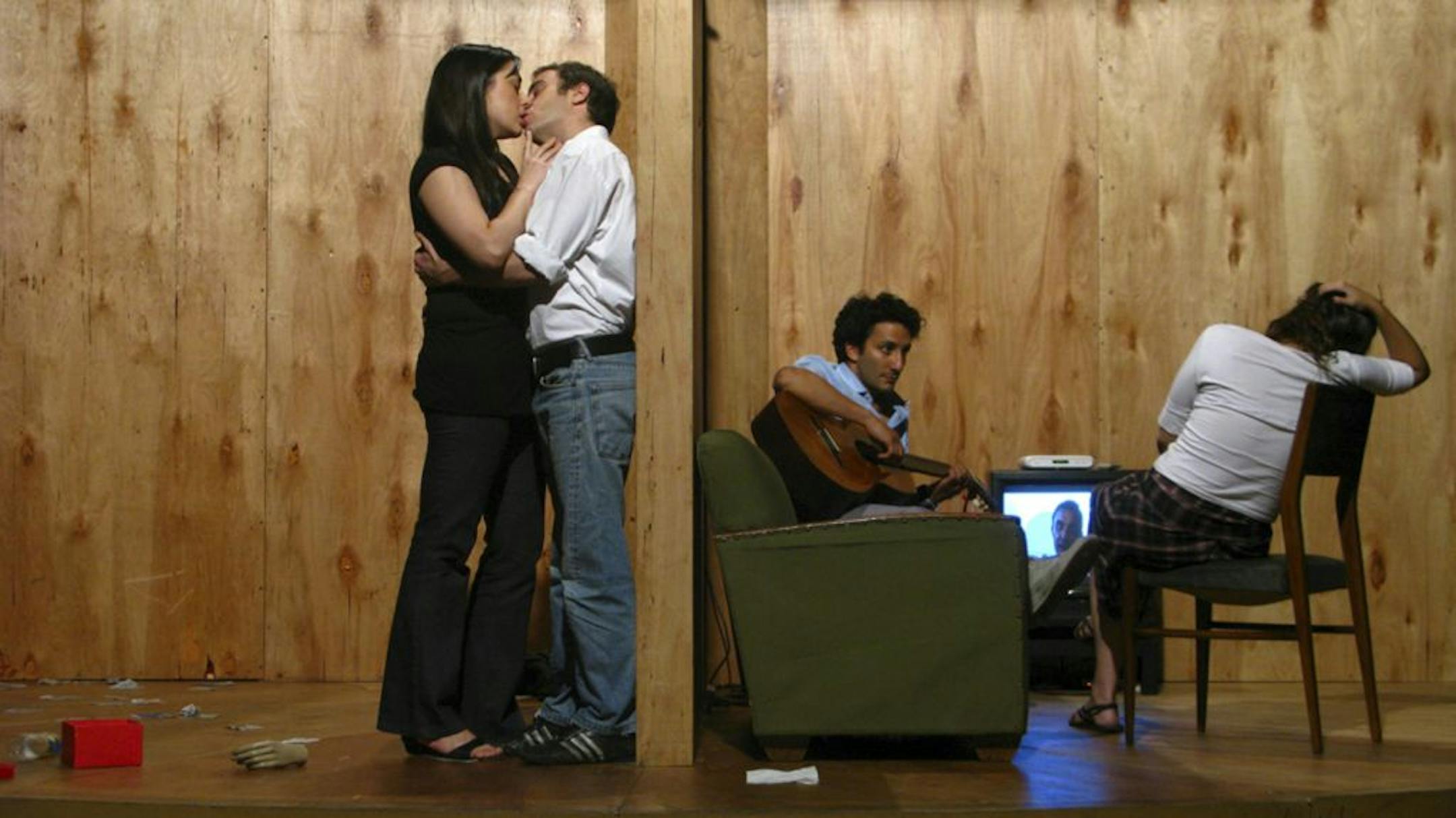
"Missing Employee" is part of the monthlong Out There festival of new performances at Walker Art Center that opens Thursday. This year's festival spotlights young, international auteurs. In addition to Mroué, the lineup includes Argentinian Mariano Pensotti, whose piece, "El Pasado Es un Animal Grotesco" ("The Past Is a Grotesque Animal"), deals with the stagnating effects of his nation's debt meltdown; Japanese provocateur Toshiki Okada, whose "Hot Pepper, Air Conditioning, and the Farewell Speech" follows low-level office employees who find themselves disposable among the ravages of capitalism, and a new work by American Young Jean Lee.
"All of these artists have singular, powerful visions," said Philip Bither, senior curator of performing arts at the Walker. "It's not just that they are all more connected through technology and ideas than ever before. They show that the world is small and we're all part of the same conversation."
Sly critique


