

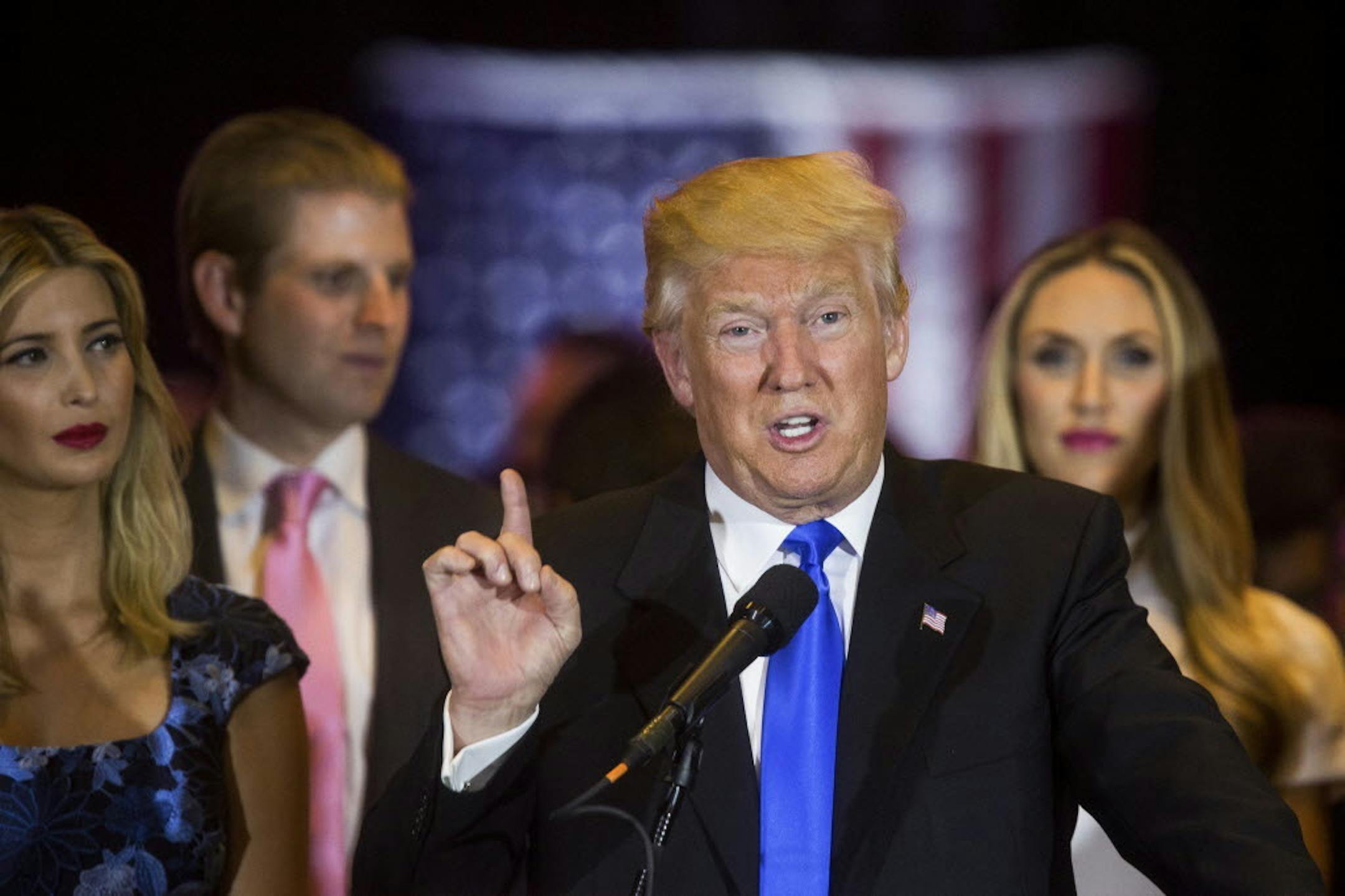
Donald Trump, the most voluble U.S. presidential candidate in memory, will soon be entitled to regular briefings on some of the nation's most sensitive intelligence secrets.
Once Trump, known for his off-the-cuff speeches and constant tweets, becomes the Republican nominee for the White House in July, he'll be entitled to updates based on the President's Daily Brief, a compilation of top-level classified intelligence about global events.
It's a prospect giving pause to some officials, who wonder how Trump will react to the information and whether he might inadvertently let some sensitive information slip out, according to several who asked not to be identified because they don't want to be seen as taking sides in the political campaign.
"We will absolutely have no problem keeping it private. Nobody can hold information better than Mr. Trump," Hope Hicks, a spokeswoman for Trump, said when asked about the briefings. "We look forward to asking questions."
While every Republican and Democratic nominee since the 1950s has received such briefings, providing them to Trump is going to be a unique experience for intelligence professionals, said Michael Hayden, who served as CIA director of the CIA from 2006 to 2009 and participated in the sessions for Democrat Barack Obama and his GOP challenger, Arizona Sen. John McCain, in 2008.
"My life experience had me brief, or see others brief, candidates who are familiar with and accepting of the post-World War II American foreign policy consensus," said Hayden, who is now with the Chertoff Group in Washington. "None of that appears to apply to Mr. Trump. This is going to make this series of briefings particularly challenging and exciting."
During the Republican primary season, Trump has, at times, questioned the U.S. role in NATO, called Russian President Vladimir Putin "a strong leader," and said he's "in that camp" that believes torture yields valuable information from detainees.
Hayden declined to speculate whether Trump can be trusted but said he would expect the Obama administration to give the Republican nominee the same briefings as his Democratic opponent.


