

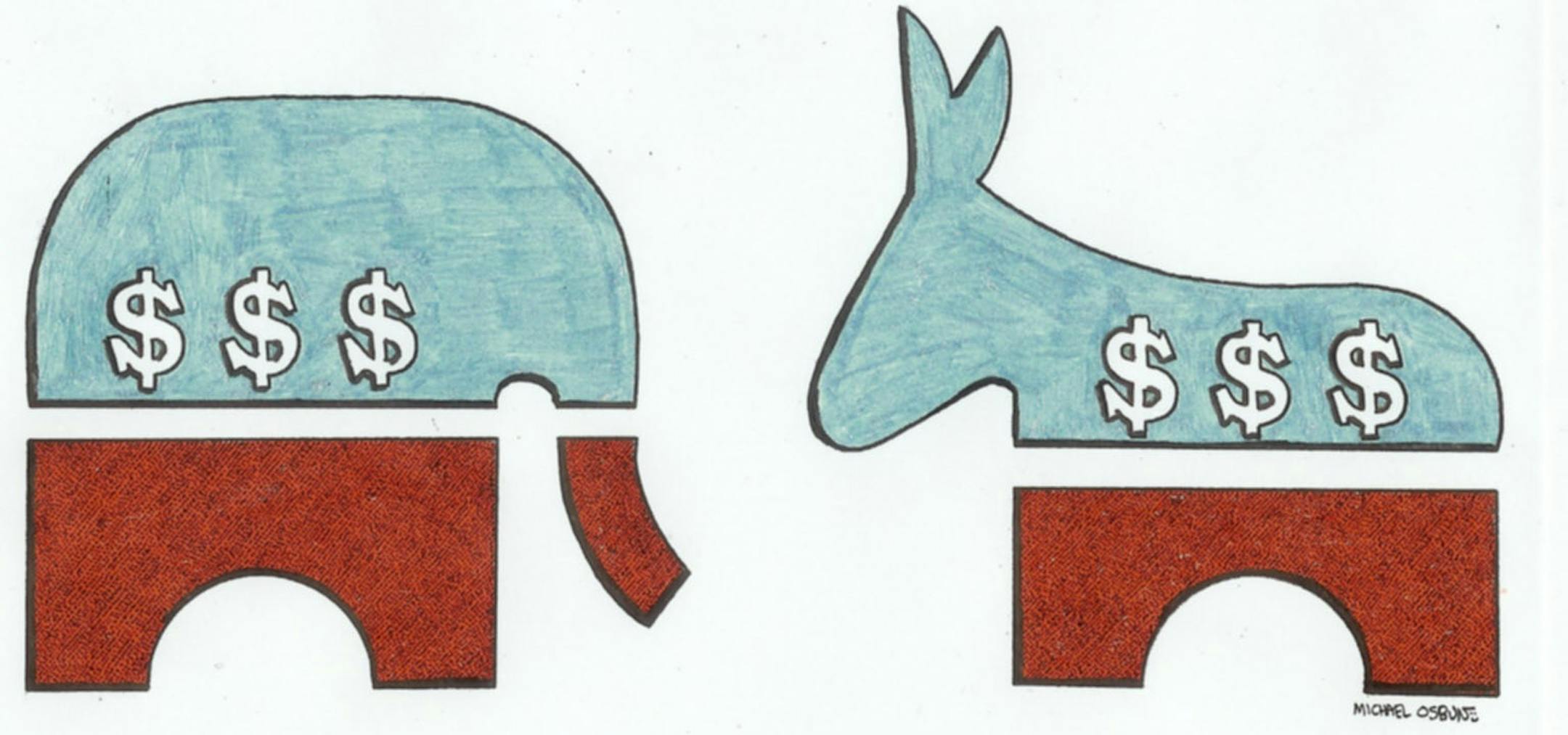
As much as $1 billion in private donations from shadowy campaign organizations, often bankrolled by anonymous donors, will drive the outcome of the 2012 presidential election. Millions more will target voters in congressional contests, where more paltry sums can presage victory or defeat.
Who is behind all that money? As often as not, we'll never know.
But the problem with current campaign finance law is not too much secrecy. The problem is too little.
What matters is not that the public is kept in the dark about who supplies all that furtive campaign money. The trouble is that the concealment doesn't extend to the candidates. If we're going to have secrecy, let's have it for everyone.
In American politics, a few thousand insiders know who is fueling the careers of those who govern 300 million. For the most part, the 300 million don't. A modest proposal: keep everyone ignorant. Drop an impenetrable shroud between those who give and those who receive.
Put people in jail for divulging the names of political donors. With so much money sloshing around politics, fines won't do. A stretch in the pen would.
Imagine if the candidates themselves were prevented from knowing the identity of their benefactors. Might they behave differently toward "special interests"? If you cannot answer this question, you explain the sharp drop in student test scores.
It's sometimes hard to distinguish the pursued from the pursuer, in a world where money is chased and few involved are chaste. From one point of view, the first in line to end the current system should be the people who finance it.


