

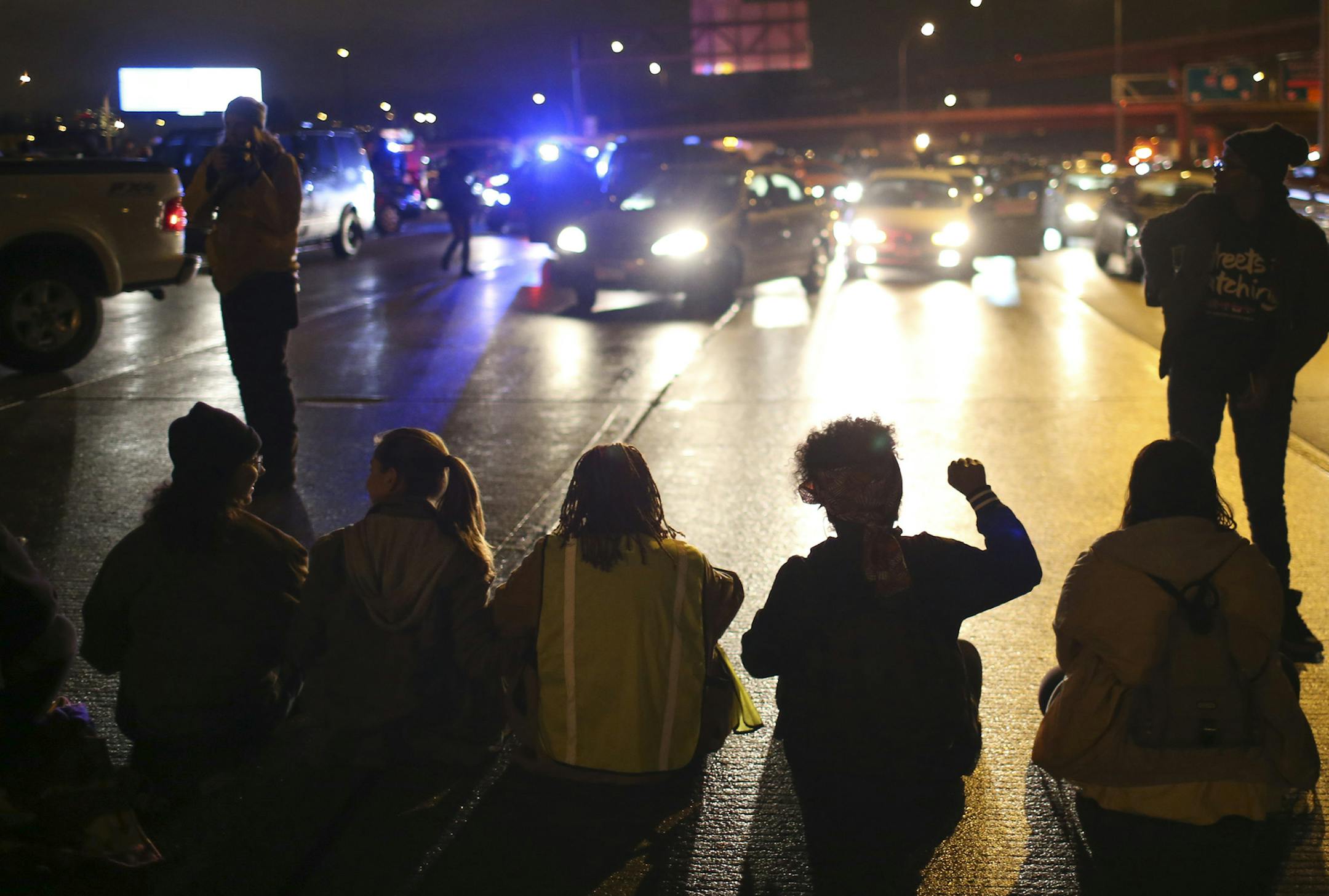
I am a vehement supporter of Black Lives Matter. Some people mistake this to mean that I support everything every member of every chapter of the group says or does — that I have some explaining to do every time a Black Lives Matter member makes an outlandish remark or chucks a bottle into a crowd of police.
Not so. What it means is that I support the movement's overarching cause, the termination of an injustice that I believe to be real — the discrepancy between the value society places on white lives vs. the value we place on black lives.
But as much as I support their cause, I have found myself becoming increasingly frustrated with some of the movement's methods, particularly in Minneapolis as it relates to the shooting death of Jamar Clark. I'm certainly not alone, but while most peoples' frustration stems from the types of protests the Minneapolis chapter of BLM has been conducting — from blocking freeway traffic to camping out outside the Fourth Precinct station — my frustration has more to do with the narrative the local group has built those protests on.
I don't necessarily have a problem with the highway shutdown. It wouldn't be the first tactic I would choose, but I think interrupting privilege and forcing people to pay attention is an important component of the BLM game plan. And while I've heard legitimate criticisms of this tactic, such as the hypothetical ambulance responding to an emergency, this criticism also illustrates the essential claim of Black Lives Matter — as it places more importance on the life of the hypothetical victim in the hypothetical ambulance than on the life of the real victim who was already killed.
I also don't have a problem with the precinct campout. If an institution is a purveyor of injustice, it deserves to be a target of the protests fighting those injustices — even if many of that institution's members are providing the admirable and essential services that most police officers do indeed provide.
Where I do have a problem with #Justice4Jamar is that both of these protests have been based on a version of the Jamar Clark story that, in all likelihood, is not entirely true. Black Lives Matter Minneapolis has gone all-in on an improbable counternarrative that, in the long-run, could greatly reduce its credibility and ability to attract widespread support.
In the BLM narrative, Clark is an innocent victim, face down on the ground, handcuffed and helpless, when he is shot in the head by Minneapolis police. The shooting has been confirmed to be true. However, other evidence suggests that the rest of this narrative is not. It suggests that Clark was not innocent nor handcuffed nor helpless — that he was violent toward his girlfriend, and violent toward the police and paramedics attempting to provide her treatment, and that it was his own actions, reaching for the weapon holstered on the belt of one of the officers, that ultimately led to his death.
Right now, we don't really know. We have our own versions of the story in our heads. But as the investigation continues, the larger truth still evades us. Even when that "truth" comes out, when the official version of the story has been released, it still likely will be made up of incomplete and contradictory evidence. And no matter what the official version of that story says, I understand why people, specifically those associated with Black Lives Matter, will still be skeptical of the version produced by the very institution they are protesting.


