

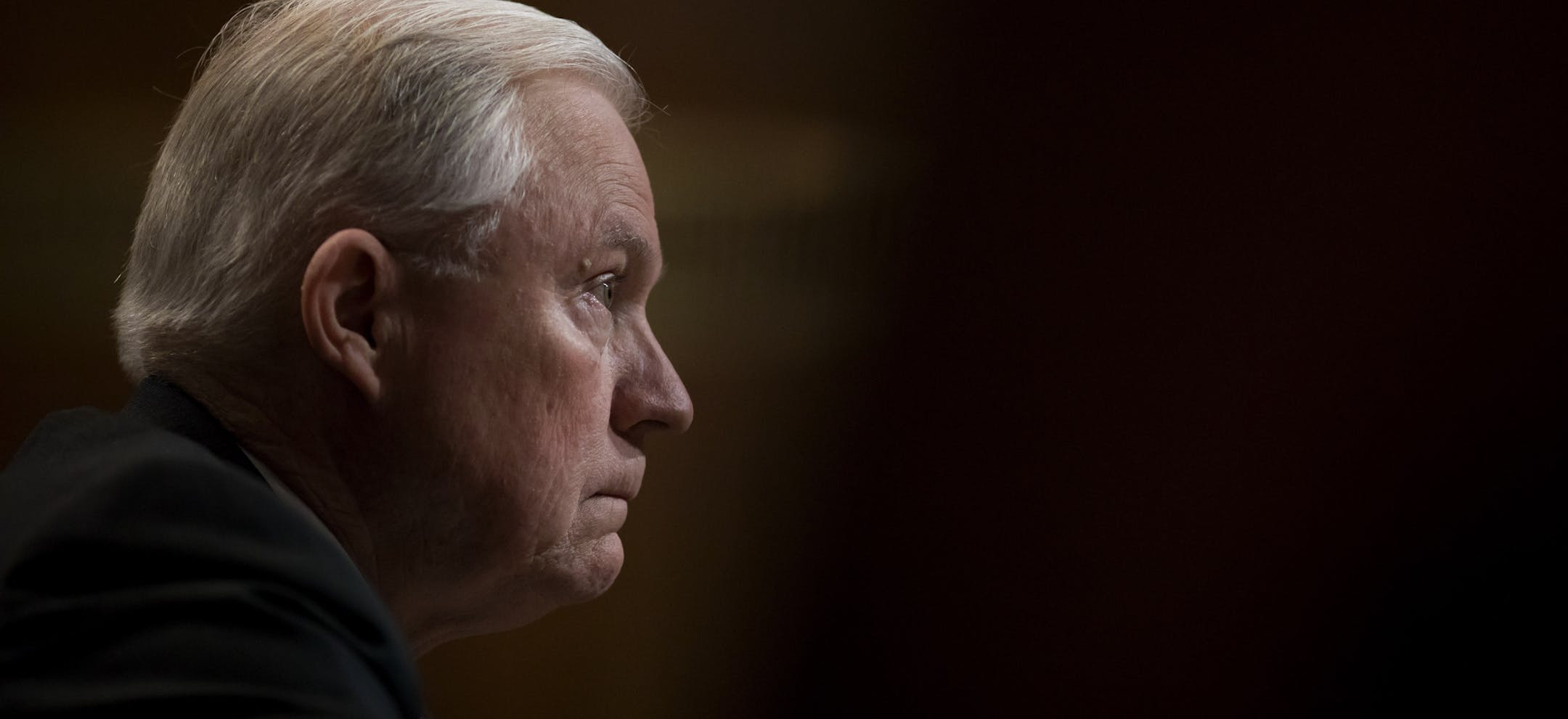
On Wednesday, at President Donald Trump's request, Attorney General Jeff Sessions submitted his resignation. Sessions's chief of staff, Matthew Whitaker, will take over as acting attorney general. This news set off a full-blown freakout among those who see this as the first step in a Nixonian plot to shut down special counsel Robert Mueller's investigation. Nationwide protests were quickly organized in response to the move, and social media exploded with cries of a constitutional crisis. But although it's true that Sessions's departure is worrisome, there's no need to panic - at least not yet.
Sessions, of course, had recused himself from the Russia investigation, which led to Deputy Attorney General Rod Rosenstein taking over supervision of that case. There have already been some suggestions that Whitaker may need to recuse himself as well, based on public statements he has made about the investigation and his relationship with those who could be implicated in the probe. But whether it's Whitaker or a newly appointed attorney general, the fear is that this person might fire or at least undermine Mueller. I'm not sure those fears are justified.
Let's be clear: The only thing that has happened at this point is that Sessions is gone. And Trump has wanted to get rid of Sessions for some time; no one is shocked at his departure. The real surprise is that Sessions lasted this long, given the public ridicule and disdain he endured from the president. And it's common for presidents to reshuffle their Cabinets following midterm elections, so there is nothing inherently suspicious about the timing.
Regardless of who is attorney general, there are safeguards in place to protect the special counsel. The governing regulations give Mueller a good deal of autonomy and ensure that he is not subject to day-to-day supervision by any Justice Department official - which is precisely the point of having an independent special counsel.
It's true the attorney general can deny Mueller the authority to take particular investigative steps. But the attorney general must notify Congress about any such denials and provide an explanation. If he wants to remove the special counsel, he could do so only for misconduct, dereliction of duty or other good cause, and again would have to provide an explanation to Congress. That notice goes to both the majority and minority parties - and as of January, of course, the majority in the House will be the Democrats, who will not be shy about responding.
In short, the attorney general, whoever he or she is, can't just "disappear" the special counsel's investigation - Congress has an oversight role. Actually, if Trump's goal was to get rid of Mueller, it would have been much smarter to do this months ago, when a much more pliant Congress would have been less interested in objecting.
We can also take heart in the Justice Department's demonstrated ability to maintain its independence when it comes to political investigations, even in the current climate. For example, much to Trump's displeasure, last summer the department indicted two Republican members of Congress only a few months before the election (although, remarkably, that did not stop one of them from being reelected by almost nine points, while the other appears to have narrowly hung on to his seat).
Sessions was a Trump loyalist and advocate during the campaign but stood up to Trump as attorney general. Whitaker has expressed some strong personal views about the Mueller investigation, but we shouldn't just assume the former U.S. attorney will simply ignore the Justice Department's traditions and policies and roll over for Trump when his former boss refused to do so. And any new permanent attorney general will have to be confirmed by the Senate, where even some Republican senators are likely to demand assurances about the protection of the special counsel.


