
Dollar's strength creates few problems in Minnesota, for now

Almighty greenback is great for U.S. tourists, but it hits Minnesota exporters in the pocketbook

March 25, 2015 at 3:19AM
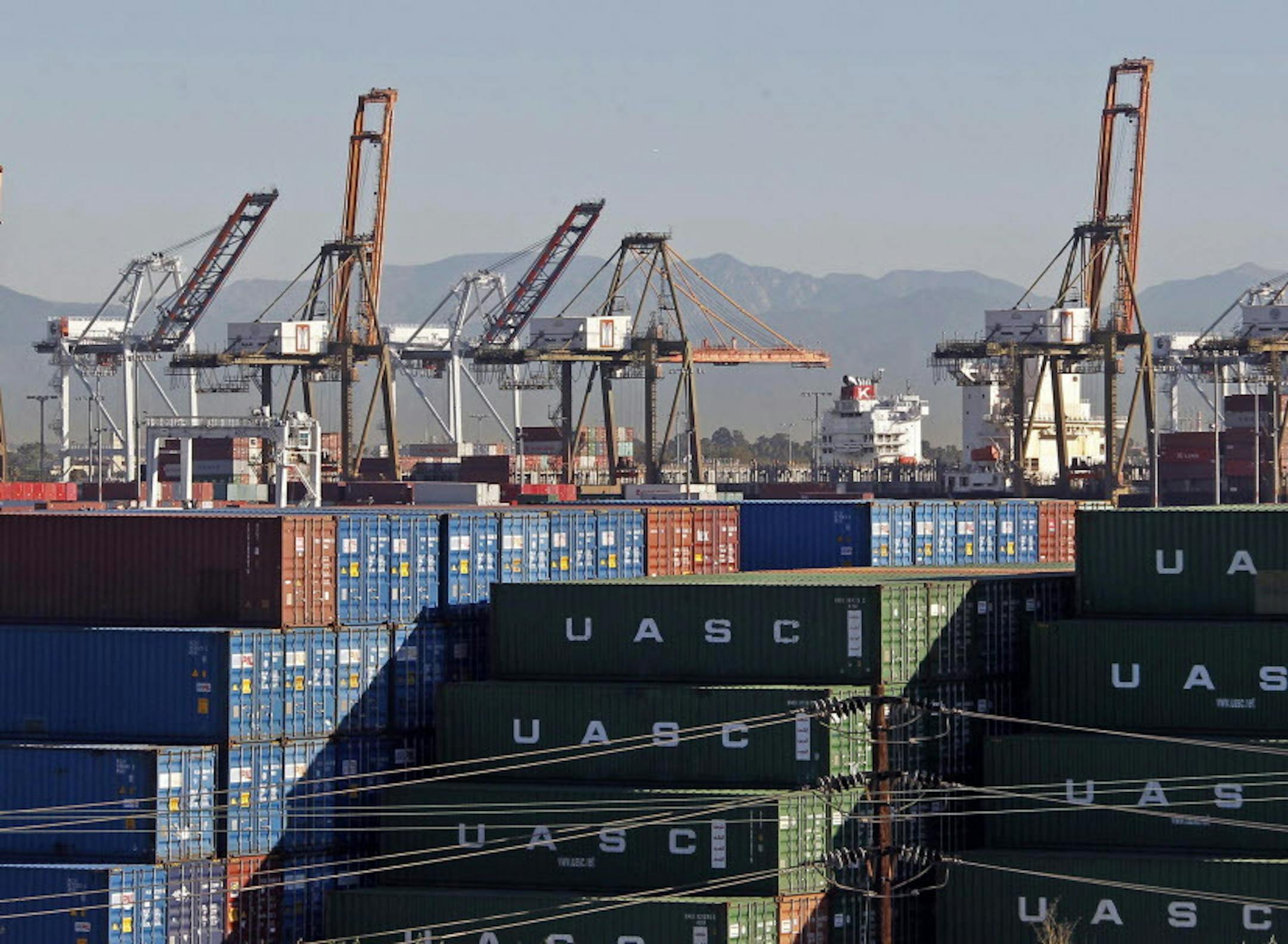
The Ports of Los Angeles and Long Beach, with some cargo loading cranes in the upright and idle position, are seen in this view from the San Pedro area of Los Angeles, Thursday, Feb. 12, 2015. Seaports in major West Coast cities that normally are abuzz with the sound of commerce are falling unusually quiet. Companies that operate marine terminals said they weren't calling workers to unload ships Thursday that carry car parts, furniture, clothing, electronics ó just about anything made in As
While American tourists benefit from the strong dollar, exporters find they have to adjust to the new playing field. (The Minnesota Star Tribune)

A strong dollar is good for American tourists in Europe, but it may turn into a problem for Minnesota businesses selling abroad.

The U.S. dollar is now stronger against other world currencies than at any time since 2003, which means more buying power when Americans travel overseas.

But across Minnesota and the Upper Midwest, the strong dollar also has led some manufacturers and other companies with overseas sales to cut revenue forecasts. When the dollar is strong, people in other countries pay more with their currency to buy U.S. goods, a development that tends to weaken demand for American products and services.

The strengthening dollar carved out $19 billion from U.S. corporate revenue in the fourth quarter of 2014, according to a report from FiREapps, a currency risk consulting firm.

With the dollar up another 12 cents against the euro since the start of the year, investors expected another bite from corporate earnings when first-quarter results start to be reported next month. For the full year, firms in one important Minnesota industry, medical devices, expect sales to decline 6 percent because of the dollar's strength, according to Moody's.

Even so, large companies with global operations won't be devastated. The greater challenge is for a narrow set of small exporters, exactly the kind that are encouraged to explore international markets as Minnesota strives to be more global.

Gov. Mark Dayton and his economic ­development officials have tried, and so far mostly failed, to accelerate export growth. In 2012, Dayton announced the MSP Export Initiative, aimed at doubling Twin Cities exports by 2017, which would have required 15 percent annual growth.

The state's exports were flat in 2013 and rose 3 percent in 2014. With a stronger dollar, few expect much growth this year.

"It never helps," said Dave Anderson, director of international sales for Jet Edge Inc. in St. Michael. "My distributors are worried and nervous about it."

Jet Edge, a maker of high-pressure water jet equipment for manufacturers, does all its manufacturing in Minnesota. A stronger dollar against the euro means the firm's prices go up relative to those of its European competitors.

The firm, which supplies auto, aircraft, weapons and nuclear parts-makers across the globe, may have to adjust prices to compete with companies making similar tools in Europe and selling them there, Anderson said. "We don't have a lot of latitude to change our price drastically, but we can sometimes adjust it to help," he said.

For Jet Edge and its 41 employees, the impact of currency fluctuations shouldn't be blown out of proportion. Its products aren't bought on a whim. "Some of our sales cycles can be two years, and the currency can fluctuate several times," Anderson said.

The same is true at Roseville-based Horton Inc., which makes fans and fan clutches that cool the engines on trucks, buses, earthmovers and power generators. Horton products are in the blueprints for machines made by Caterpillar and John Deere, world-class Midwestern manufacturers.

"They want a Horton fan and clutch in trucks, construction equipment and farm equipment," said Rosalyn Fineran, chief financial officer of the firm, which has been around since 1951 and has manufacturing locations in the United States and Germany.

Horton's European business is smaller than its American business, but even in Europe the strength of the dollar hasn't cut into business much, because most orders are engineered specifically for a product run, Fineran said. Orders are therefore more dependent on market cycles than on currency exchange rates.

Dollar sign of good economy

Last Wednesday, Janet Yellen, chairwoman of the Federal Reserve Bank, said that while the strong dollar is holding down exports, it's also a sign of health in the economy. Fed Vice Chairman Stanley Fischer echoed that sentiment this week, saying Monday that the muscular dollar shows the U.S. economy is performing well.

The resurgent dollar drives down the prices of imports, and along with lower gas prices, has given customers more spending power, said Alan Robinson, a currency expert for RBC Wealth Management in Minneapolis. "Our view is that, yes, it is a little bit of a head wind for revenue growth and earnings growth, but it's not that big of a deal," he said.

Exports only account for 13.5 percent of the U.S. economy, he said, so it's not a big share compared with the U.K., where exports are 28 percent of the economy, or Canada at 31 percent and Germany at 46 percent.

And a strong dollar has helped drive down oil prices, Robinson said, which is good for the economy.

"I think to step back a little bit, if we look at the strong dollar story as a symptom rather than a cause, then it's actually positive," Robinson said.

Farmers are less competitive

Farmers, who buy feed, seed and fertilizer in dollars and then sell their crops and livestock in a foreign currency, take a different view.

"When the value of the dollar is stronger, it makes our export products less competitive," said Kent Thiesse, a vice president at MinnStar Bank in Lake Crystal.

Prices for corn, soybeans, pork, even the dry livestock feed that's a byproduct of ethanol production will drop if demand for exports declines, he said. Prices are already pushed downward by the bumper crop of 2014.

"Margins are already very tight," Thiesse said. "We're probably more reliant on exports than we've been in other years, because we've got such a big surplus."

Thiesse said so far he hasn't seen "a huge drop-off" in exports, but if the value of the dollar keeps rising, the effect could be more severe.

Farmers in Minnesota sell about a third of their products internationally, said Su Ye, an economist at the Minnesota Department of Agriculture. "Minnesota is a small state with a small population, but we are number four in ag production in the nation," she said. "Ag is such an export dependent sector."

Big firms are at less risk

The big Minnesota companies that sell consumer goods all over the world — General Mills, for instance — are less at risk for several reasons. For one, their treasurers hedge the value of the dollar through investments. Also, by making products in different countries, they tend to operate in local currencies and worry less about exchanging the value into dollars.

"They tend to produce close to where they sell," said Matt Arnold, an analyst at Edward Jones who covers 3M.

He added, "I think it's a very, very minimal risk for them."

Adam Belz • 612-673-4405 Twitter: @adambelz

about the writer

about the writer

Adam Belz

Reporter

Adam Belz was the agriculture reporter for the Star Tribune.

See Moreicon

More from Business

See More
card image
Fairview Health Services

The school is changing an elective course while still working with the Eden Prairie-based health care giant after students raised concerns.

This transmission electron microscope image shows SARS-CoV-2, the virus that causes COVID-19, isolated from a patient in the U.S., emerging from the surface of cells cultured in the lab. (NIAID/TNS) ORG XMIT: 1659810
card image