

DULUTH – Do people want oysters from Minnesota?
New research led by the Duluth-based Minnesota Sea Grant is looking to answer that question and study whether sustainable aquaculture is feasible in the Great Lakes region.
"Can we do aquaculture well? Should we do it at all? And if yes to those two questions, how do we do it right?" said Minnesota Sea Grant spokesperson Marie Thoms.
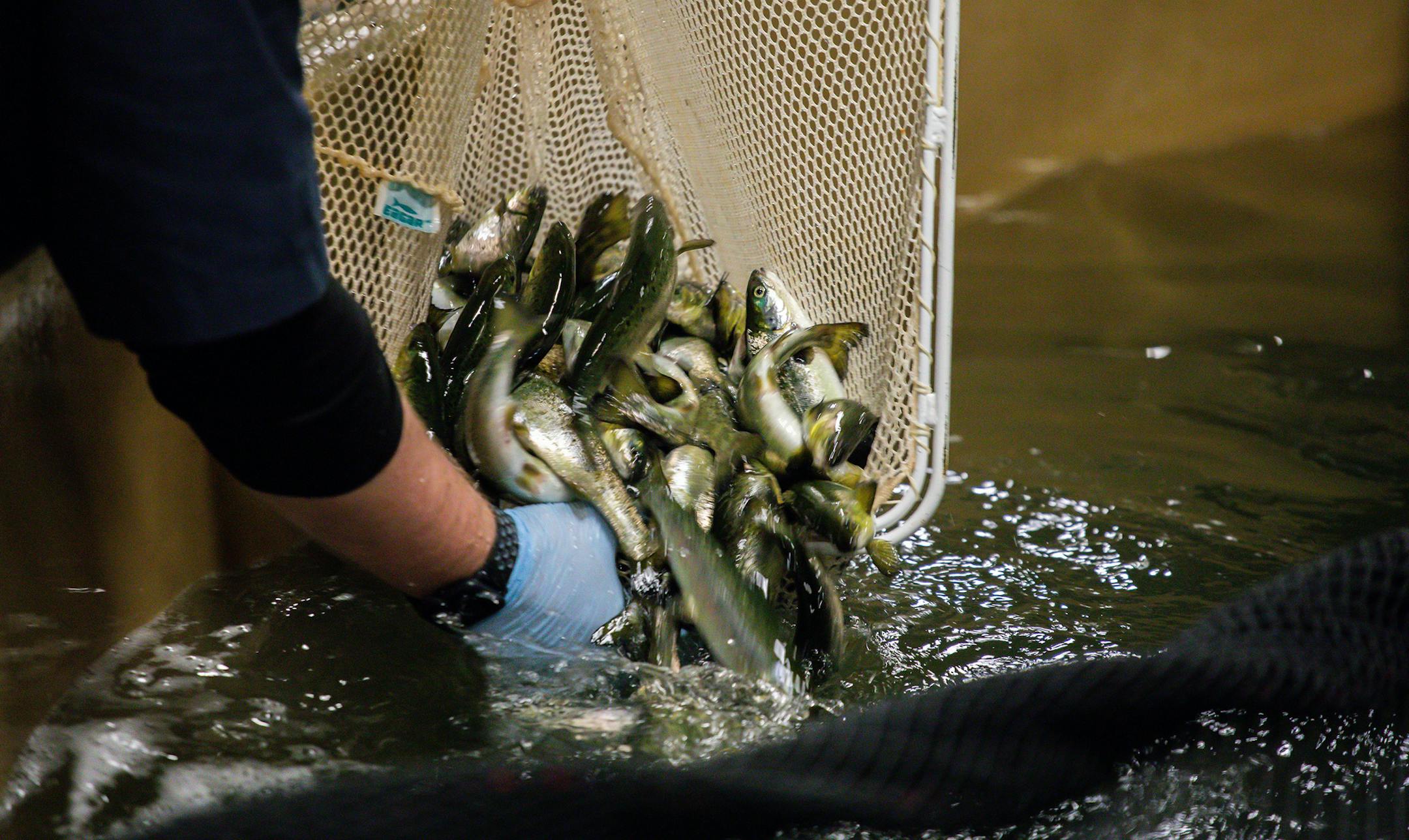
The Great Lakes Sea Grant Aquaculture Collaborative was launched with a $1 million federal grant announced last week. Over the next three years, researchers from eight states will look at emerging technologies and conduct market surveys to gauge consumer and industry appetite for Midwestern aquaculture, the practice of farming seafood in a controlled environment.
The project comes as the U.S. faces a $14 billion seafood trade deficit from importing 90% of its fish and shellfish, according to the National Oceanic and Atmospheric Administration (NOAA).
At the end of the study, researchers will recommend strategies for the industry that could help satisfy demand for seafood without depleting ocean stocks — or disrupting the Great Lakes.
"Our goal is to keep all of this out of the Great Lakes proper and hopefully out of public waters," said project co-leader Don Schreiner.
What he envisions instead is something like Superior Fresh in west-central Wisconsin, a land-based aquaponics operation that harvests thousands of pounds of salmon per year, plus millions of pounds of leafy greens. Schreiner also pointed to the shrimp farm proposed in Madison, S.D., as another example to study.


