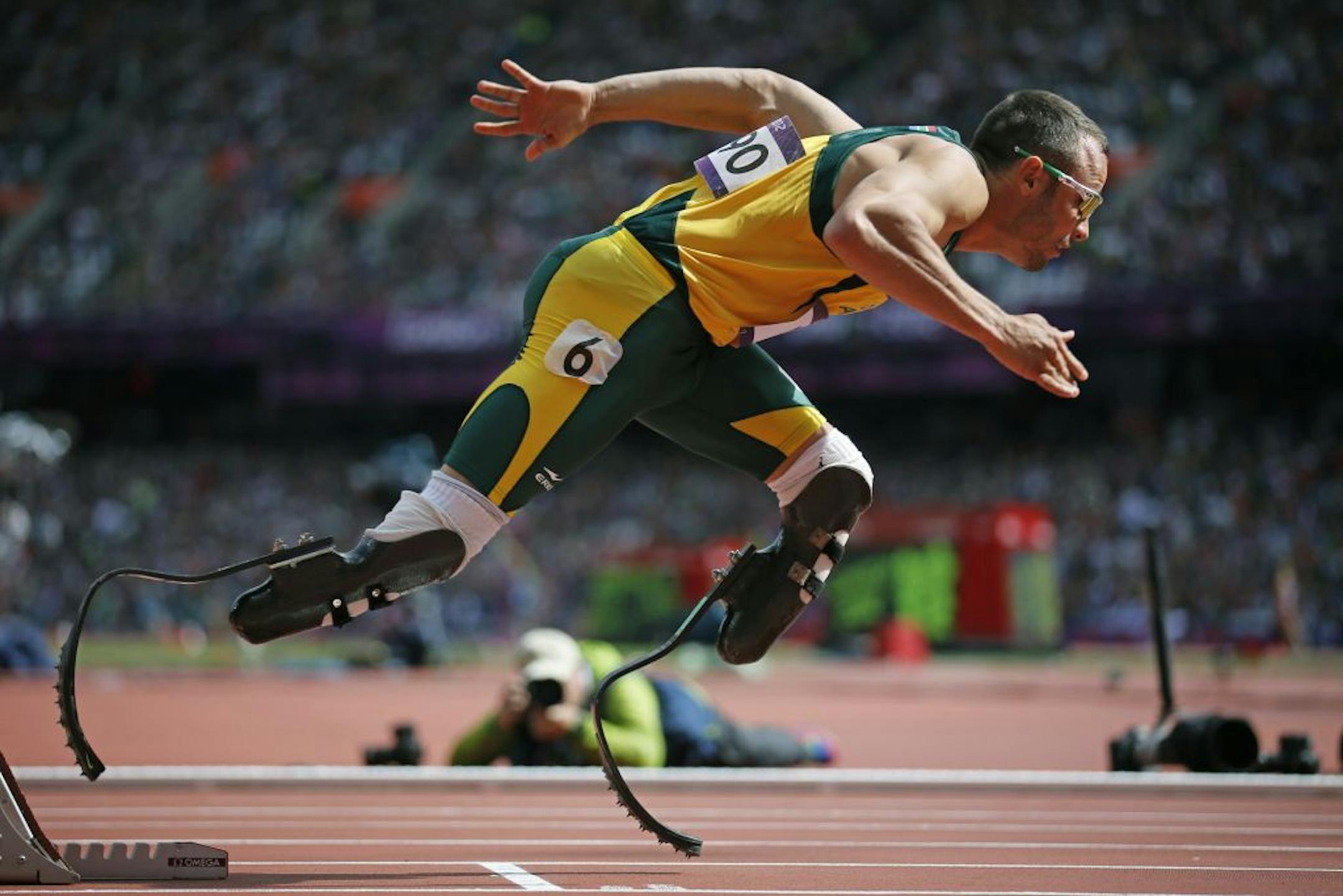
Oscar Pistorius, the South African track star, has allegedly shot his girlfriend to death. The world is stunned. Other athletes have committed violent crimes, but Pistorius was supposed to be different. We expected better of him.
Why?
"Pistorius seemed to personify only good things," says one columnist. "His was a story of perseverance, taking chances, inclusion and giving hope to others, especially the disabled." He was "an unprecedented champion for equality and disabled rights," says another. He gave us "the feeling of watching humanity advance," says a third.
A fourth recalls: "He was throwing open the doors of sport to all. He was a symbol, a moment in history, a one-man parade of the human will." There were stories about his guns and his rage, but we ignored them because "he was a hero and we wanted him to be perfect." Michael Rosenberg of SI.com puts the question bluntly: "Were we shocked because he is a double-amputee? I think so."
Bullseye. We expected better of Pistorius because he's disabled. We confused the goodness of his story with good character. We put him on a pedestal. But equality isn't about being special. It's about being ordinary. People with disabilities aren't above sin or crime. They're just like the rest of us.
Nobody keeps records on how many people with physical impairments have committed crimes. But we do have prison data.
In 2001, a Justice Department review of the best available survey, taken in 1997, found that 11 to 12 percent of state and federal inmates reported physical disabilities. Most of those conditions probably developed in jail. But even in the youngest age category - 24 years old or less - 5 percent of state prisoners and 2 percent of federal prisoners reported physical disabilities, which were distinguished in the questionnaire from mental, emotional, speech, learning, hearing, or visual difficulties.
A survey of state officials, reported in 2003, found that the highest number of wheelchair-bound inmates reported by a single state was 974. The highest number of inmates with other physical mobility impairments was 1,949.