

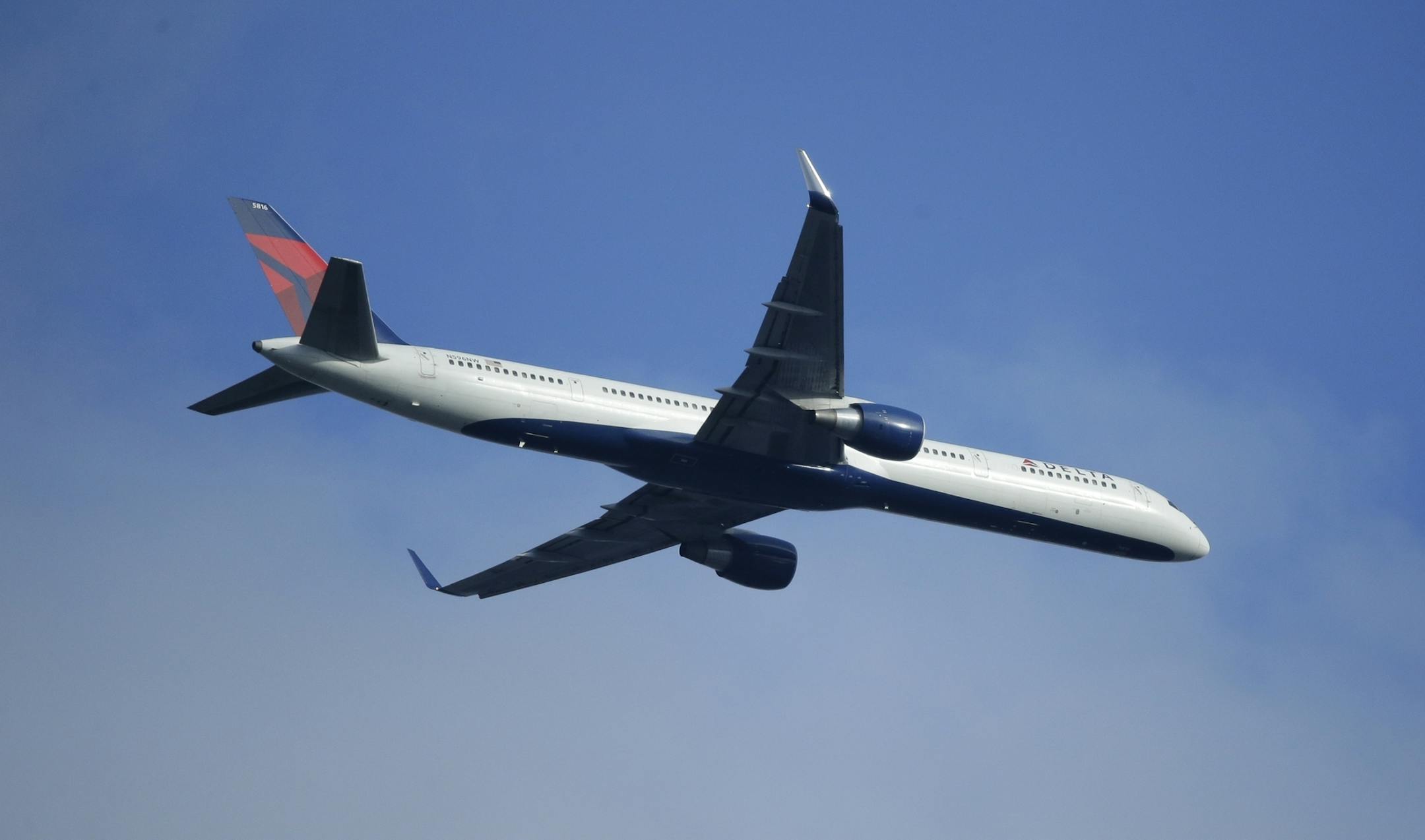
Delta Air Lines will begin diversity training for all of its flight crews after at least two widely publicized incidents in which passengers said they were discriminated against or treated uncivilly on its flights.
Chief Executive Officer Ed Bastian banned a passenger for life in November after the man was videotaped yelling in support of Donald Trump. A few weeks earlier, the carrier had apologized to a black doctor who volunteered to help a sick passenger and was rebuffed by a flight attendant.
"Their brand reputation is critical, and you don't want that reputation to be damaged," said Jason Wingard, dean of Columbia University's School of Professional Studies and a consultant on diversity issues. Success for consumer-facing companies such as airlines is "tied to customer loyalty and emotions."
The Atlanta-based airline is last among the four largest U.S. carriers to require such training, which it made mandatory for executives last year and will start for 23,000 flight attendants in the second quarter. Delta's classes will use "real and relevant scenarios" and discuss unconscious bias and so-called microaggressions, said Keyra Lynn Johnson, managing director for diversity and inclusion. "This goes well beyond the typical cross-cultural training."
Tensions between passengers or between passengers and crew have been on the rise. On Friday, the U.S. Department of Transportation issued new guidelines for airline personnel on nondiscrimination, including sample scenarios outlining their legal obligation not to discriminate based on race, sex, religion or national origin. It also issued a document for passengers, explaining their rights.
Incidents of reported discrimination rose 37 percent in the first 10 months of 2016 to 74, according to the transportation agency. Although the number is fairly small, these episodes can cause public relations headaches for the companies and provoke lawsuits.
The U.S. presidential campaign, in which Trump proposed banning Muslims from the United States, and recent terrorist incidents have intensified the issue, said Corey Saylor, director of the department to monitor and combat Islamophobia at the Council for American-Islamic Relations. The organization documented 149 removals from flights, buses or trains in the first nine months of last year, more than double the 62 of the same period a year earlier, he said.
"Airplane removals weren't really a significant issue until 2016," Saylor said. "The rhetoric definitely plays into it."


