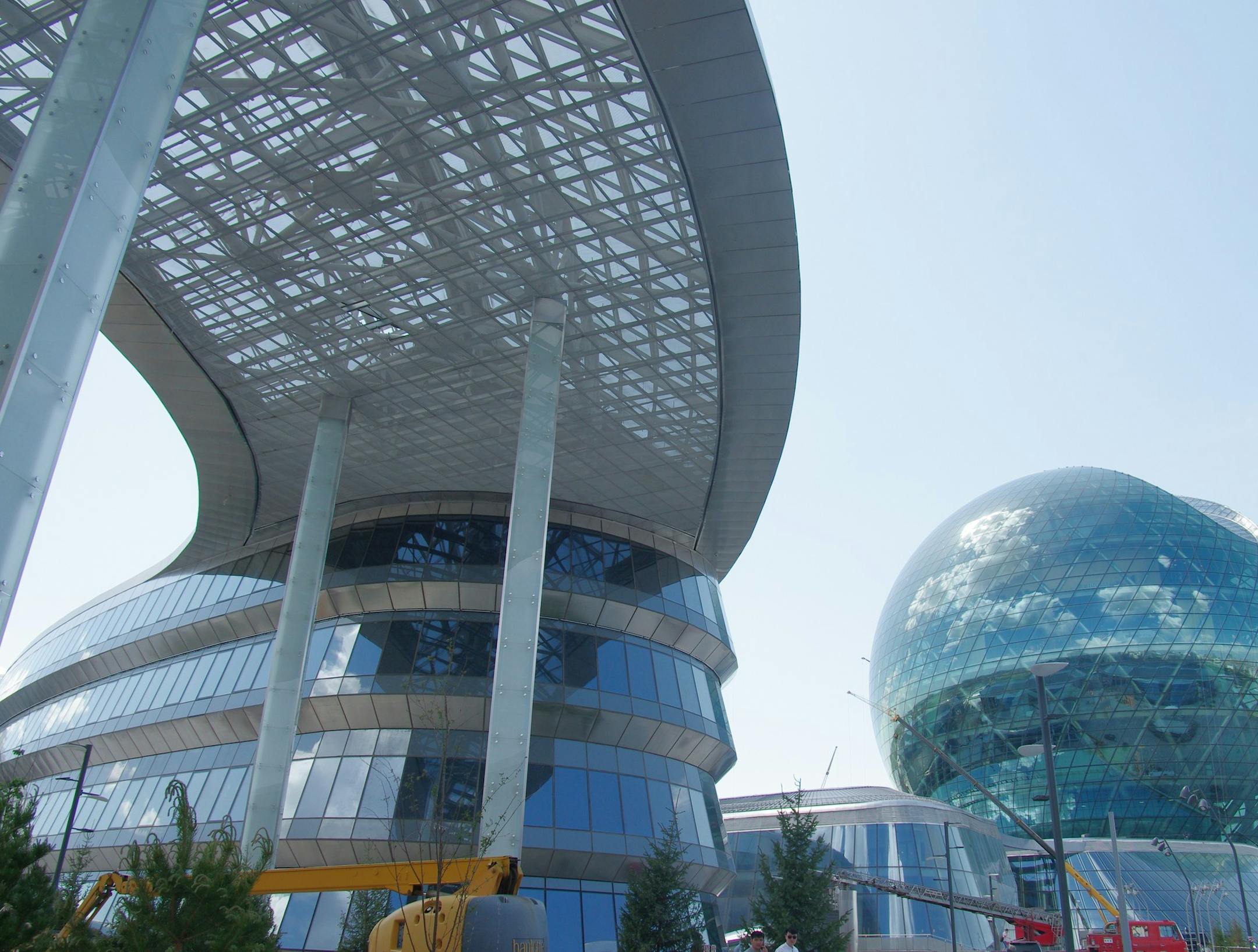
When an authoritarian ruler builds a gigantic dark globe, he should not be surprised that people call it the "Death Star."
But whereas the Death Star from "Star Wars" was a tool for wiping places off the map, the Kazakh pavilion at Expo 2017, which opened in June in Astana, Kazakhstan's capital, is supposed to put the Central Asian country of 18 million on the map — especially for investors.
The Death Star celebrates traditional forms of Kazakh hospitality, such as giving guests a warm coat or a sheep's head for supper. A shopping mall named after the old Silk Road offers fancy souvenirs.
Kazakhstan is at a crossroads, literally and figuratively. Geographically, it is sandwiched between Russia, China and the Middle East, astride once and future trade routes. The president, Nursultan Nazarbayev, is eager to turn this location to Kazakhstan's advantage by joining China's "Belt and Road" program of new transport links between Asia, Europe and Africa.
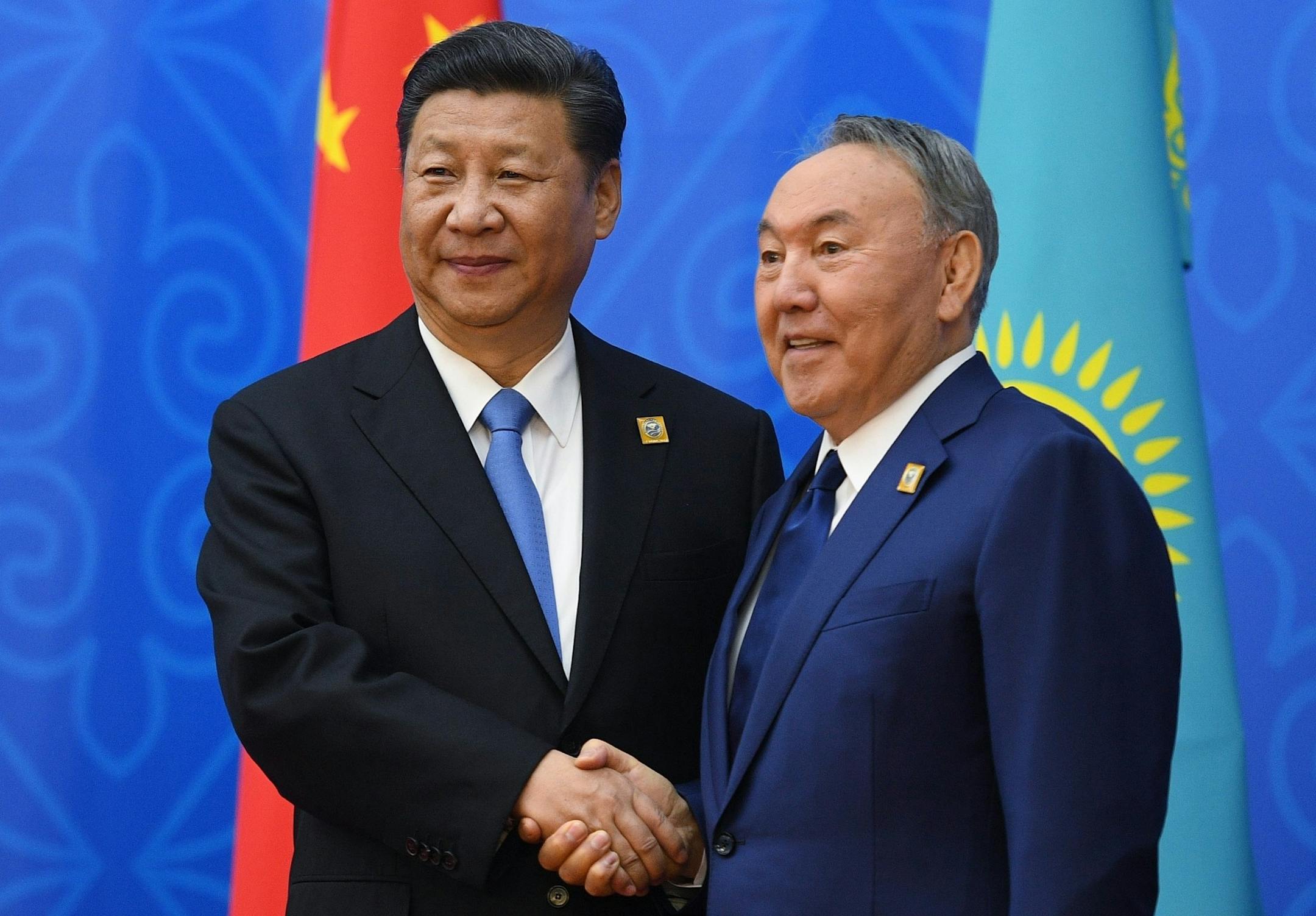
Over the past two years, Chinese cash has created a massive freight-rail hub at Khorgos, spanning the border between the two countries. Xi Jinping, China's president, visited the Expo on June 8 and purred that the two countries should be "partners forever."
The other crossroads is historical. Kazakhstan has a choice: open up or stagnate. This is not easy, given how much the country has suffered from foreign domination. The Soviets forced nomadic Kazakhs into collective farms at gunpoint, wiping out a quarter of the population. They used Kazakh territory both as a gulag and a nuclear testing ground, deliberately exposing children to radiation to measure its effects.
Few expected an independent Kazakhstan to thrive, but it has done better than any of its Central Asian neighbors. That is thanks mainly to gushers of hydrocarbons. Oil and gas accounted for 58 percent of exports last year; the mammoth Kashagan oil field is one of the biggest discoveries in the world in recent decades. But reasonably competent government has also played a part. Real output per person rose from $1,600 in 1990 to $14,000 in 2013.
Nazarbayev, who has been in charge since the Soviet days, spent much of the windfall conjuring Astana out of a patch of nearly deserted steppe. The move to the new capital allowed the civil service to marginalize many crusty old hands, who stayed behind in the previous capital, and to promote young modernizers, who moved.