

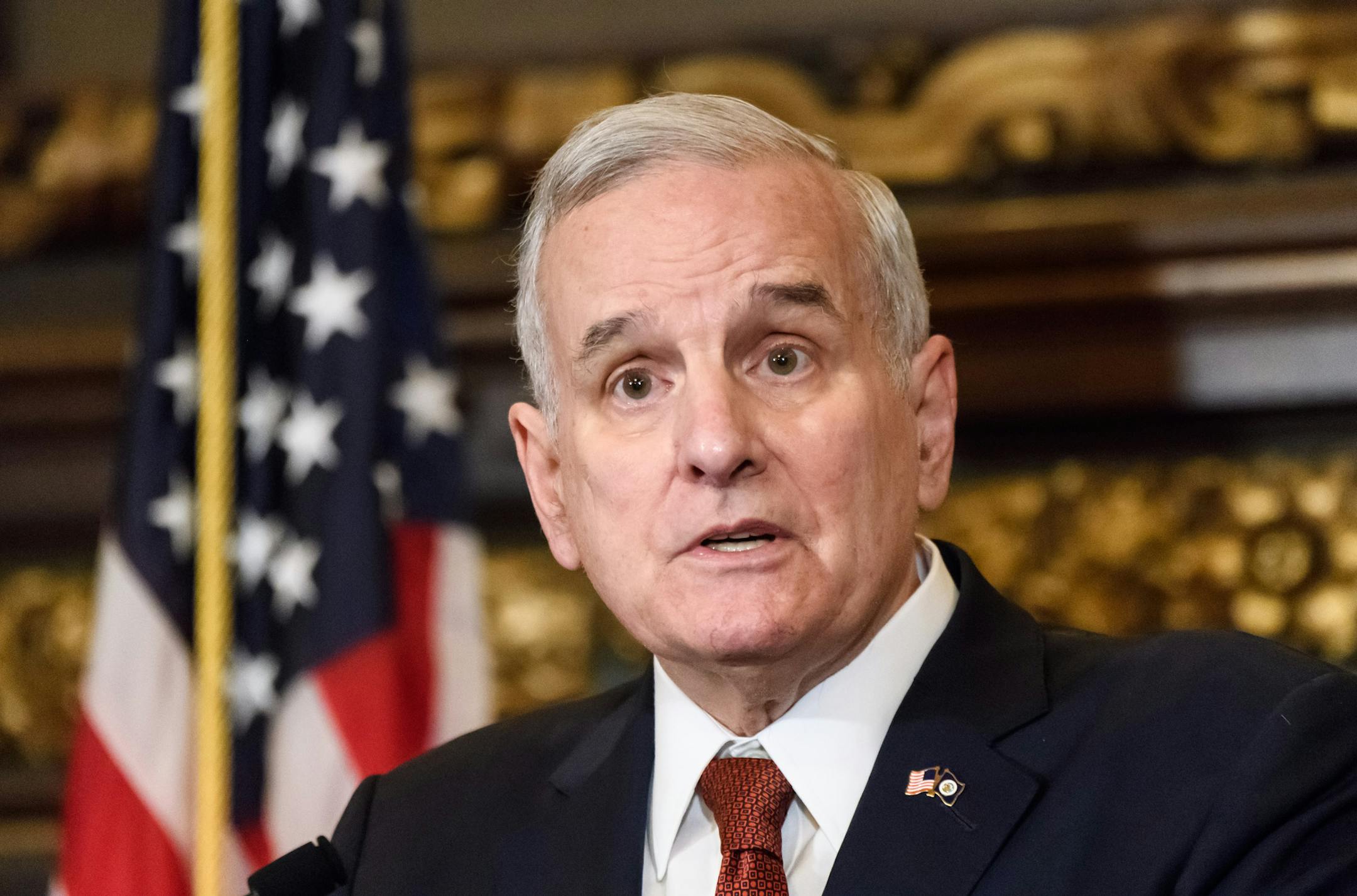
Gov. Mark Dayton has called for a work group led by officials from Minnesota AARP to improve state oversight of Minnesota's senior care facilities, his second response to a Star Tribune series chronicling breakdowns in the state's handling of elder abuse allegations.
The new work group will develop recommendations designed to protect the rights of about 85,000 Minnesotans in state-licensed homes for seniors, including changes to state law that would reduce the secrecy that often surrounds state abuse investigations.
The work group has a deadline of Jan. 26, 2018, before the 2018 Legislature convenes in late February.
"I am deeply concerned by recent reports of maltreatment, neglect, and abuse taking place in those businesses, which families have entrusted for the care of their loved ones," Dayton said in a written statement. "I believe the perspectives of seniors and their families should be at the center of the discussions."
The decision to put Minnesota AARP, a consumer group, at the head of the work group signals that Dayton is prepared to go outside an inner circle of industry representatives and state regulators for reform ideas. The work group will engage other consumer-oriented organizations, including Mid-Minnesota Legal Aid, the Alzheimer's Association of Minnesota, the Minnesota Elder Justice Center and the grass-roots Elder Voice Family Advocates.
The announcement came just two days after U.S. Sen. Amy Klobuchar called on the U.S. Department of Health and Human Services, the federal agency that regulates nursing homes, to take more aggressive action against criminal elder abuse. Klobuchar also asked the Government Accountability Office to review federal nursing home regulations and recommend changes to federal law that would better protect senior citizens from violent crimes and other forms of abuse.
State Sen. Karin Housley, chairwoman of the Senate Aging and Long-Term Care Policy Committee, last week called the thousands of uninvestigated incidents "an emergency situation" and is preparing a package of reforms to improve investigations and increase disclosure for families.
More than 25,000 complaints
The five-part Star Tribune series, published in mid-November, detailed chronic failures by facilities and state regulators to investigate and prosecute incidents of criminal abuse in senior care homes.


