

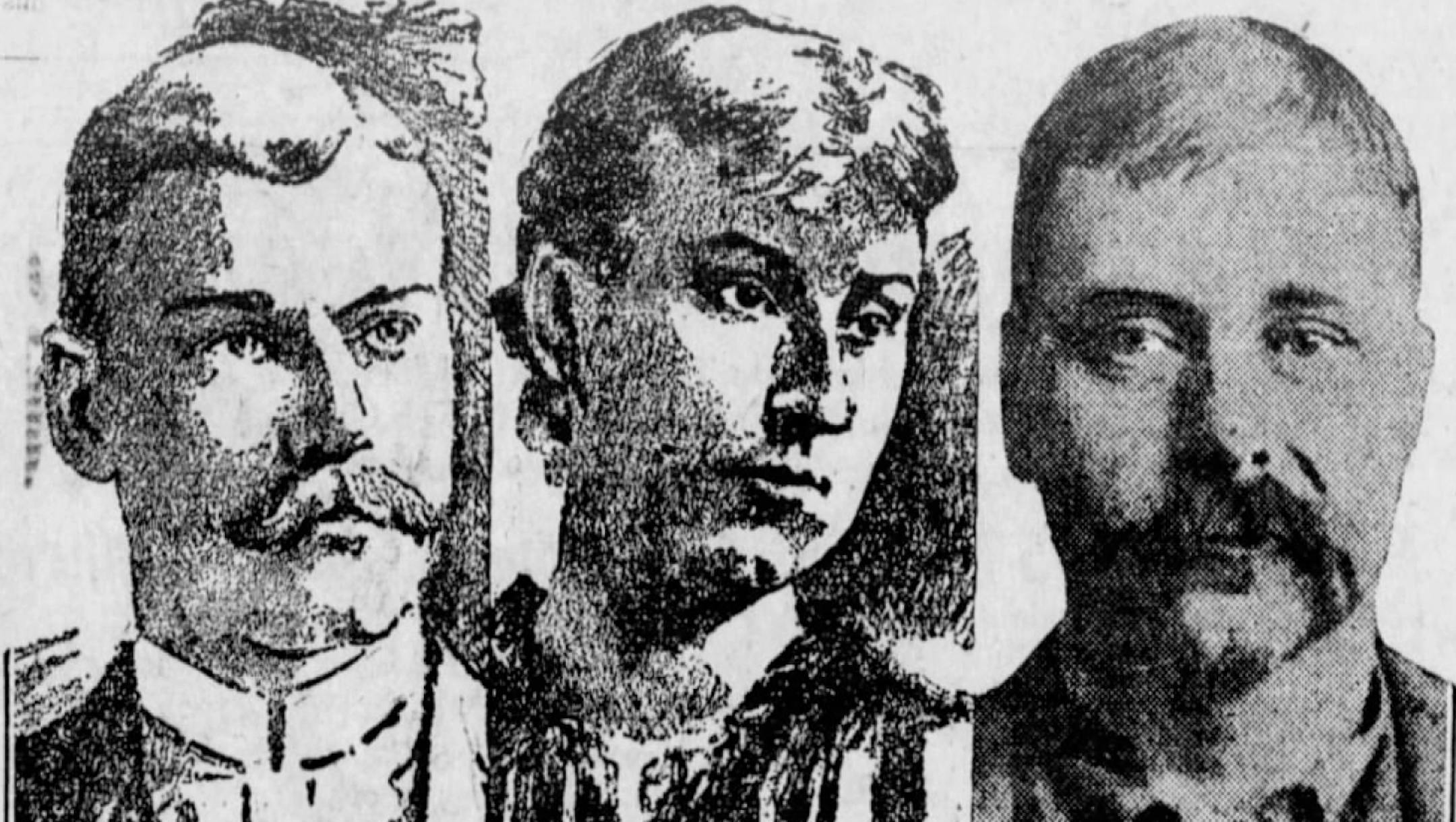
William Erhardt had just gotten off work handling baggage at the Soo Line train depot in downtown Minneapolis. About 8 p.m., the 21-year-old hopped on a streetcar, heading toward his family's home on the still-undeveloped northwestern shore of Lake Calhoun. It was Dec. 3, 1894.
"It was a sparkling cold night," Erhardt recalled six decades later, in 1955. "I can still see the dim figures of the skaters circling Calhoun, and the lights of the city back of them."
That picturesque scene was quickly shattered. A tan-colored horse charged toward him — pulling what appeared to be an empty buggy — just after Erhardt stepped off the streetcar for his walk home. Four years later, the posh Minikahda Country Club would rise nearby. But back then, Excelsior Boulevard was a rutted, narrow road.
A few steps later, Erhardt discovered a woman's body wrapped in an expensive sealskin coat. He assumed she'd been thrown from the buggy by the runaway horse. But rather than an accident, he'd stumbled upon what would become one of Minnesota's most notorious murder-for-hire cases. The coroner found a bullet hole in the back of the woman's skull by her right ear.
The horse, a buckskin named Lucy, galloped 4 miles back to the Palace livery stables. A worker there discovered a pool of clotted blood on the buggy seat and told police the carriage had been rented to a woman named Katherine Ging. Just 29, with curly black hair and gray eyes, she'd moved from New York to make hats and dresses for well-heeled women of Minneapolis at her upscale dress shop on Nicollet Avenue. Her friends and customers called her Kitty.
She lived at a new five-story red brick apartment building, the Ozark Flats, which still stands on the corner of Hennepin Avenue and 13th Street. So did Harry Hayward, the building owner's ne'er-do-well son — a gambler with ties to counterfeiters.
The two had dated, but "rumor was that he was more infatuated with her than she with him," Peg Meier wrote in this newspaper in 1994 on the murder's 100th anniversary.
Described as tall, trim, with broad shoulders and bold eyes, Hayward had an alibi. He returned home a little after 11 p.m. that night after escorting a well-to-do woman to the Grand Opera House, where several people had seen him attending a performance of "A Trip to Chinatown."


