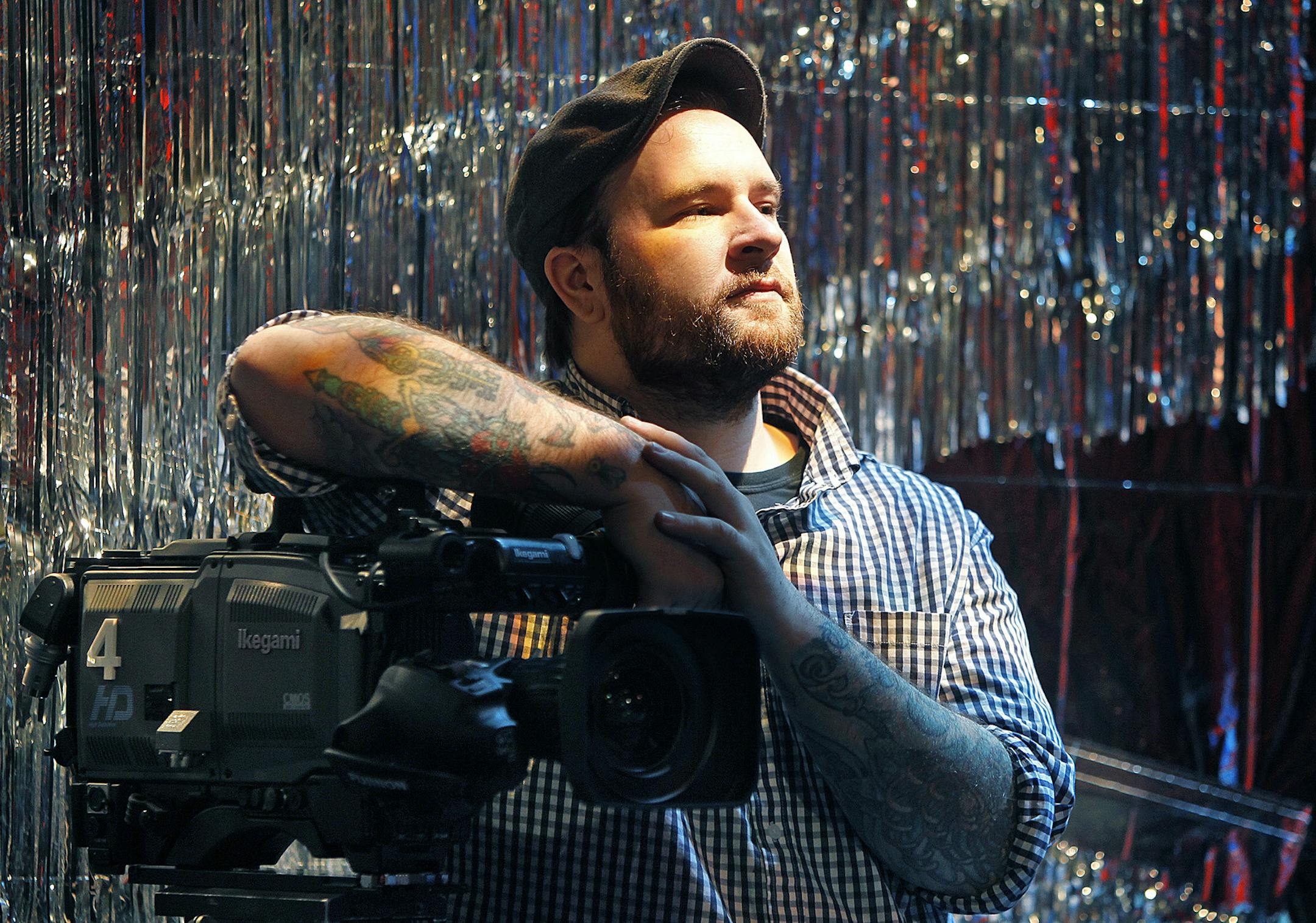
He flew to Paris in November to shoot a video with Swedish pop star Robyn. He's in Haiti this week documenting the charity efforts of Artists for Peace & Justice for folks like Ben Stiller and director Paul Haggis.
When we caught up with Dan Huiting a few weeks ago, though, the Minneapolis videographer was about to head to a far less exotic locale, Detroit Lakes, Minn., to work with a far less famous artist, Caroline Smith — and he sounded excited about that, too.
"Caroline is from Detroit Lakes, so it's a big deal to her," Huiting said.
To local musicians like Smith, just working with Huiting has become a big deal. The 32-year-old Twin Cities native has almost single-handedly made music videos a viable art form again for bands from the Upper Midwest. His work has ranged from elegant, high-art mini-movies with Bon Iver and Cloud Cult to electrifying live footage with P.O.S. and Trampled by Turtles to a couple of seedy, bath-inducing clips with Prof and Spyder Baybie.
A lot of his work has been traditional MTV-style videos, but Huiting also has a growing number of impressive music clips filmed for his full-time employer TPT (Twin Cities Public Television), which recently launched an aspiring new "Austin City Limits"-style series called "The Lowertown Line" under his visual direction. He also has done a lot of work of late for the internationally viewed Pitchfork.tv, an offshoot of big-kahuna music blogger site Pitchfork.com. The latter gig is what got him to Paris with Robyn, and afforded him the chance to spend full days shooting the likes of Father John Misty, Toro y Moi and Tallest Man on Earth.
Not bad for a guy whose first real videographer job was shooting First Ave's Best New Bands of 2009 showcase for Mpls.tv and City Pages.
From the videographer's aw-shucks perspective, the reason local bands are thinking visual again has less to do with his own budding talent, and more to do with growing technology.
"You can film much higher-quality video on cheaper cameras nowadays, it has made it a lot more affordable for bands to fund it themselves," he said, citing $3,000 as a good starting point for a video budget. And thanks to the music world becoming more and more centered around the web, he said, it's pretty much a requirement to make a video.