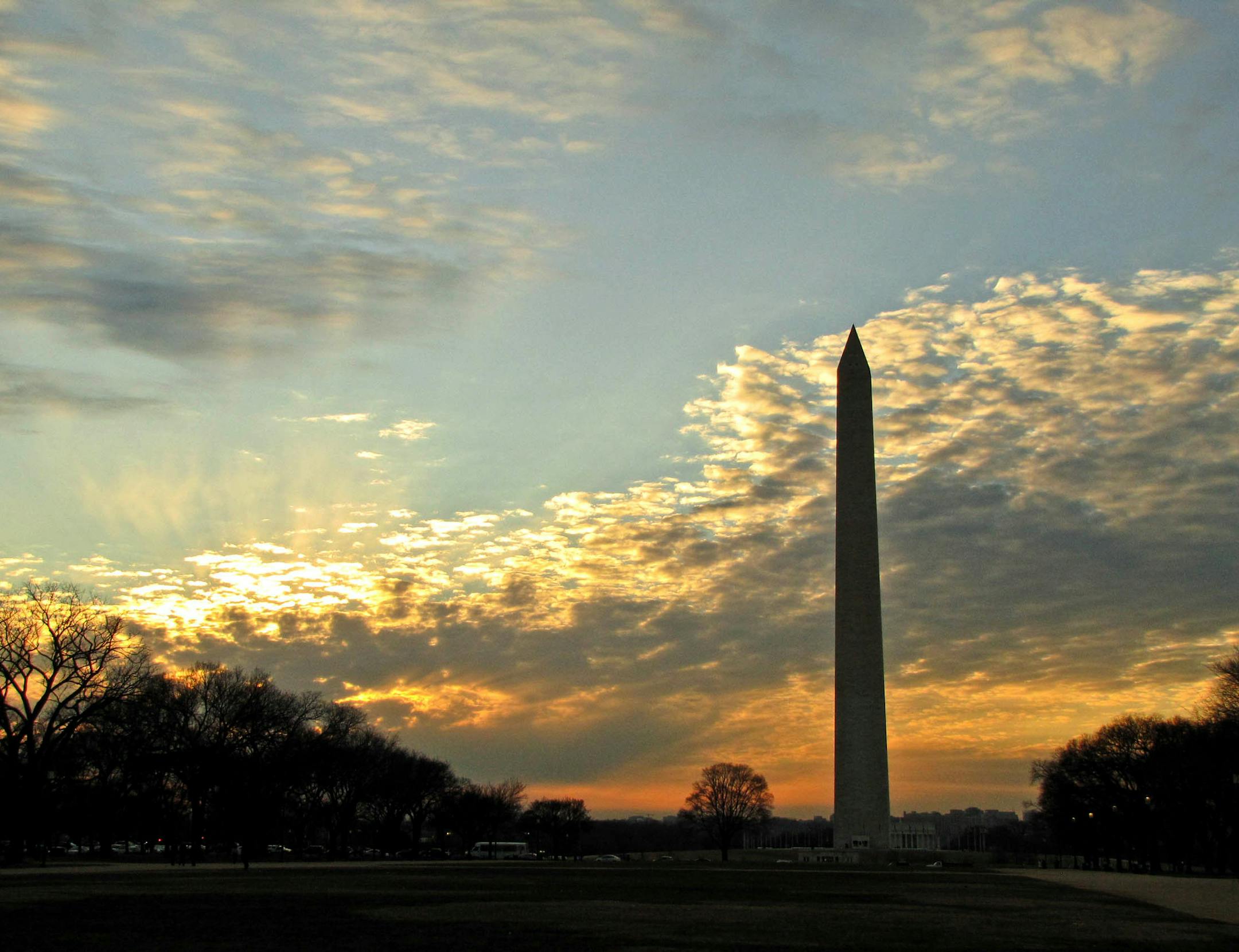
A chilly breeze whips around the base of the Washington Monument, causing the Revolutionary War soldier patrolling the grounds to pull his blue wool coat more tightly around his shoulders. The sun is out in full force, though, a perfect day for photos. I snap a few close-ups of the soldier, in period costume because it's Presidents' Day, then back up to scout out the best angle to capture the towering white obelisk. As I do so, I stumble into a squat metal post bearing a sign: "Peak Season is Memorial Day through Labor Day. Line up 1-2 hours before ticket window opens at 8:30 a.m." A chuckle slips from my lips.
There are no crowds anywhere today in Washington, D.C. No throngs of tourists jostling for position in ticket lines, no people elbowing each other to get a better glimpse of the Hope Diamond or Dorothy Gale's ruby slippers, no clump of anxious parents fighting to ensure their child is the next one to stand by the soldier over yonder for that oh-so-perfect shot in front of the Washington Monument.
And there's certainly no need to arrive here at dawn's early light just for the privilege of waiting in line for the ticket booth to open.
My brother was one of those who stood in this very spot for two hours early one steamy July morning, just to nab four tickets stamped with a midafternoon entry time. Smiling at the thought, and of how I'm going to rub it in to him later, I saunter up to the counter — there's not a single person in line at 11 a.m. — and purchase two tickets that allow us immediate entry.
Washington, D.C., is one of America's most popular tourist destinations, with 20.2 million visitors in 2014, a record high. The vast majority of leisure travelers stop in between mid-March (the start of the popular National Cherry Blossom Festival) and the end of July. My husband and I haven't planned this offseason trip with the intent of avoiding D.C.'s crowds. Our younger daughter needed some assistance moving to town in early February, so we decide to stick around after she's settled in to check out our nation's capital. What we quickly discover, everywhere we go, is a peaceful aura and lack of frenzy that allows history buffs like ourselves to thoroughly take in every attraction at a pleasurable, leisurely pace.
Unintended private tours
It all begins at Mount Vernon, George Washington's estate. Visitors use a timed ticketing system to sign up for the popular 25-minute tour of Washington's mansion; generally, their tour time will be later in the day. We are able to immediately join the next tour of George's abode. Outside, we snap photos without having to wait for people to step out of the way. The only time we have to pause — for about two minutes — is when a small group of international students clusters in front of George and Martha's tomb. Before we leave, we take a good look at George's false teeth on display in the complex's nearly empty Education Center. (They're rather unsightly, and are made of human and cow teeth, plus elephant ivory — ick!)
Melissa Wood, Mount Vernon spokesman, encourages offseason visitors to take advantage of the attraction's special activities, such as "Meet Martha Washington." "In April, you will be seated in a crowded theater listening to her speak," she says. "In the offseason, many guests are known to have one-on-ones with our Martha Washington, which they always note is the highlight to their visit."
At the Holocaust Museum, and at several of the Smithsonian museums on the National Mall, we have similar experiences. The National Museum of American History had 4 million visitors in 2014, most of whom likely stopped at the Star-Spangled Banner, one of the museum's top five favorite exhibits. Usually the wait is no more than 15 minute to view the wool-and-cotton flag that fluttered over Fort McHenry and inspired Francis Scott Key to pen the words that would become our national anthem. Not bad at all. But it's still nice when we're able to walk right up to the famous flag, plus linger without worrying about spending too much time looking at others' expense.