

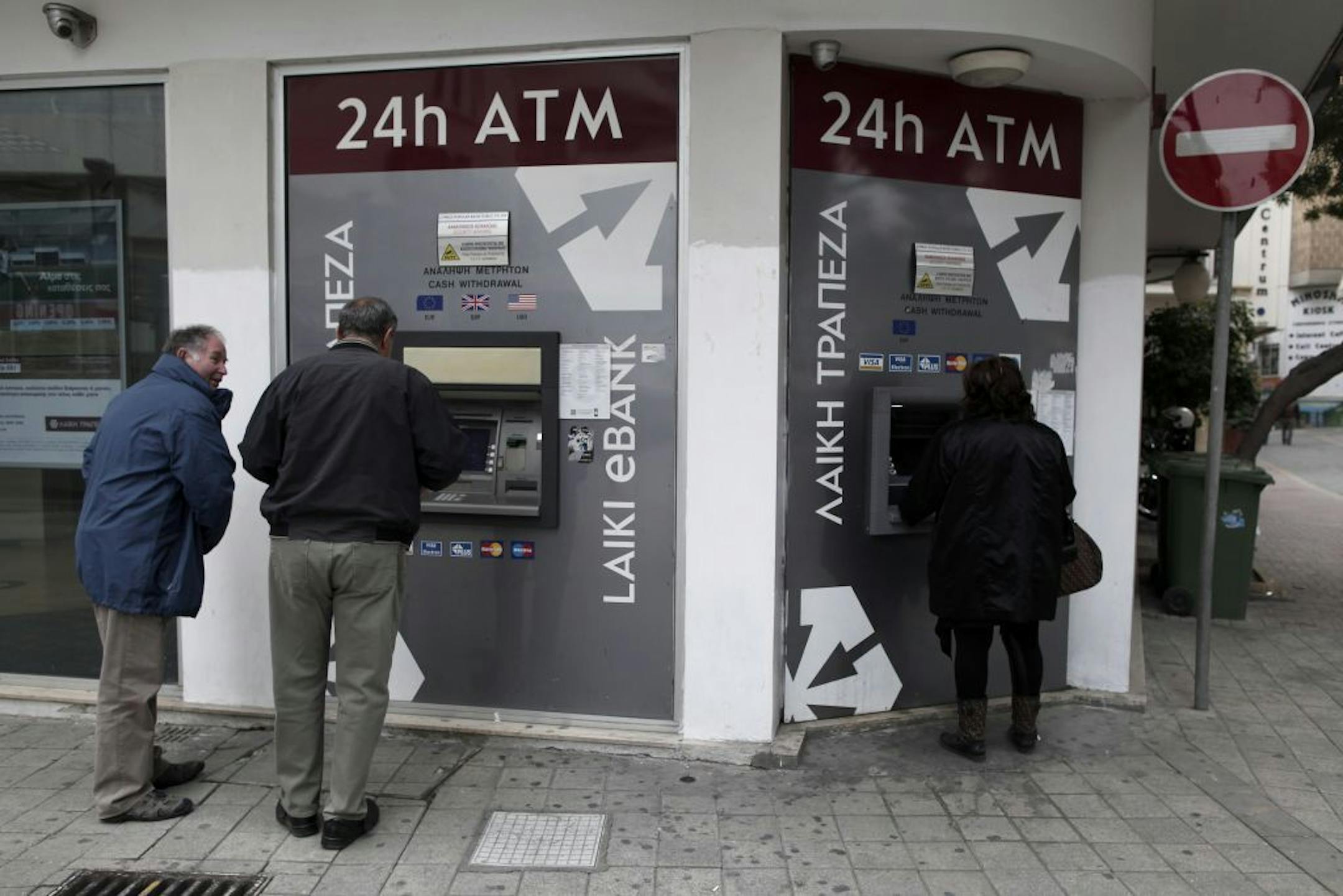
NICOSIA, Cyprus - The Cypriot government and the country's central bank were working Wednesday on an alternative proposal to stave off bankruptcy, a day after Parliament rejected an initial plan to raise billions of euros by seizing up to 10 percent of people's bank savings.
Tuesday's decisive rejection of the plan to take a slice of all deposits above 20,000 euros has left the country's bailout in question and fueled fears that the Cypriot economy is on the cusp of bankruptcy — and could potentially have to leave the euro.
That scenario that could roil global financial markets as well as endanger deposits in the country even further.
Government spokesman Christos Stylianides said a meeting was underway at the central bank to discuss an alternative plan for raising funds, but also for reducing the 5.8 billion euros ($7.5 billion) that must be found domestically.
President Nicos Anastasiades was also meeting with the representatives of his country's potential creditors — the International Monetary Fund, European Central Bank and European Commission. The three, collectively known as the troika, must sign off on any Plan B the Cypriots come up with if it is to be approved as part of the bailout.
Under the initial plan conceived in Brussels last weekend, other eurozone countries and the IMF would give Cyprus 10 billion euros in rescue loans if the country raised 5.8 billion euros through a bank deposit seizure.
The bank's deputy governor, Spyros Stavrinakis, said no decision had been taken on when banks, which have been shut since the weekend, would reopen, and that a new plan has not yet been presented to the country's euro partners and IMF.
The banks remained shut for the third day running to avoid a bank run, and there are growing expectations they may not reopen until next week — certainly not until Cypriot authorities come up with a credible financial package that has the troika's blessing.


