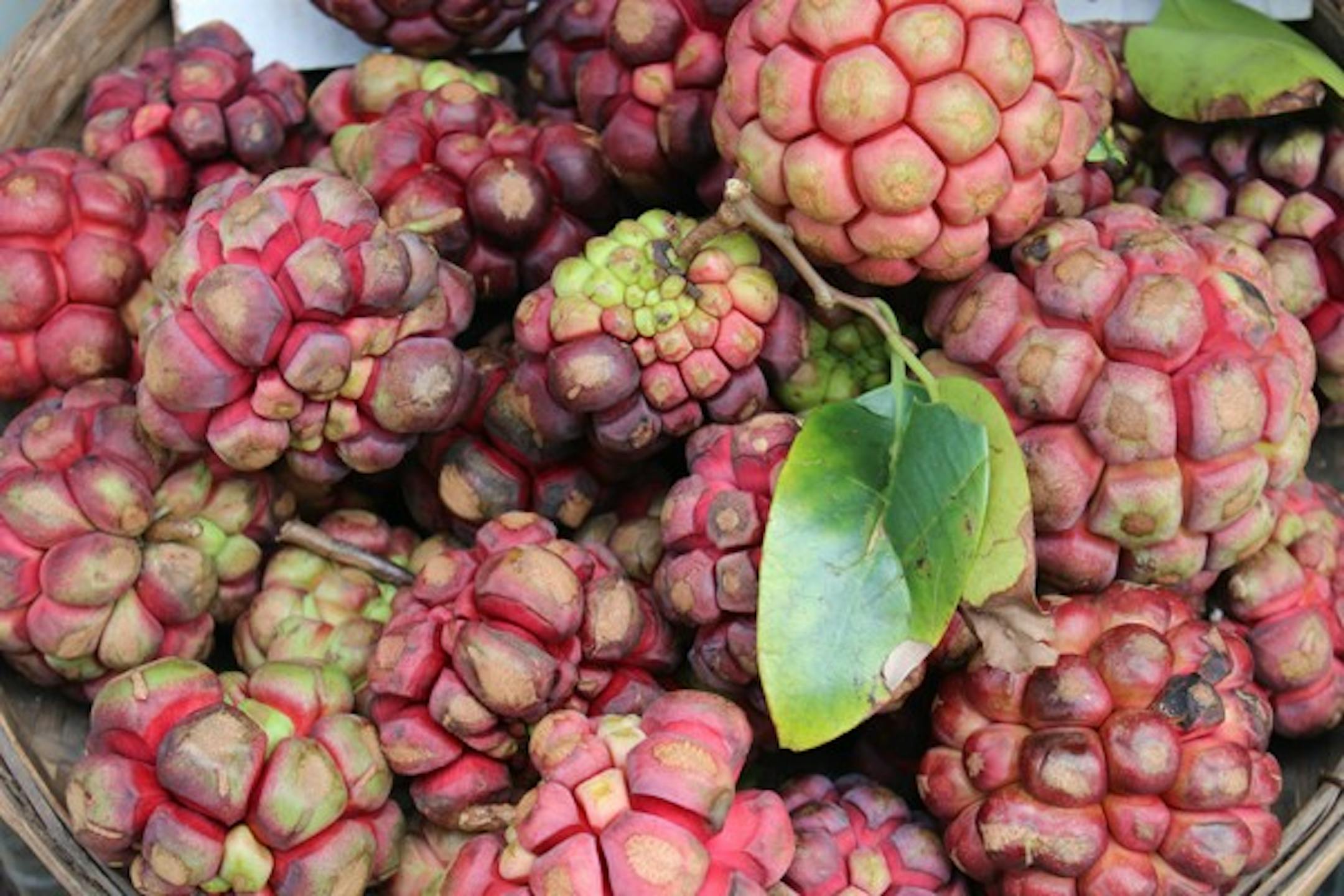
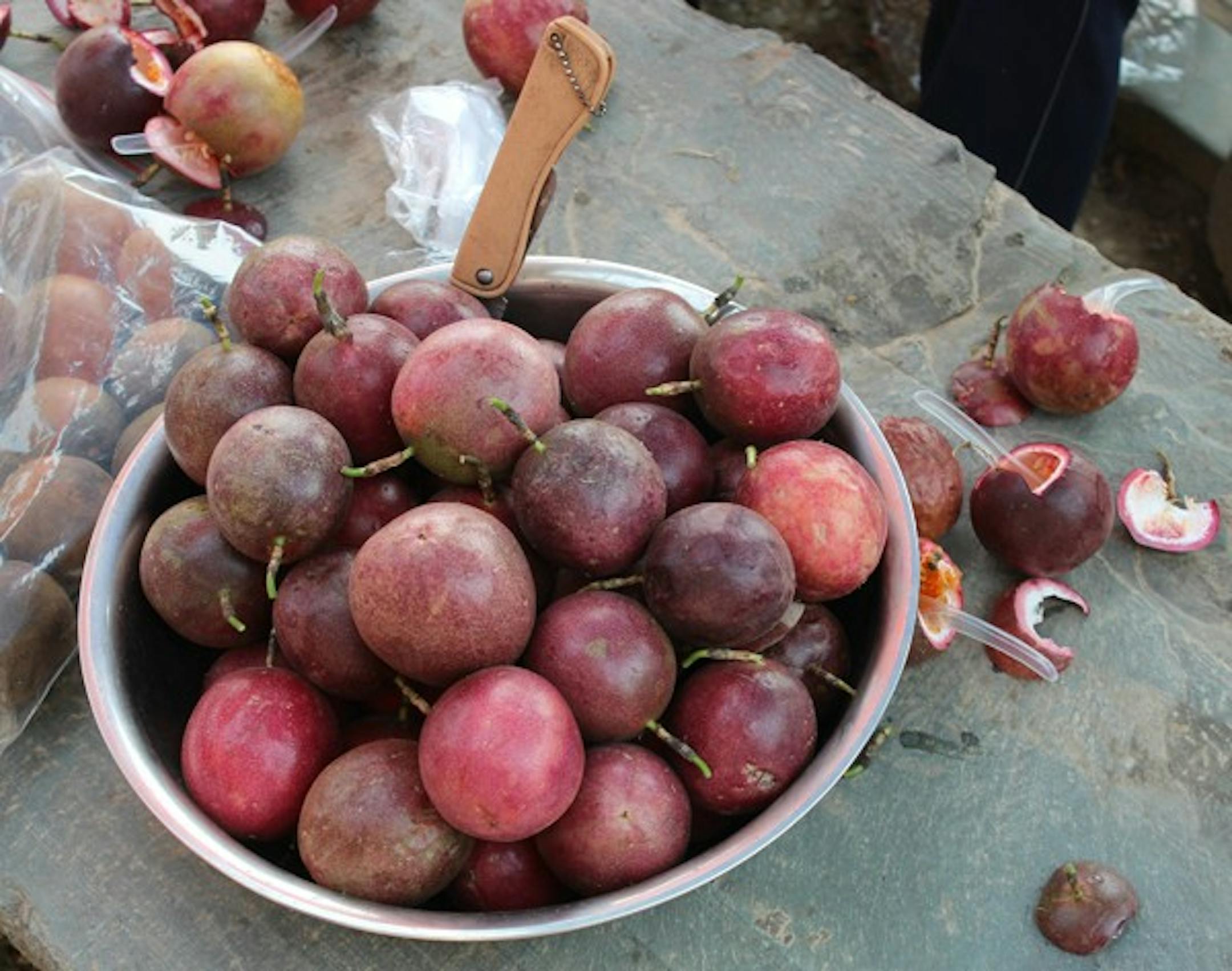
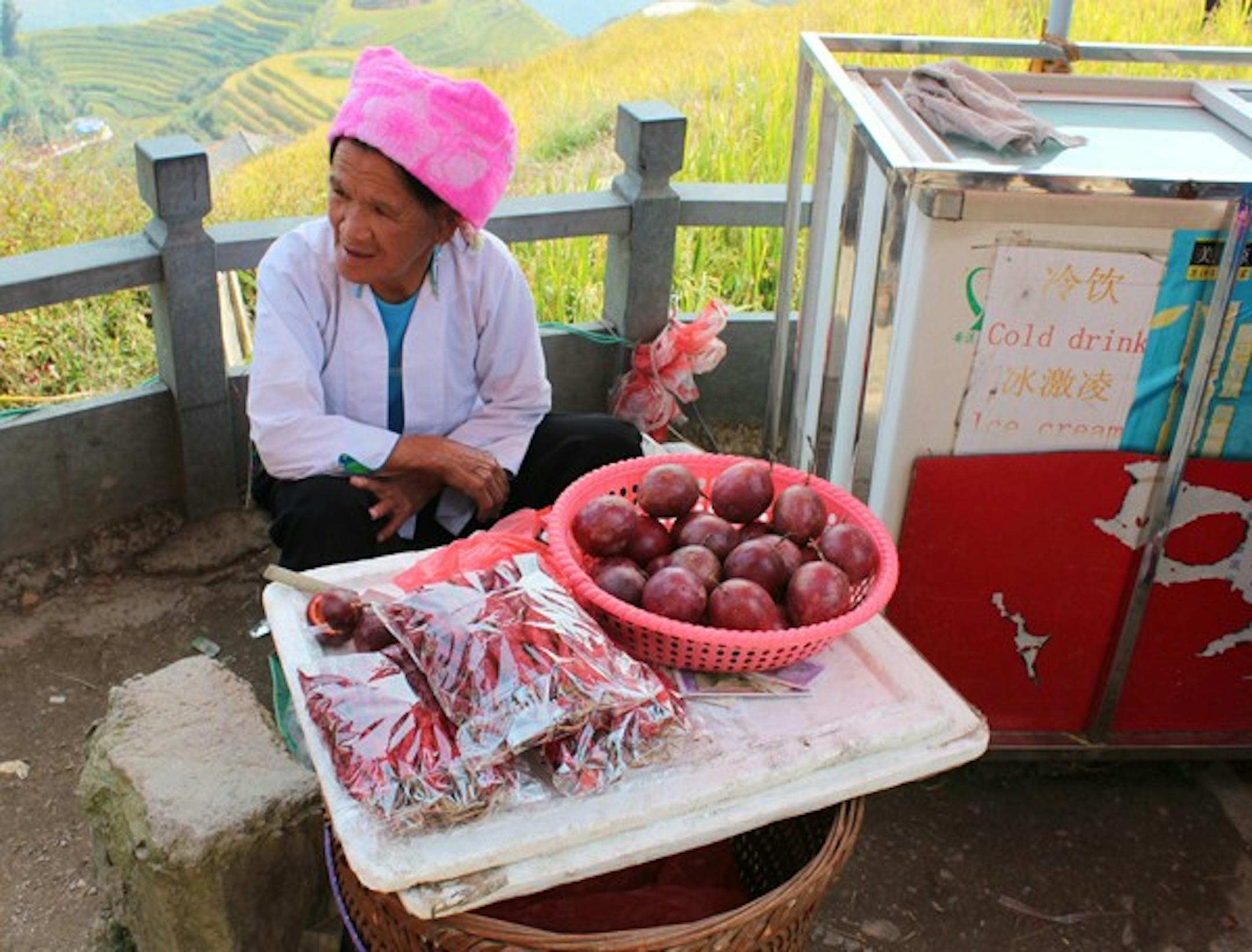
Unlike "banana," "apple," and the inexplicable "apple with a banana flavor" my first Chinese textbook insisted was real (as best as I can tell, it's not), none of these fruits were a part of my beginning language classes. If I'd ever heard of them before, their names were nothing but bright abstractions conjuring islands, unfamiliar trees, hot suns. I learned to parrot the Chinese words for a series of fruits never real to me outside of Asia, in some cases later matching them with English names like "pommelo" or "red bayberry" or some other unfamiliar label (unrecognized by my version of Microsoft Word) that didn't help explain to my father what it was I was waving in the corner of his computer screen.
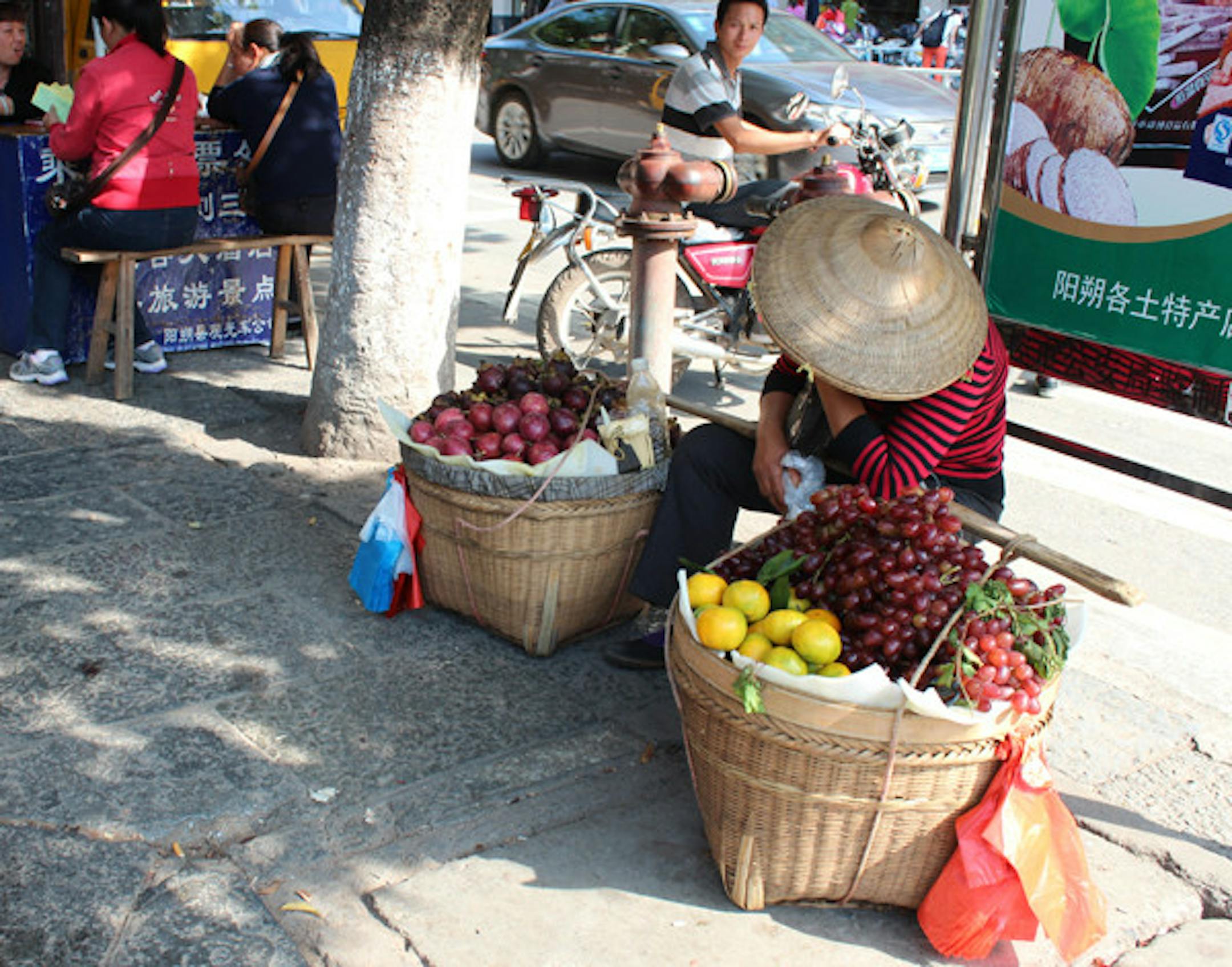
These fruits are an interesting study of the connection between object and language. Often, the language in which something is first known becomes the default, as though that thing is more firmly entwined with its name in that language, that Chinese is its true name and English a paltry shadow, or English tied to its essence and Chinese a clumsy affixation. Sometimes it's a matter of ease. Pommelo in Chinese has two syllables, 柚子youzi, and that becomes the name everyone around me calls it by, even in the midst of all-English conversations.
Having learned to categorize Clementines and Mandarins and Navels as "oranges" in the broad sense, I struggle in Chinese to make distinctions between fruits that all look like they belong to that family but are apparently strictly separated based on some invisible logic - small greenish globes with orange-like interiors; larger yellow-orange fruits also sectioned into slices sealed in semi-transparent white; palm-sized spheres slightly flat at the ends and easy to peel. They might be 橙子chengzi, 柑子 ganzi, 柑橘 ganju, or 橘子 juzi. No broader category of "orange" to sweep them all into. I'm still not wholly confident I have that one sorted out. Vendors are puzzled if I approach asking how much the chengzi cost while pointing at something that clearly belongs in the juzi category.
Names are the beginning. Learning to properly label a fruit is part one of the challenge that continues with finding out how to know when it is ripe and how to eat it, tasks that seem deceptively easy. It should be basic: peel, and eat, or don't peel and just eat, but even choosing which of those two methods to follow can be a decision fraught with uncertainty.
Mangosteen
With its fuchsia rind, this sweltering tropical fruit is the only one to ever rival my love for the wild raspberry.
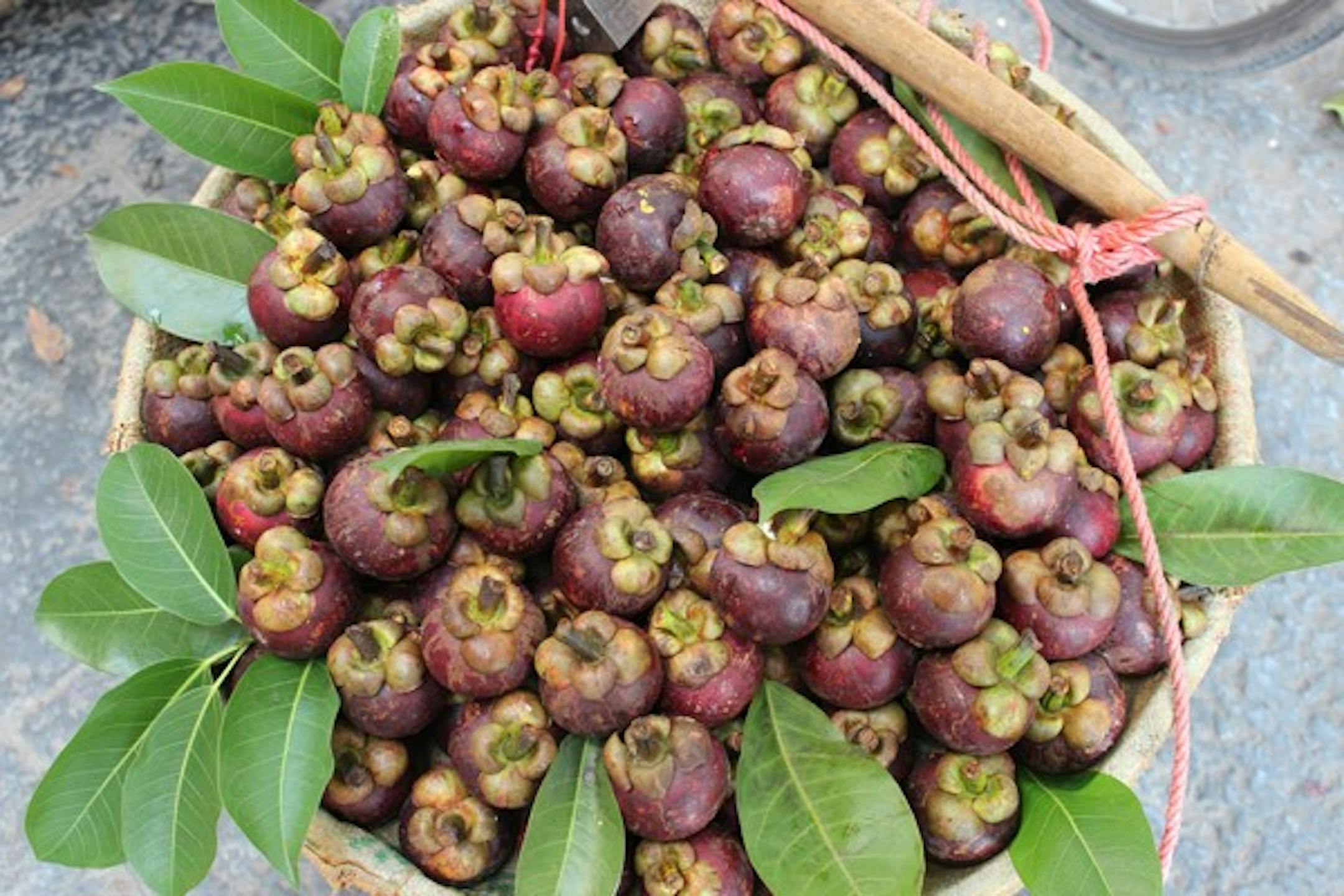
Those tiny orbs were long banned from the U.S., and once imports began to trickle through in 2007, they would sell for fortunes a pound in upscale East Coast groceries.
The woman who would become one of the best friends China ever brought me introduced me to the mangosteen in the warmer months of 2012. Mountains of those dark magenta spheres were tumbling out the front of fruit stands lining the streets we walked toward our favorite coffee-shop haunts. She had spent part of her childhood in Sri Lanka and knew far more about how to choose and eat the fruits stacked in piles in Beijing's bustling produce markets than I had learned growing up in Minnesota. It was summer in northern China. There were almost no blueberries, few strawberries, and not a raspberry for miles.