For a long time I ignored the cruise ship fliers that packed my mailbox, because they triggered a vague sense of dread. This had everything to do with the last ship I had boarded, years before, when I decided to delay my return home from a college semester abroad by booking a last-minute cabin on a meandering euro cruise. Clearly I hadn't thought things through.
At the time I had a big head of unkempt hair, really more hair than anyone needs, and while that had proved popular in London, my fellow cruisers were more ambivalent. When I showed up to my assigned seating in the formal dining hall at the epic round table my first night at sea, my table-mates, decked out in sparkly cocktail dresses and ship-ahoy blazers, seemed congenial enough. When I showed up for dinner the second night, though, I sat down to an empty table. "They all switched seats," my lone waiter said, eyeing my hair nervously.
Though the sense of rejection stung a bit, it wasn't any worse than the freakish parade of dishes that landed on that table in the course of the week, a buffet that veered between the arcane and inexplicable. There was lots of poached fish with bloodshot maraschino cherry eyes, and chewy dinner rolls, and vats of wild rice. Only the old-school fancy food desserts salvaged things: the drama of the flaming crêpes suzette; the mystery of the baked Alaska, which I pictured as a chunk of flambéed tundra when I first saw it listed on the menu.
The twin trauma of abandonment and bad food, though, wasn't enough to dissuade me from boarding a cruise ship again a few years ago. I was drawn by word that cruising had undergone a sea change, and my rebound voyage on a Crystal cruise proved it. Forget indifferent dining and limp buffets. Finally recognizing the lure of serious food, cruise lines were cooking up something edible. On the Crystal cruise, the revolution translated into an eclectic range of dynamic, open-seating restaurants, including a top-form Nobu, and enough cooking panels and demos to satisfy a fresh generation of savvy, foodcentric travelers.
Cruising's culinary revolution
Trends evolve at an accelerated pace these days, and the second wave of the great cruising culinary revolution is already upon us. The most recently inaugurated fleet of ships aren't content to simply dish up a few top chefs and some serious restaurants. Morphing into floating master classes in all things foodie — a kind of full-scale gastronomic immersion — the newest ships offer everything from state of the art demo kitchens and an entire boatload of global dining rooms to culinary-themed port-of-call excursions that wind through local spice markets and regional kitchens.
The Oceania Cruises' Riviera ship — tellingly christened in 2012 by chef Cat Cora, the ship's official godmother — may be the best emblem of this shift in cruising, and was reason enough to sign up for my third cruise. Designed to offer a curated gastronomic adventure, the ship seems to think big. I could see that my initial night on board, when I joined a fall Mediterranean sailing that meandered from Istanbul through the Greek islands on its way to Italy. After surveying the midsize ship's glossy interiors, I had to decide where to eat first. On Riviera, that takes time because the range of dining rooms includes (take a deep breath): the Grand Dining Room; the Italian-themed Toscana; the Polo Grill steakhouse; the pan-Asian Red Ginger; the Terrace Café buffet; the Waves Grill, and the French brasserie Jacques, overseen by uber-haute chef Jacques Pepin and the first restaurant to ever bear his name.
Deciding to start light, I opted for Red Ginger, and the restaurant offered its own immediate lesson. This wasn't some glib sushi-to-satay afterthought. The dining room itself was a coherent, understated sweep of black lacquer and red Buddha heads, and everything I sampled was a study in authenticity, from a plate of caramelized tiger prawns tossed with chili, garlic and scallions to a velvety miso-glazed sea bass and a red curry thick with chicken, Thai eggplant and lime leaves.
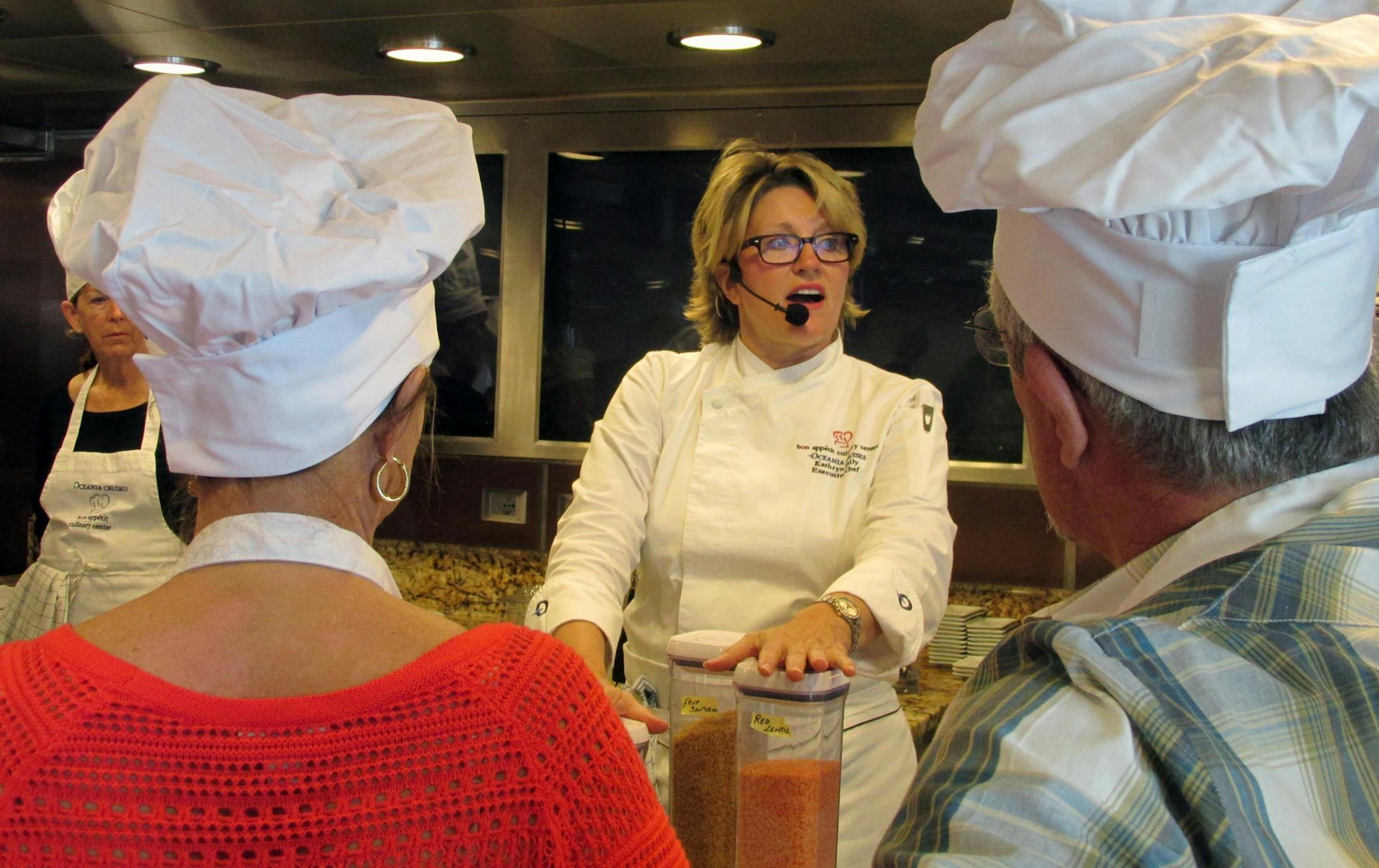
The Riviera's sheer dogged culinary dedication was even more apparent the next day when I joined the cooking class led by Kathryn Kelly. A graduate of the Culinary Institute of America, Kelly initially agreed to devote three months to helping set up the Oceania's cooking schools. "Three years later," she tells me, "I'm still here."