1:33
1:33Despite the double whammy of a soaked spring and parched summer, Minnesota farmers are likely to pull off a reasonable crop this year.
The corn harvest could be a winner on par with last year's, though results will vary, particularly in southeastern Minnesota, which never recovered from a punishing May snowfall that nixed a lot of planting.
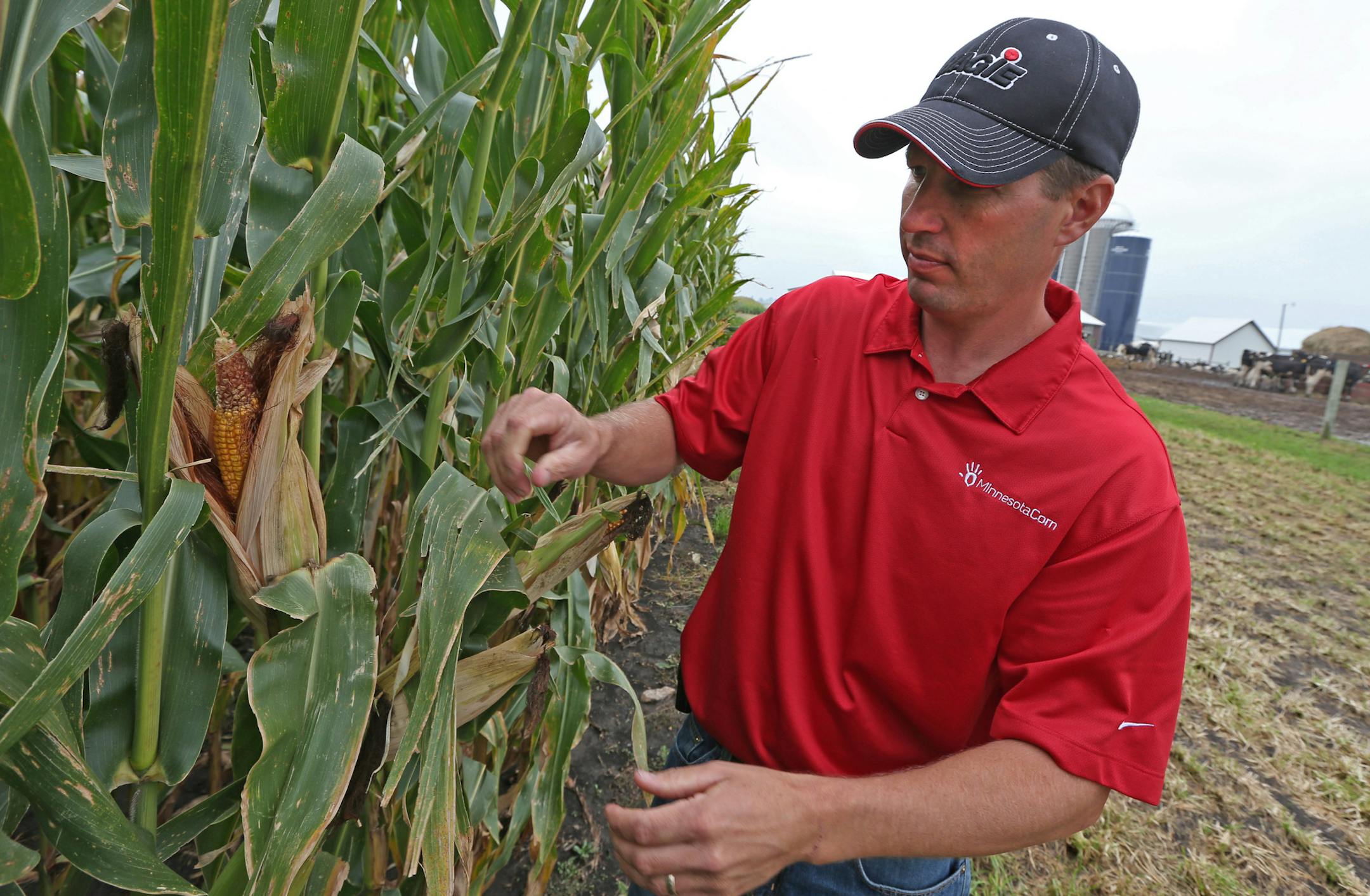
"The corn yield looks like it will be close to last year, but there will be a lot of variation," said David Nicolai, a University of Minnesota Extension crop educator in Farmington. "It will be a case where average yields look good, but county by county, field by field, this will be a year of variability."
As for soybeans, Minnesota's second-largest crop after corn, a particularly arid August is likely to put a dent in farmers' haul.
Fall is here and the harvest of corn and soybeans is just around the corner. Minnesota is among the nation's top five producers of both corn and soybeans, and the health of both crops is important to rural economies through much of the state.
Many Minnesota farmers started the year on an ominous note as wet, cold weather delayed planting. By May 1, virtually no corn was in the ground, though farmers by then normally would have at least a third of their crop seeded. Southeastern counties — Mower, Freeborn, Dodge, Steele, Olmsted — were worst hit, federal crop insurance data show.
The snow was on the ground so long that many farmers never got their whole crop in. "We are roughly half planted," Dan Erickson, a farmer in Alden west of Albert Lea, said of his corn crop. "My dad [who is also a farmer] said he's never seen anything like it in 45 years."
Erickson said the situation is similar in other southeastern counties he covers as a regional representative for the Minnesota Corn Growers Association. Federal crop insurance will cover part of the farmers' weather-related losses. And Erickson said that at least some of the corn he and others actually planted looks good right now.