

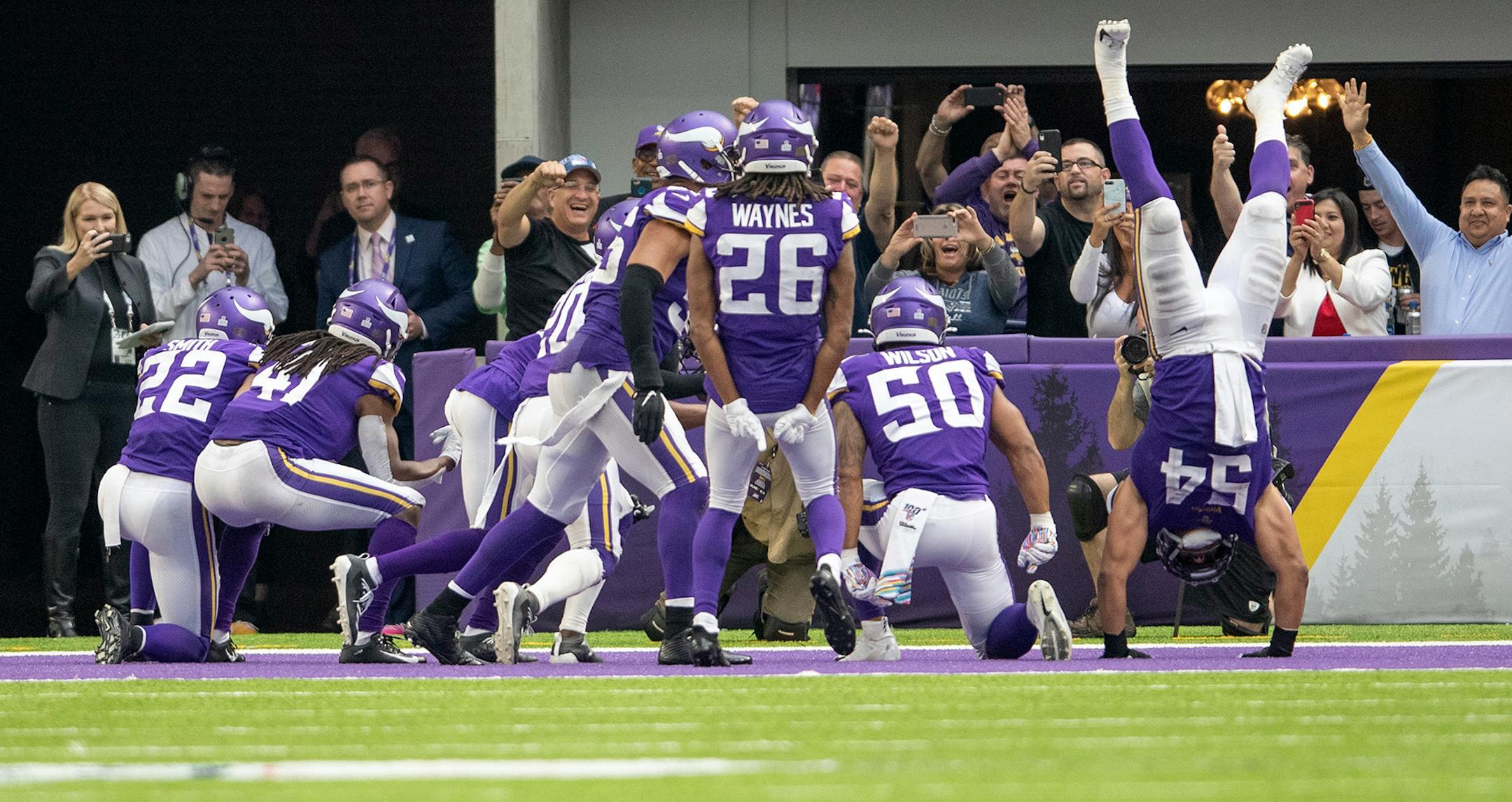
The Vikings franchise is too often a derailed train veering into a dumpster fire. For decades, the Vikings have made "crisis management" an oxymoron.
Even during the relatively successful tenure of Rick Spielman and Mike Zimmer, the team has dealt with internal dramas and external embarrassments, and external dramas and internal embarrassments.
Just this summer, Zimmer and Spielman did all they could to muddle their kicking and punting competitions before finally landing on the solution that most teams begin with: Give the jobs to quality veterans on one-year contracts and spend your time and assets on something else.
But let's give credit where it is due to a franchise that might have been overdue, in terms of making the best of a bad situation. The Vikings faced a crisis two weeks ago. They have not only survived, but they also appear to have righted themselves. They might have even set themselves up for a remarkable season.
The Vikings enter Sunday's game in Detroit with the third-highest point differential in the NFL, behind only New England and San Francisco. They are 4-2, tied for the fifth-best record in the NFL. Their only losses were at Green Bay and Chicago, two strong teams with pronounced home-field advantages.
If the Vikings win Sunday, given that they play woeful Washington on Thursday, they should soon be 6-2.
Two weeks ago, they looked like a bad reality show. Their offense malfunctioned in Chicago, and quarterback Kirk Cousins looked helpless. He then apologized to one star receiver (Adam Thielen) while another (Stefon Diggs) skipped work and posted inscrutable messages on social media.
This drama had all of the markings of a sports disaster. The Vikings' roster is built to win now, and three of the team's most important and expensive players were conducting a relationship workshop, with one occasionally recusing himself. The team was 2-2, and both losses could be blamed on the $84 million quarterback, who was reviving every criticism ever levied at him.


