

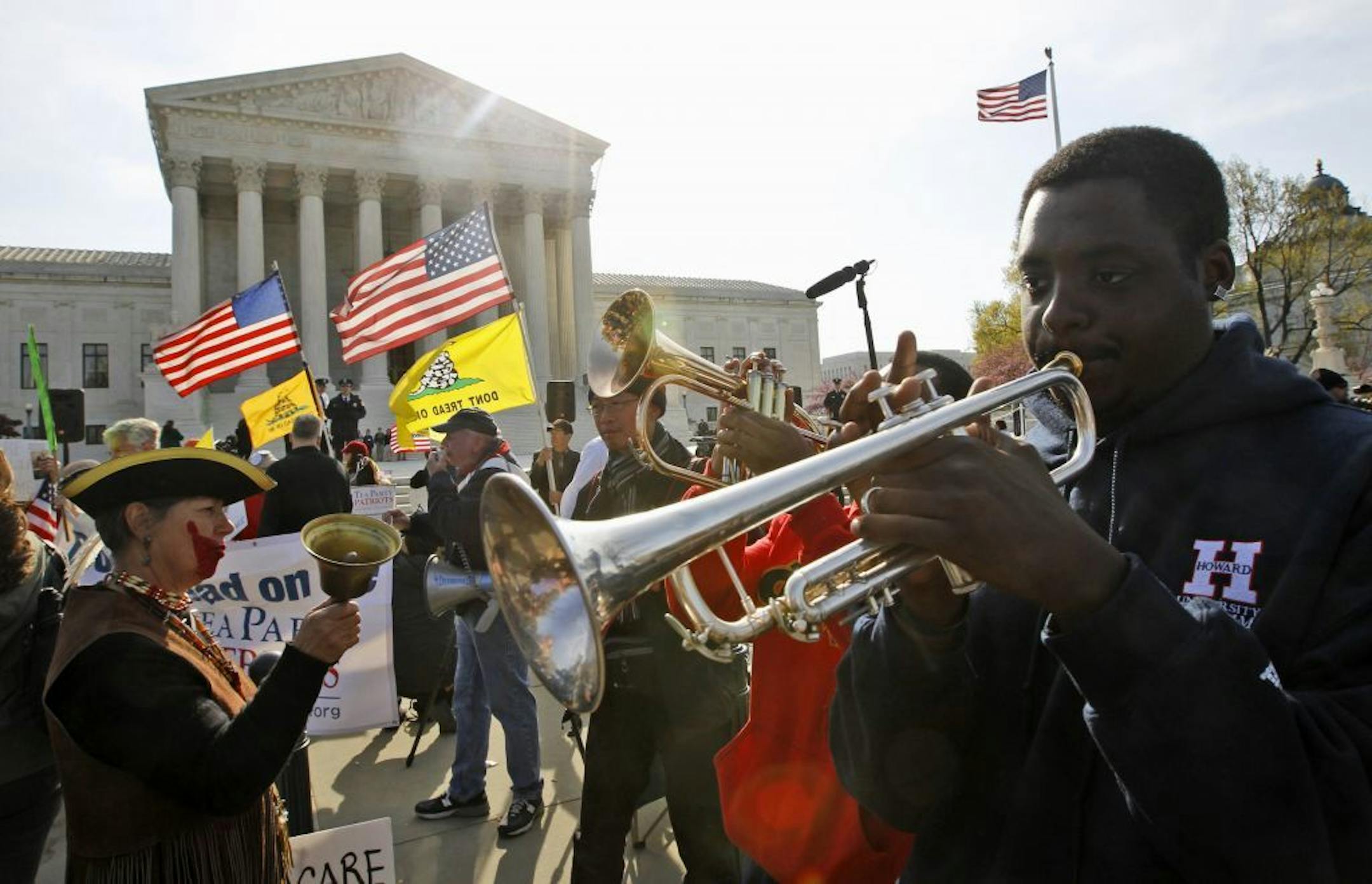
WASHINGTON - The Supreme Court closed an extraordinary three-day review of President Obama's health care law Wednesday with its conservative majority signaling that it may be on the brink of a major redefinition of the federal government's power.
Justices on the right of the deeply divided court appear at least open to declaring the heart of the overhaul unconstitutional, voiding the rest of the 2,700-page law and even scrapping the underpinnings of Medicaid, a federal-state partnership that has existed for nearly 50 years.
Much can happen between now and the expected ruling, and a far more moderate tone may emerge. But Solicitor General Donald Verrilli closed more than six hours of questioning by making an unusual and emotional plea to the justices for restraint. He asked them to respect Congress' judgment rather than insert themselves into a partisan battle that has roiled the political landscape since the law was passed in 2010.
"The Congress struggled with the issue of how to deal with this profound problem of 40 million people without health care for many years," he said. "Maybe they were right, maybe they weren't, but this is something about which the people of the United States can deliberate and they can vote, and if they think it needs to be changed, they can change it."
Verrilli made a direct appeal to Justice Anthony Kennedy, who is considered pivotal because he is the conservative most often willing to side with the court's liberal bloc. On Tuesday, Kennedy said he worried that the law's mandate that almost every American either secure health insurance or pay a penalty undermines personal liberty.
Verrilli spoke about "millions of people with chronic conditions like diabetes and heart disease" who would be "unshackled" from their conditions and about families who would be freed from financial harm caused by high medical costs. The law will help ensure that they "have the opportunity to enjoy the blessings of liberty," he said.
Paul Clement, representing Florida and 25 other states objecting to the law, said, "It's a very funny conception of liberty that forces somebody to purchase an insurance policy whether they want it or not."
The examination of the Patient Protection and Affordable Care Act was unlike any the court has conducted in decades. It has been nearly 50 years since justices have devoted so much time to a subject.

