

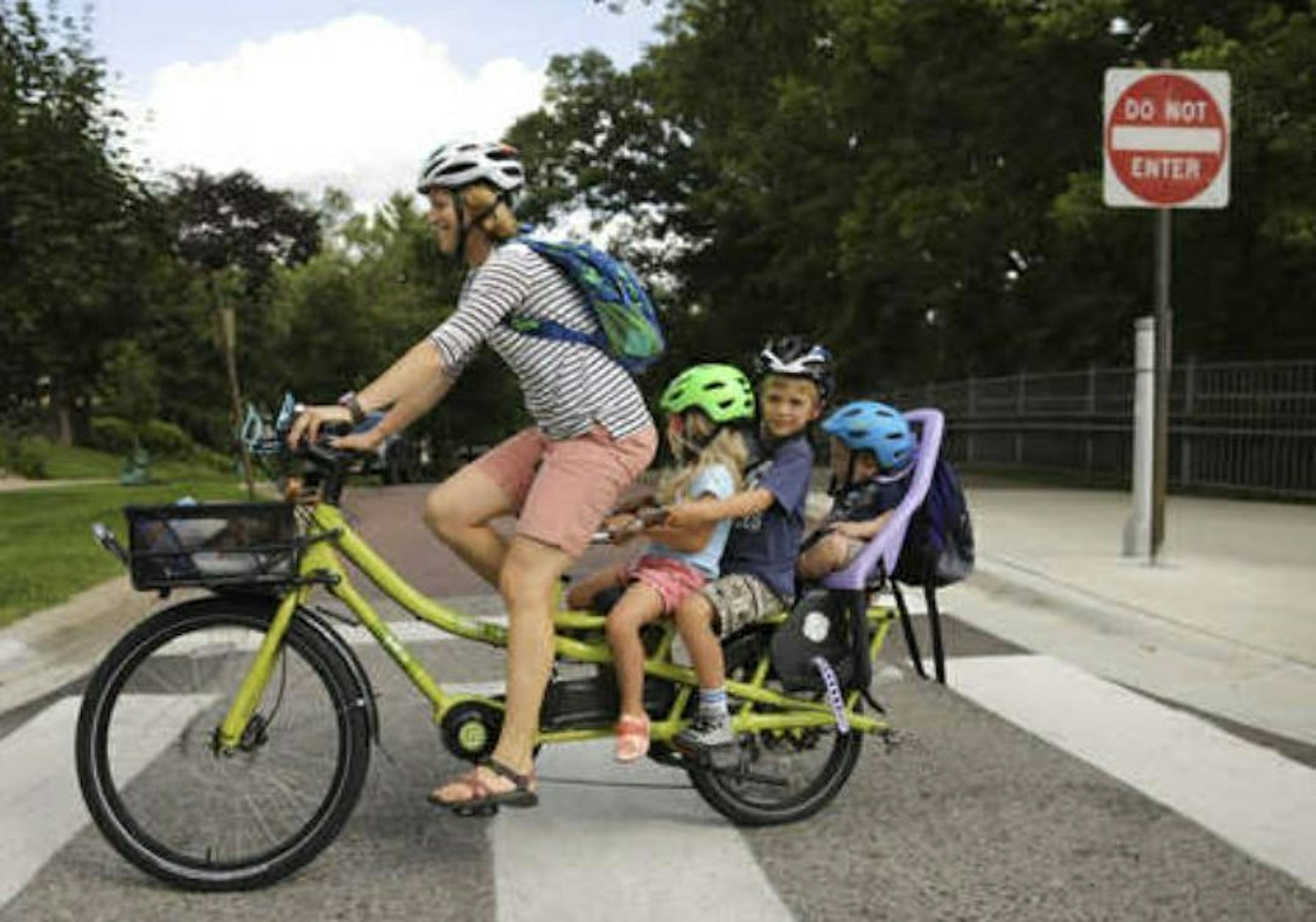
The Star Tribune recently has reported on the vocal opposition to proposed changes limiting the role of Minnehaha Parkway west of Portland Avenue in Minneapolis to providing access to the Minnehaha Parkway Regional Trail ("Mpls. set to force cars off parkway," front page June 7, and "Drivers' access matters on Minnehaha Parkway," Opinion Exchange, June 12). I am disappointed that the newspaper hasn't sufficiently represented the vision of Minneapolis Park and Recreation Board staff, the rational for the changes, the support of many residents, and the benefit to the future of our city and residents.
The changes are consistent with a vision for a future in which residents drive less, recreate more and are healthier, and in which air and noise pollution decrease. They lower the impact of automobile traffic on corridor users, reduce pavement, calm traffic, and create safer trails and crossings for bicyclists and pedestrians.
The Minnehaha Creek Parkway Regional Trail was originally envisioned by a Park Board that thought boldly, far into the future, to preserve land around the Lakes, Minnehaha Creek and the Mississippi River for public enjoyment. The Grand Rounds was conceptualized in the late 1800s as "a system of ornamental avenues" to connect the parkland around the lakes and the Mississippi River, promote attractive residential and commercial development, serve as a firebreak, and protect residents from disease. There were no cars in Minneapolis at this time.
The parkway was envisioned for reasons that do not exist today. The concept of an ornamental avenue for the "Sunday" driving that was so popular in the mid-1900s is a thing of the past. This is not to say there are not those who drive sections of the parkway for pleasure when commuting, or drive the parkway to show off Minneapolis' natural "jewels" to out-of-town visitors. Today, however, Minneapolis' population participates much more in active forms of recreation than in recreational drives.
As reported in Forbes magazine when it ranked Minneapolis the healthiest city in America: "Minneapolis residents breathe clean air, prioritize exercise … supported by a city that was among the first to add bike trails … . If you live in Minneapolis, you and your neighbors … are more likely to be in excellent or very good health … . Minneapolis has lots of open spaces, parks, and walking areas, and you see people biking (running and walking) everywhere."
So, should the Minnehaha Parkway be for pleasure driving, recreational use or both?
Some facts to consider:
• In 1900, Minneapolis had a population of 202,718 and there were few cars. Today, the population is 422,331 (2017). Last year, there were more than 7.4 million registered vehicles in the state of Minnesota.


