

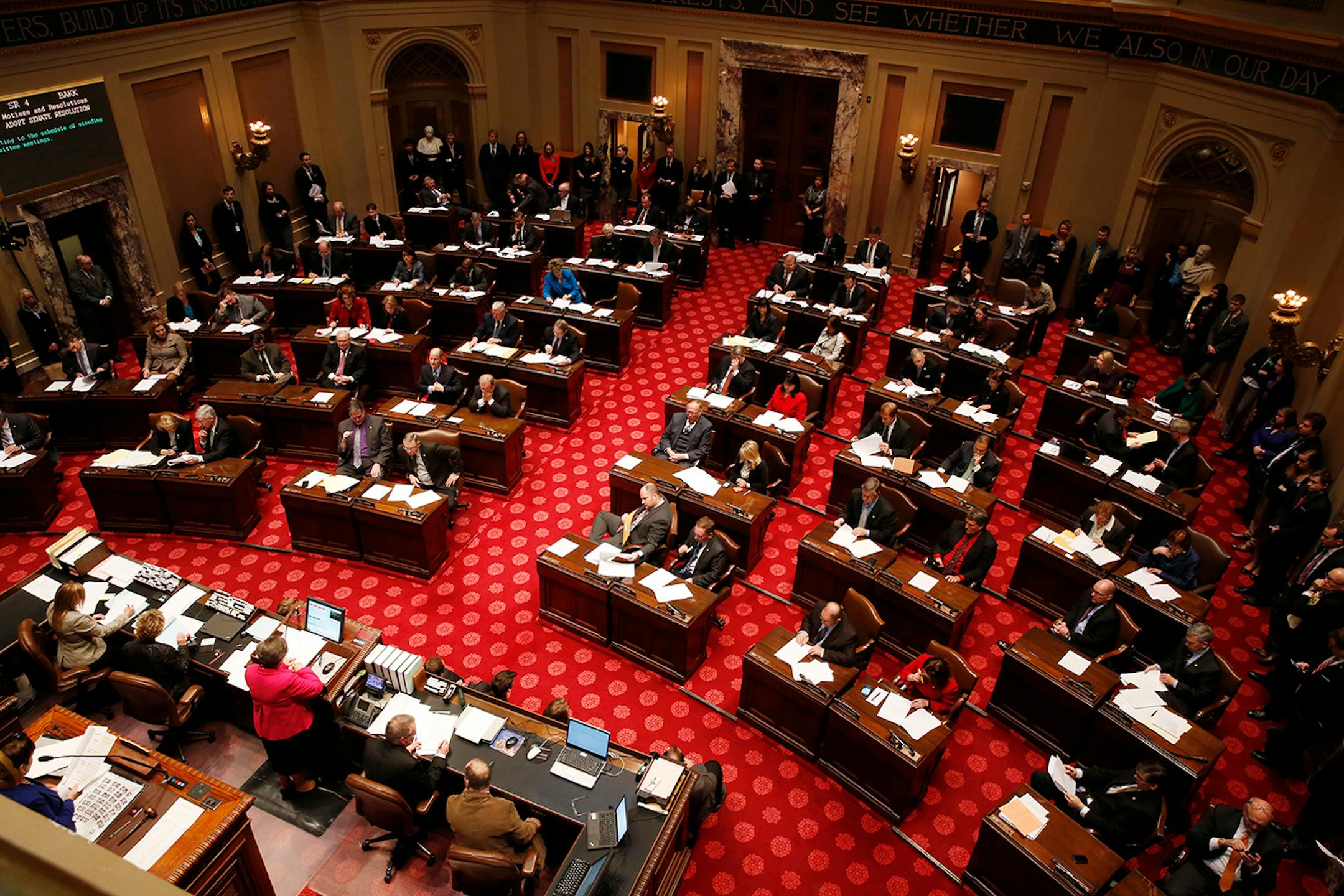
Senate Republicans have endured the indignities of minority status for all but two of the past 44 years, but they say this is their year.
The formula is simple: The DFL controls six Senate districts that Mitt Romney won in his failed 2012 presidential campaign. Flip those, and they are in the majority.
"We think we're going to win," said Minority Leader David Hann, R-Eden Prairie.
Not so fast, the DFL responds. Strong candidates, fundraising, organization and a GOP presidential nominee in Donald Trump — who polls badly in the suburbs — will ensure continued DFL control.
"We'll hold the Senate, and we may gain a few seats," said Sen. Ann Rest, DFL-New Hope, who is leading her side's effort.
Without a statewide race for governor or U.S. senator this year, the election that matters most in Minnesota is the battle for the State Capitol, which is divided between a GOP House and a DFL Senate.
The stakes are high: Despite the focus on Washington, D.C., and the presidential race, the government decisions that directly affect the most Minnesotans — on issues like education, public safety, transportation, social services and everything else that goes into the state's $42 billion two-year budget — are made at the Legislature.
While much of the focus this year has been on the GOP majority House, which has flipped control three times in the past three elections, the Senate is also in play, largely due to those DFL senators who are representing districts that lean Republican.
![Sen. Minority Leader David Hann talked with Dr. Doris Brooker while door knocking in his district in Eden Prairie. ] GLEN STUBBE * gstubbe@startribune.com Friday, September 9, 2016 Sen. Minority Leader David Hann was door knocking in his district in Eden Prairie.](https://arc.stimg.co/startribunemedia/AYDQX7JEF7US3BMKMUFARLPBLQ.jpg?&w=1080)
![Sen. Ann Rest, DFL-New Hope, who didn't cast a vote the first time, voted yes the second time and then hugged bill author Rod Skoe after the final vote. bill author The bill was defeated the first time. It later passed 35-31 the second time around. Monday, April 29, 2013. ] GLEN STUBBE * gstubbe@startribune.com](https://arc.stimg.co/startribunemedia/FQDX7G22R5UFPO223O4XTCMP2Y.jpg?&w=1080)


