

![With skyrocketing farmland prices and crop insurance guarantees, black dirt is looking more like black gold for farmers in Minnesota. . Looking to expand his farm, Gene Stoel of Lake Wilson purchased an additional 160 acres last fall for $6,800 per acre. "This has been a very good age for farming." Stoel said. ] BRIAN PETERSON • brianp@startribune.com Lake Wilson, MN - 05/12/2012 ORG XMIT: MIN2013032815134350](https://arc.stimg.co/startribunemedia/NR3EHKXH5REI3HS2WCZ7CIL3ZM.jpg?&w=1080)
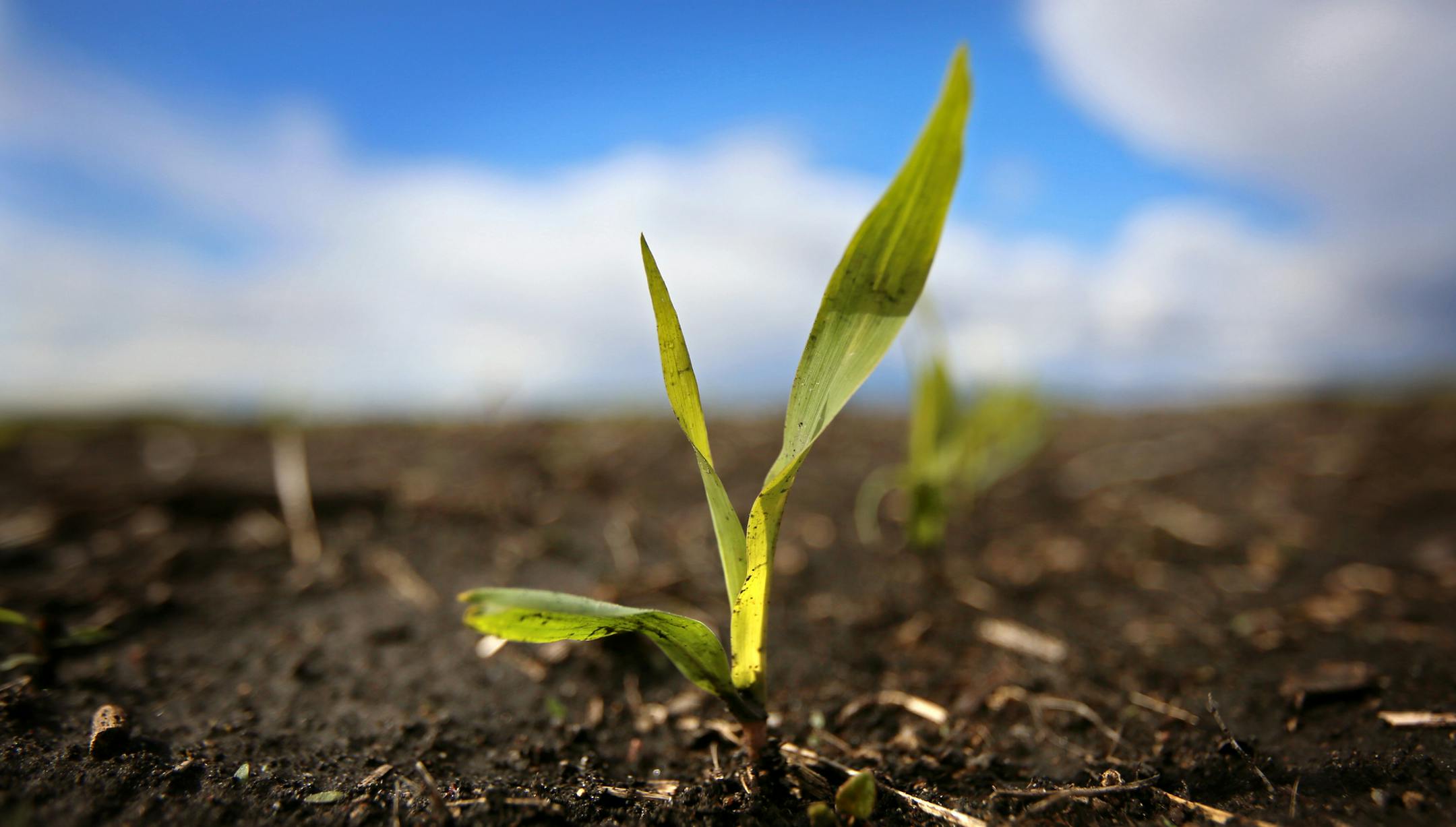
Minnesota farmers plan to plant a record amount of corn this year, while the overall U.S. corn crop is expected to be the biggest since 1936, say federal government forecasts released Thursday.
In Minnesota, most of the increase in corn, the state's largest crop, comes at the expense of the second-biggest crop, soybeans. Indeed, Minnesota and Nebraska are expecting the largest declines in soybean acreage this year, according to the U.S. Department of Agriculture.
Minnesota farmers "are more confident in their [corn] production capabilities than any other crop," said Ed Usset, a grain marketing specialist at the University of Minnesota. "Corn just seems to be more consistent."
It doesn't hurt, either, that Minnesota farmers on average had a strong corn crop last year, with many largely dodging 2012's brutal U.S. drought. "I'm sure that does play into it," said Bruce Peterson, a Northfield corn and soybean farmer and a director of the Minnesota Corn Growers Association.
In 2013, farmers are expected to plant 9 million acres of corn in Minnesota, exceeding last year's previous record by 250,000 acres, or 3 percent, according to the USDA's annual Prospective Plantings report.
As for soybeans, Minnesota farmers are forecast to plant 6.8 million acres, down more than 200,000 acres, or 4 percent, from last year. If realized, that would mark the state's second-smallest soybean crop in 15 years. Growers of spring wheat, the state's third-biggest crop, are looking at unchanged plantings — 1.35 million acres — from last year.
"It's a combination of price and yield that overalls adds up to more profitability for corn, or at least it has in the last few years," said Peterson, who may plant slightly more corn this year. He'll farm about 75 percent corn and 25 percent soybeans. Minnesota farmers who plant corn often also plant soybeans, and vice versa.
Nationally, corn acreage is expected to be up slightly from last year, while soybean acreage is forecast to be down slightly, according to the USDA.
![Mick Schmiesing, with the help of his retired farmer father Bob (In tractor), planted corn on his new land that he paid record price for this spring. ] BRIAN PETERSON • brianp@startribune.com Vernon Center, MN - 05/01/2012 farmland ORG XMIT: MIN2013032815160852](https://arc.stimg.co/startribunemedia/56HYFMH3P6ZRPGHUPFLTXRCQHA.jpg?&w=1080)



