

When St. Louis Mayor Francis Slay and 11 other mayors from cities along the Mississippi River went to Washington, D.C., last month to bring attention to the nation's most important waterway, the dominant problem on their minds was drought.
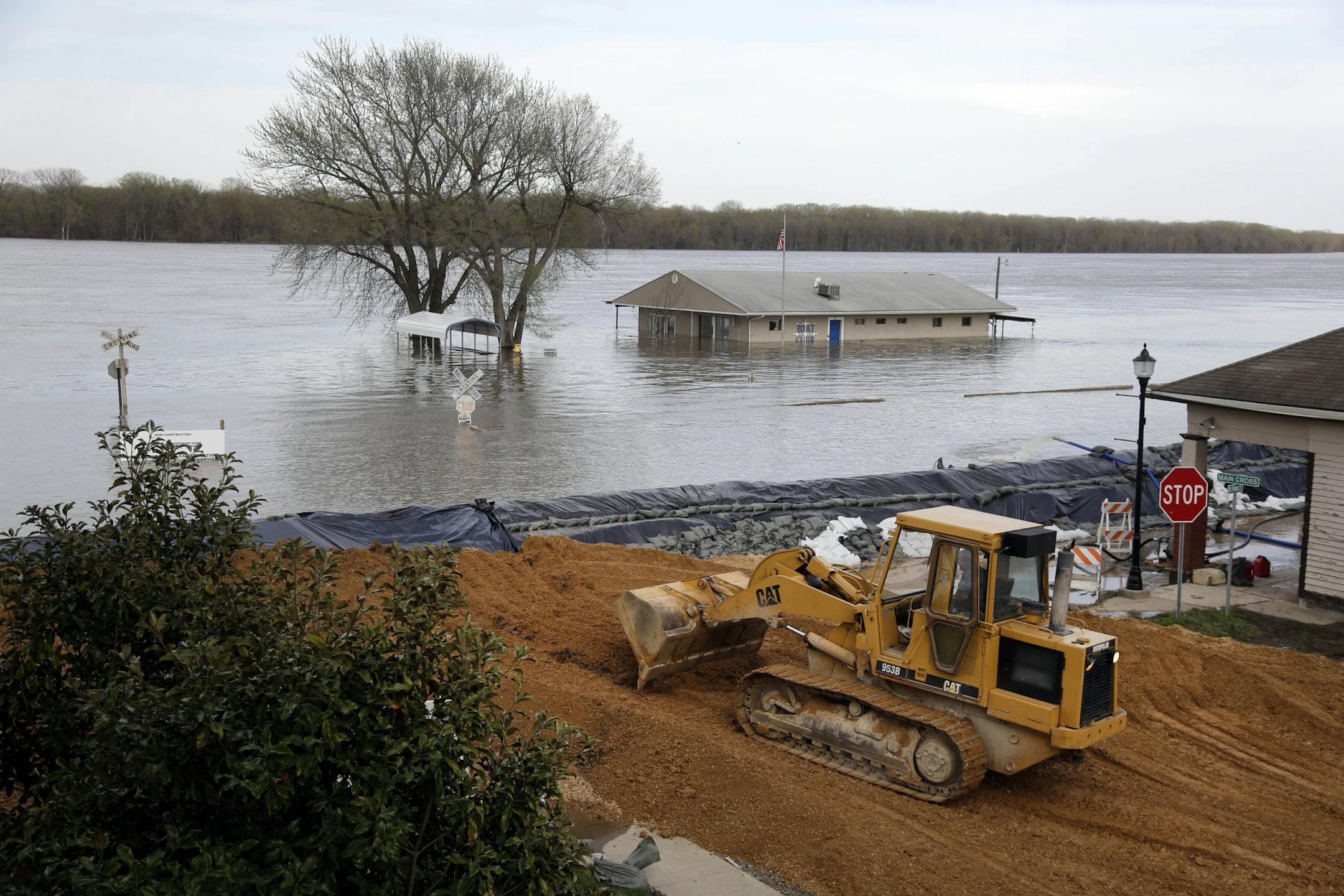
Today, for many of those mayors, it's flooding.
Either way, the complaint expressed by Slay during that visit hits home.
"There is no plan for the whole river," Slay said.
One of the mayors with Slay on that trip was Jo Anne Smiley of the tiny river town of Clarksville, just upriver from St. Louis. That town today sits protected by sandbags, parts of it underwater, residents holding out hope that the rain in today's forecast doesn't cause a significant rise in the river.
There will be times when the Mississippi will defy man's efforts to control it. But officials can minimize those times by developing a plan for the entire watershed. They never have.
The Army Corps of Engineers reacts to the weather, trying to keep the river open to navigation by managing water flows in a vital artery that each year transports more than 100 million tons of goods to harbors for export.
When the weather changes, politicians representing river interests push against the corps, or pull with it. Sometimes they want more water released from upstream dams. Sometimes they want it held back. Usually they do the bidding of big farming interests.


