

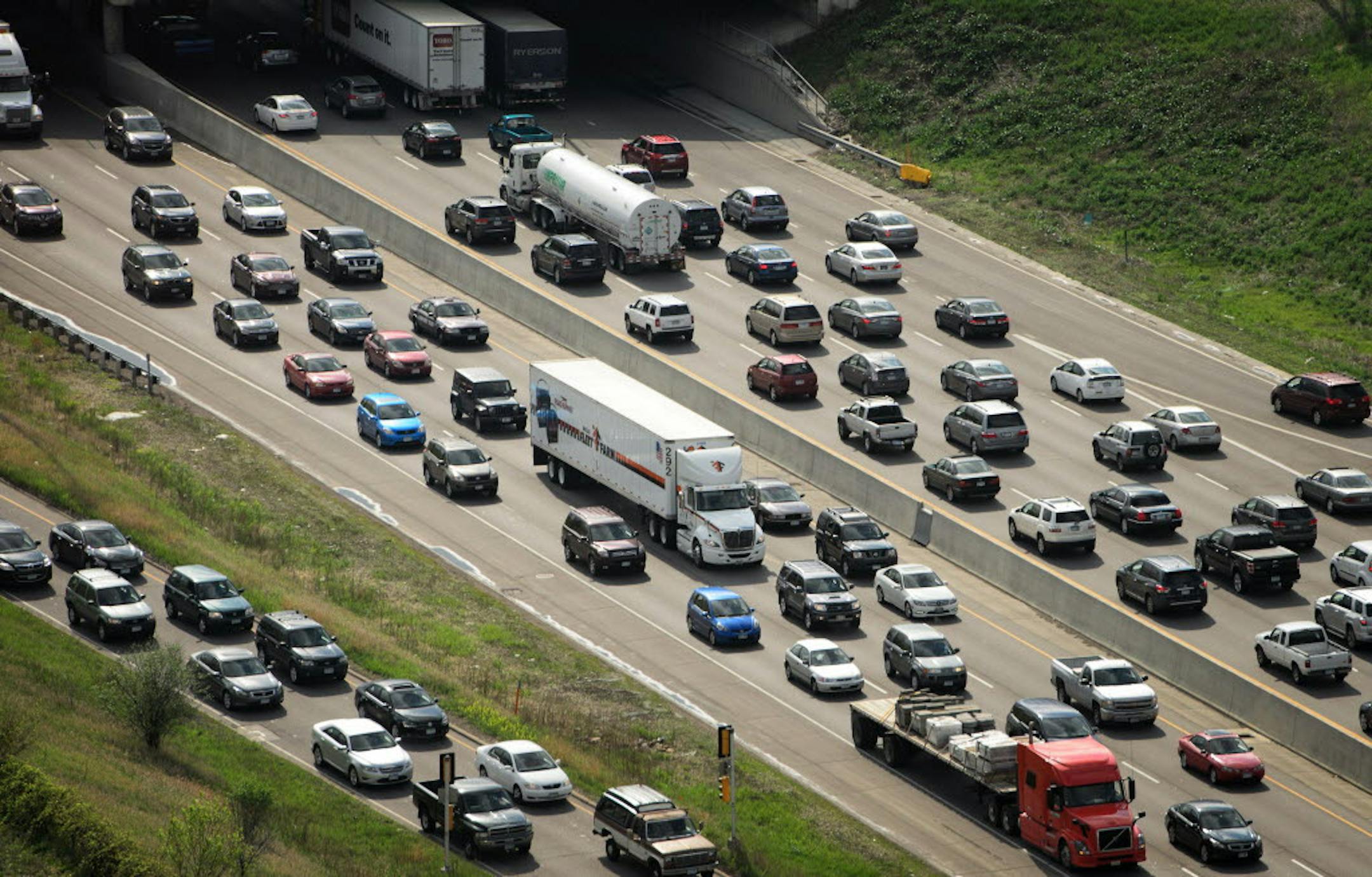
Rush hour traffic on Twin Cities metro highways is slowing — and expected to get slower.
Drivers were caught in congestion 25% of the time during the morning and afternoon commutes in 2018, according to the Minnesota Department of Transportation. That's the highest level of congestion since the state began its annual highway traffic surveys in 1993.
And things are not likely to improve, said Brian Kary, MnDOT's director of traffic operations. "This is an upward trend that we have been seeing for quite a few years," he said. "There is only so much we can do. The best we can hope for is that things plateau."
In the 2018 Metropolitan Freeway Congestion Report, released Monday, MnDOT cited a variety of factors that boosted congestion, which it defines as highway or freeway traffic moving at 45 mph or less. The Twin Cities metro area grew from 3.08 million people in 2017 to 3.11 million in 2018, according to Metropolitan Council figures, and that means more vehicles on the roads. Lower gas prices and a drop in transit ridership also factor into the increased congestion, Kary said.
Motorists are more likely to hit a snarl in the afternoon than in the morning, though drivers on the most traffic-choked routes can plan on riding the brakes part of the way to and from work.
In the mornings between 5 a.m. and 10 a.m., bottlenecks are most likely on Interstate 35W between the cities of Lexington and Arden Hills in the north and from Burnsville up to the Minnesota River in the south. Drivers also are likely to encounter a very slow roll on both directions of Interstate 94 in downtown Minneapolis.
In the evenings, the worst travel spots are on Interstate 494 through Bloomington and Interstate 94 in downtown Minneapolis, where speeds drop below 45 mph for a majority of the peak period from 2 to 7 p.m.
MnDOT collected data from more than 4,000 in-pavement and roadside radar sensors along 782 miles of metro freeways and highways to put the report together. It collected the data in October 2018 and compared it with previous Octobers because that month represents regular traffic patterns with decent weather, school in session, vacation season largely over and road construction projects winding down.


