
Community weighs in on organized trash collection in St. Paul

The city recently asked residents what they value when it comes to trash hauling. People responded en masse, a report released Wednesday shows.

May 26, 2016 at 1:59AM
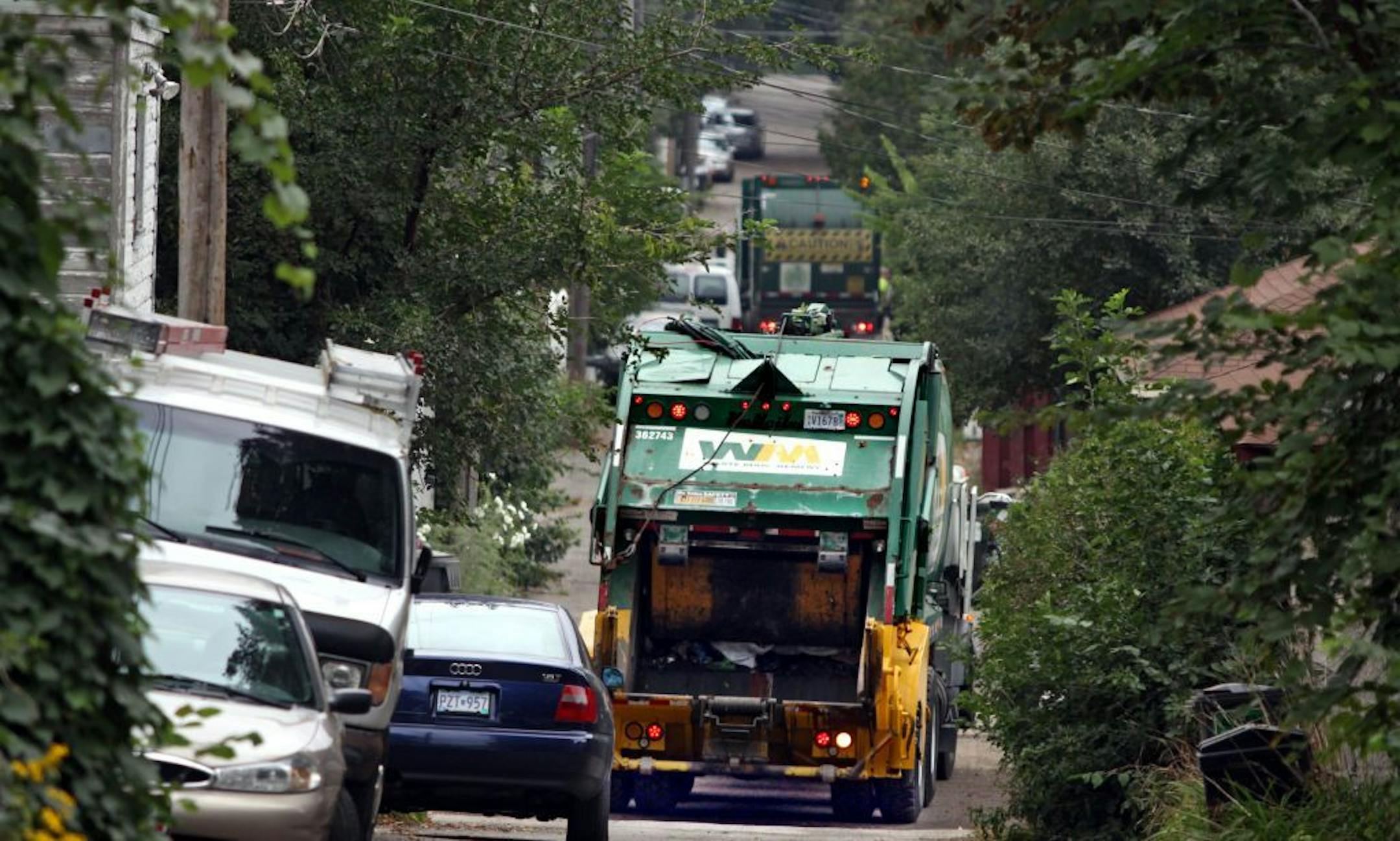
Sept. 25, 2009 - St. Paul, MN; Trash haulers wind their way through an alley in the Mac-Groveland neighborhood Friday morning.
The people of St. Paul have a deep interest in garbage and how it is collected in the city, a report released Wednesday shows. (Star Tribune/The Minnesota Star Tribune)

The people of St. Paul have a deep interest in garbage.

The city recently asked residents what they value when it comes to trash hauling. People responded en masse, a report released Wednesday shows. The city has analyzed more than 2,000 comments — and the feedback continues to pour in.

City officials are gathering opinions as they consider a switch from the existing patchwork approach, with residents hiring their own haulers, to an organized collection system in which one or more companies contract with the city.

Many residents support the coordinated system and have said that the status quo can be confusing to navigate and that it contributes to pollution. The proposed switch also prompted concerns, particularly among local haulers who fear it would force them out of business.

Community members who responded to the city ranked their top three priorities as: consistent, high-quality customer service; stable, uniform rates, and reasonable, low cost. Opportunities for small, local and minority-owned haulers and preserving residents' individual choice of haulers were not highly ranked.

While Wednesday's report does not provide a clear-cut plan for how the city should proceed, some City Council members said it encouraged them to continue moving forward on the issue.

"I think it's a good strategy for our city," Council Member Dai Thao said of the coordinated approach, which he said would result in less illegal roadside dumping.

Council President Russ Stark said he has heard broad support for organized collection. Stark said he was not surprised that the issue has sparked more feedback than any other topic ever posted on the city's online discussion forum, Open St. Paul. He has been hearing about people's confusion with the choose-your-own-vendor system and their concerns about pollution for years, he said.

Environmental and infrastructure concerns were key in prompting the city to review trash hauling. With the current system, several haulers can end up serving one neighborhood, resulting in multiple vehicles rumbling along and emitting gases.

Stark said he hopes the city can move to having just one garbage truck driving through any given alley and lower the average cost of the service.

St. Paul asked residents to submit copies of their trash bills so the city could understand what people were paying for the service. The average monthly price ranged from $22.50 for a small amount of trash (between 30 and 38 gallons) to $30.02 for a large amount (90 to 96 gallons).

The City Council will hold a public hearing Wednesday on the report but will not determine how to proceed at that meeting.

Controversy elsewhere

Organized trash collection has been controversial in more than a dozen metro-area cities. In Bloomington, the City Council approved a switch to organized collection in December, but that prompted a lawsuit by opponents.

State law requires that if the city does switch to the organized approach, it must give haulers 60 days to come up with a consortium approach to share the market.

St. Paul staff members also met with 12 of the 14 licensed haulers in the city to gather their input for the report. Haulers had numerous concerns, including limitations on their ability to grow their businesses and potential onerous requirements related to labor and insurance.

Jessie Van Berkel • 612-673-4649

about the writer

about the writer

Jessie Van Berkel

Reporter

Jessie Van Berkel is the Star Tribune’s social services reporter. She writes about Minnesota’s most vulnerable populations and the systems and policies that affect them. Topics she covers include disability services, mental health, addiction, poverty, elder care and child protection.

See Moreicon