

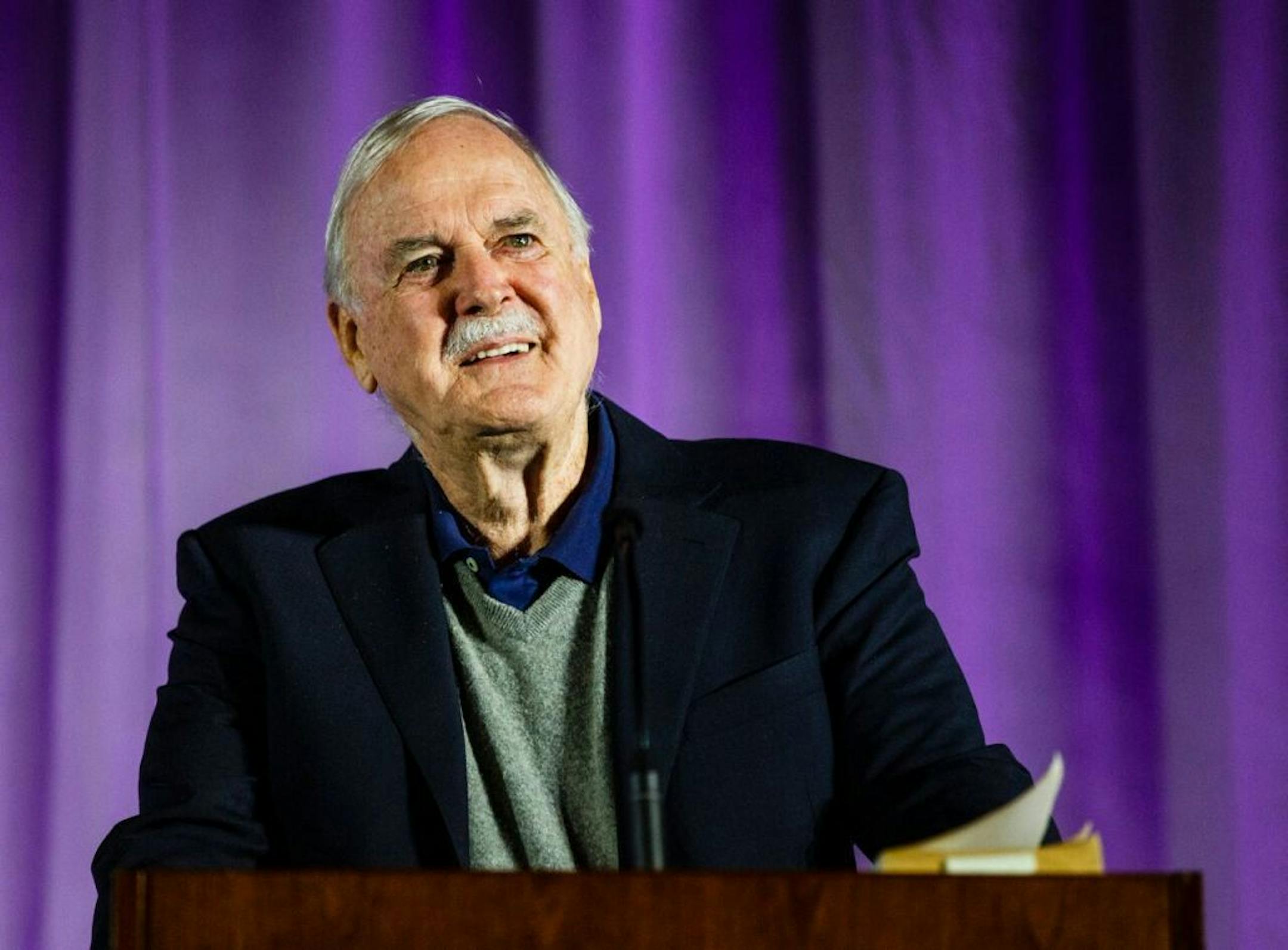
John Cleese turns out to be a very serious scholar of the creative process.
He is known for being funny, of course, having helped create enduringly popular classic comedy such as "Monty Python's Flying Circus" sketches and the TV show "Fawlty Towers."
Certainly, he is funny, too, and an audience at the University of St. Thomas' Minneapolis campus last week got to laugh while hearing sensible advice on how to foster creativity.
But when he described how his thinking on creativity developed, over lunch the day of his talk, Cleese moved quickly from personal experience to book, professor and academic study, along the way touching on everything from brain physiology to behavioral economics.
More than anything else Cleese, now 76, comes across as eager to learn. As the waiter presented menus, he explained that he was currently puzzling over what to make of another serious subject, of why already wealthy people seem grimly determined to accumulate a lot more money. "I'd love to do a TV series on that," he said. "I would love to talk to people, and say 'Why do you need so much money?' And why do people say it's so admirable? I think the world has gone quite mad."
Perhaps someday he'll be invited to speak on income inequality, but for now his talks are about creativity. It's been something he's been thinking about "in stages" for decades, he said.
"My initial interest was that no one ever spotted that I had any creativity until I discovered it for myself," he said. "I went from the age of 8 all the way through to the age of 22 without anyone ever suggesting to me that I had any creative ability at all."
In fact, the very idea of creativity simply hadn't come up in school, even though he had attended "good schools." It's one reason why he still regards much of his formal education as primarily a test of willpower.



