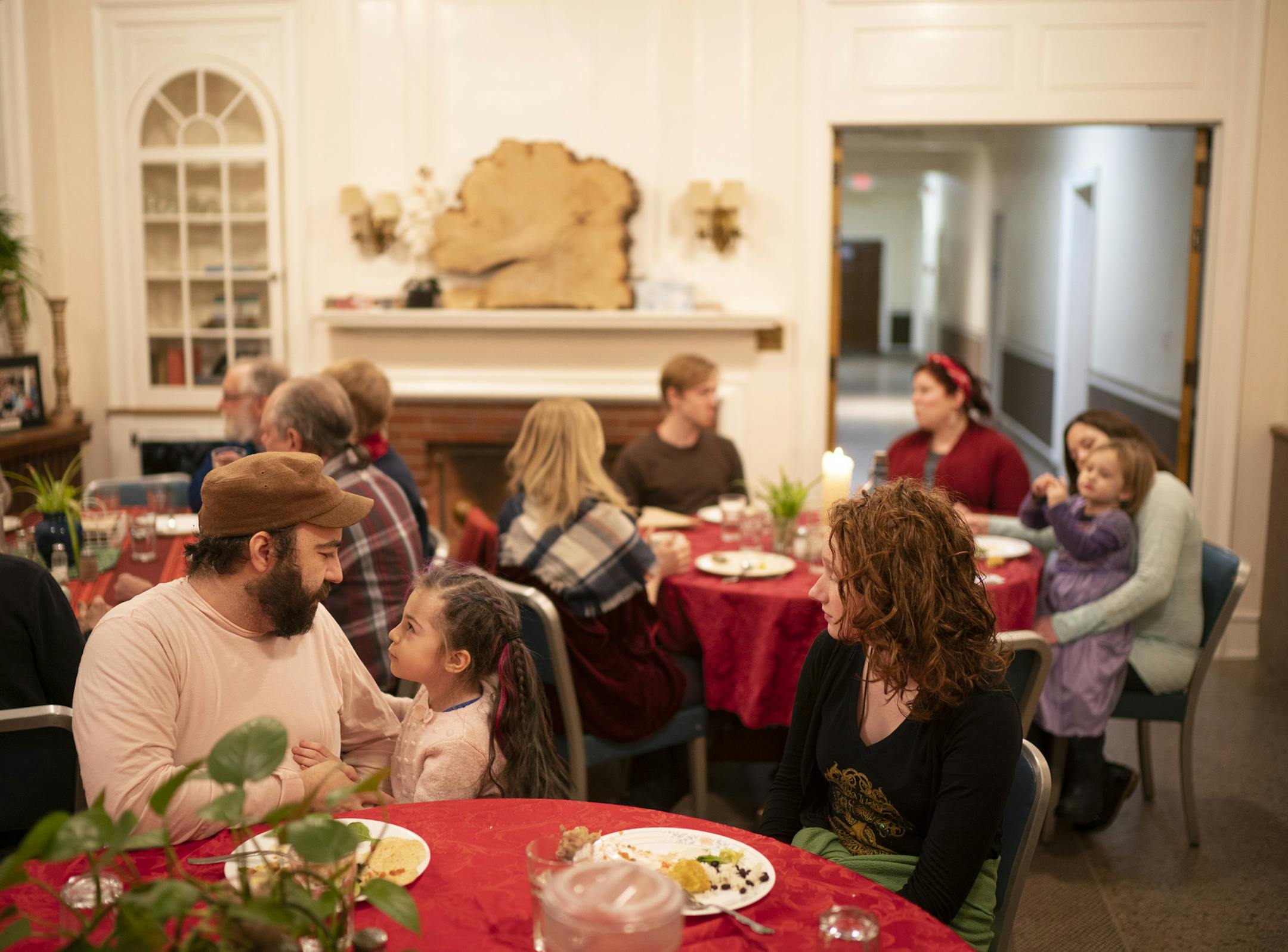
On a cold Monday night, a fire was blazing in a cozy room as about 20 neighbors sat down to dinner. The meal was vegan fajita bowls, followed by gluten-free chocolate cake and a chorus of "Happy Birthday."
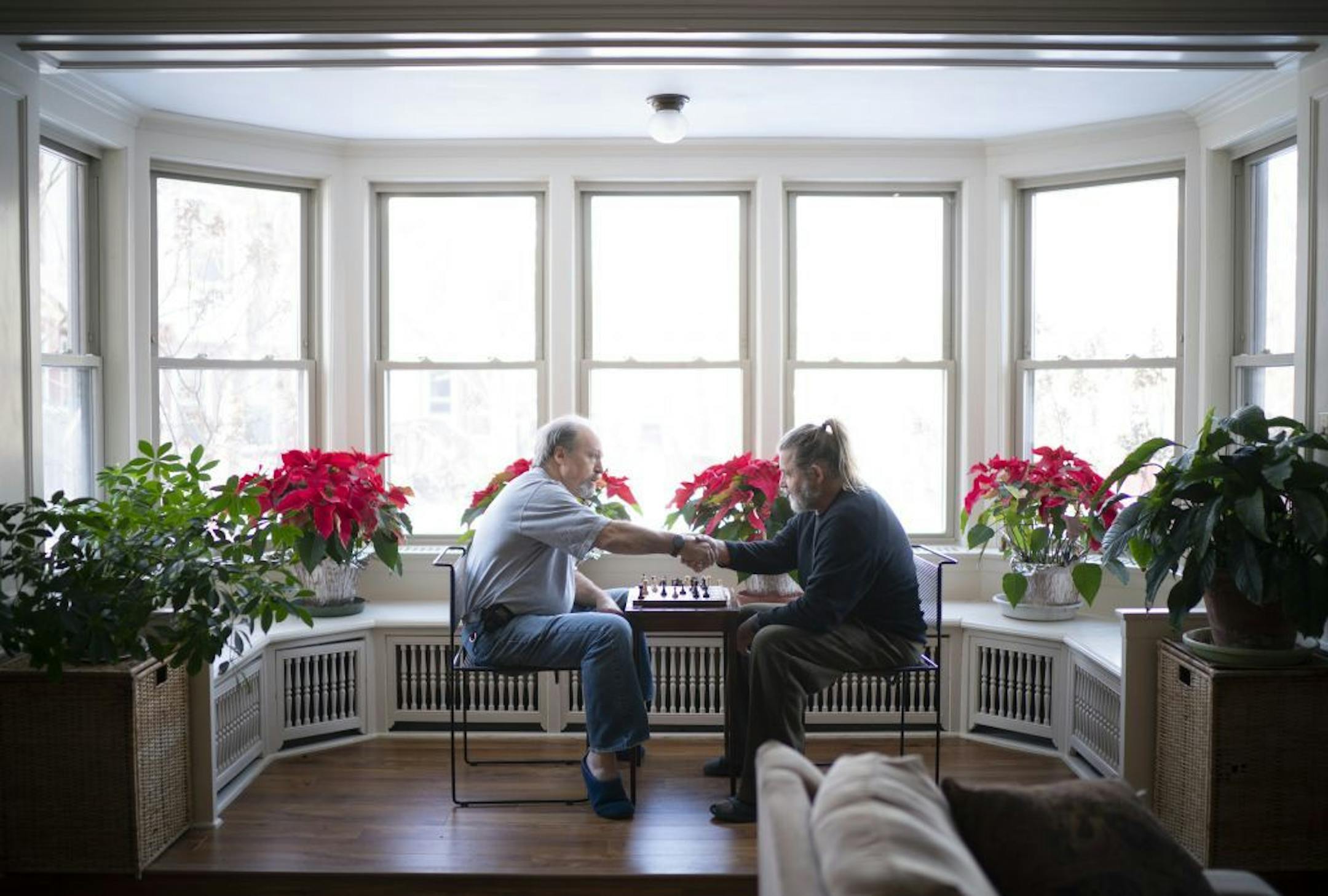
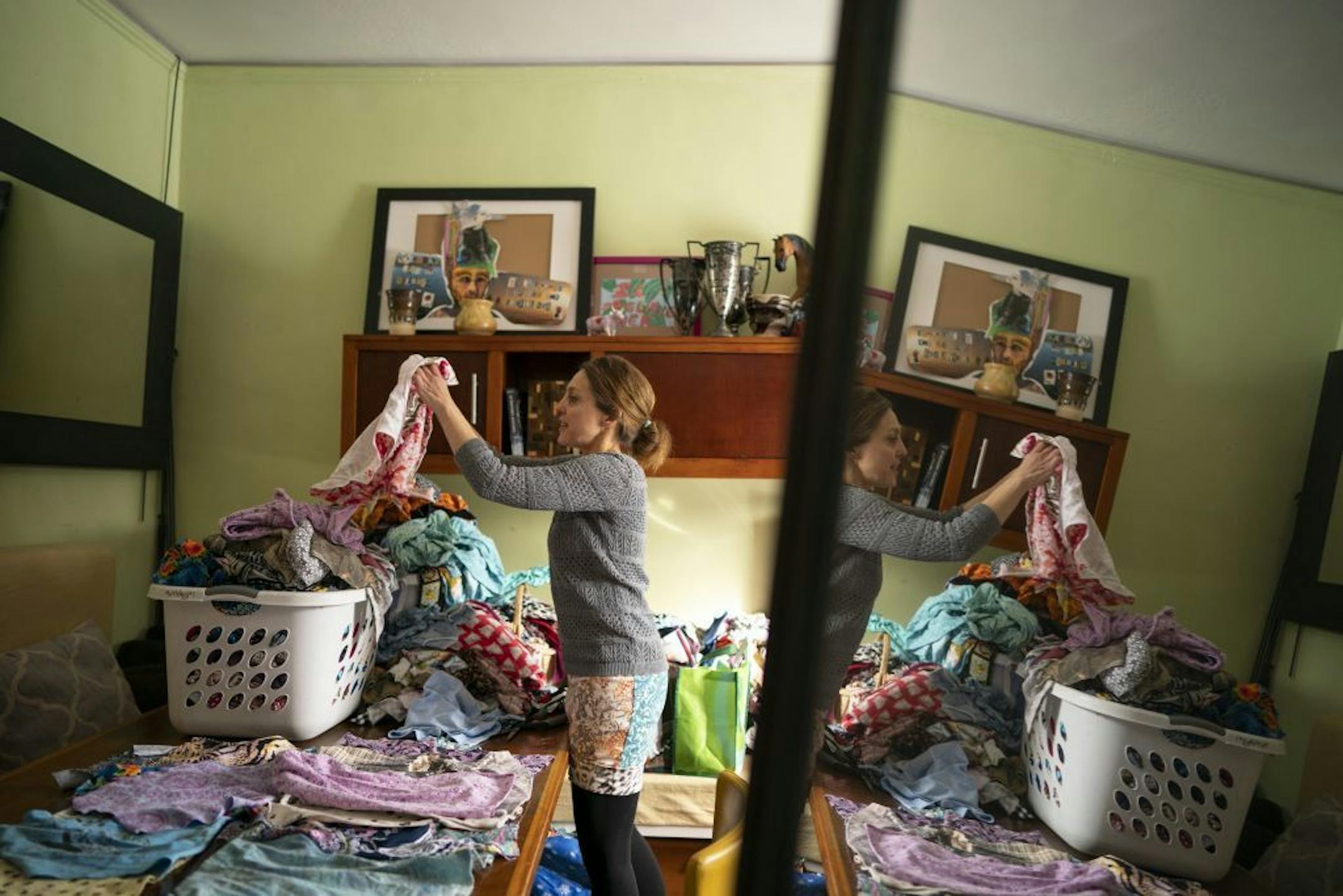
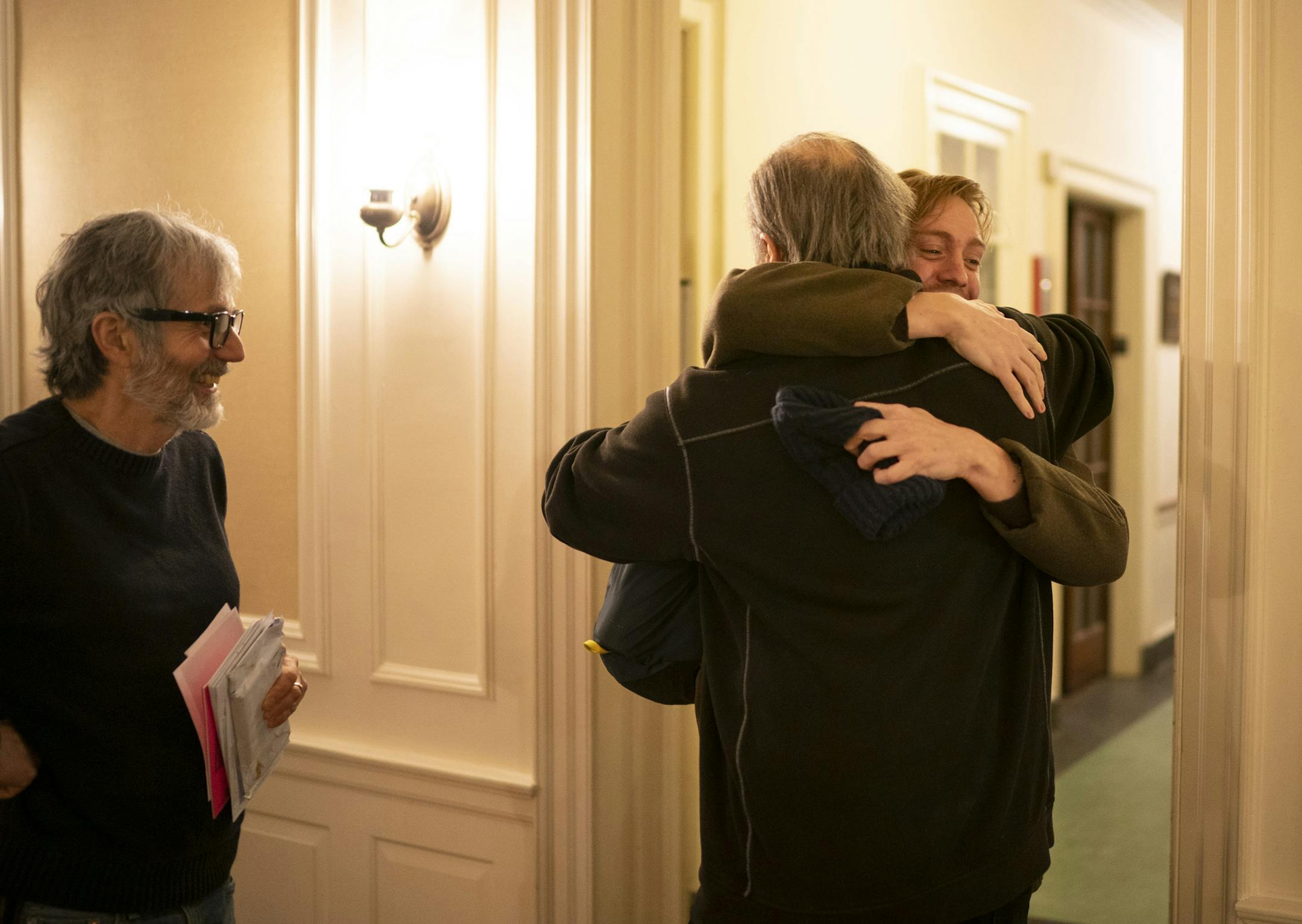
The conversation was casual and familiar — just as you'd expect among people who live in close proximity, share chores and come together for a communal meal twice a week.
"Every person here we know so well," said Miriam Zien Edgar, the evening's cook. "We know people's schedules and what they're allergic to."
The congenial diners are members of Monterey Cohousing Community — 15 households that form an "intentional community" in St. Louis Park. Members own their own homes — from 400-square-foot apartments to 1,600-square-foot townhouses — and share ownership of the "main house" and grounds, paying monthly dues of $400 to $600 to cover utilities and property taxes.
"I think that's the way to live — with other people," said Linda Weber, a member for seven years. "People are meant to live more communally, like a little tribe."
"Our wanting to be involved in a tribe is built into our DNA," said Brian PaStarr, Minneapolis, an affiliate member who plans to move in.
Danish model
People have been living in tribes for centuries, but the concept of cohousing is relatively new.
Developed in Denmark in the 1960s, cohousing combines the benefits of community living with the independence of a private home. Members share common spaces, communal meals and participate in facilities management and consensus decisionmaking.
![An exterior of the 1924 Main House of the Monterey CoHousing Community in St. Louis Park. The community also consists of seven townhomes located behind the Main House. ] JEFF WHEELER • jeff.wheeler@startribune.com The Monterey Co-Housing Community in St. Louis Park has been quietly fostering a spirit of community and neighborliness for 25 years. The community, established in 1992 and modeled after cooperative communities in Denmark, dines communally a couple of times a month. Jane Fischer](https://arc.stimg.co/startribunemedia/MFUF44EQNQW6H3AZHBNKWFVURI.jpg?&w=1080)