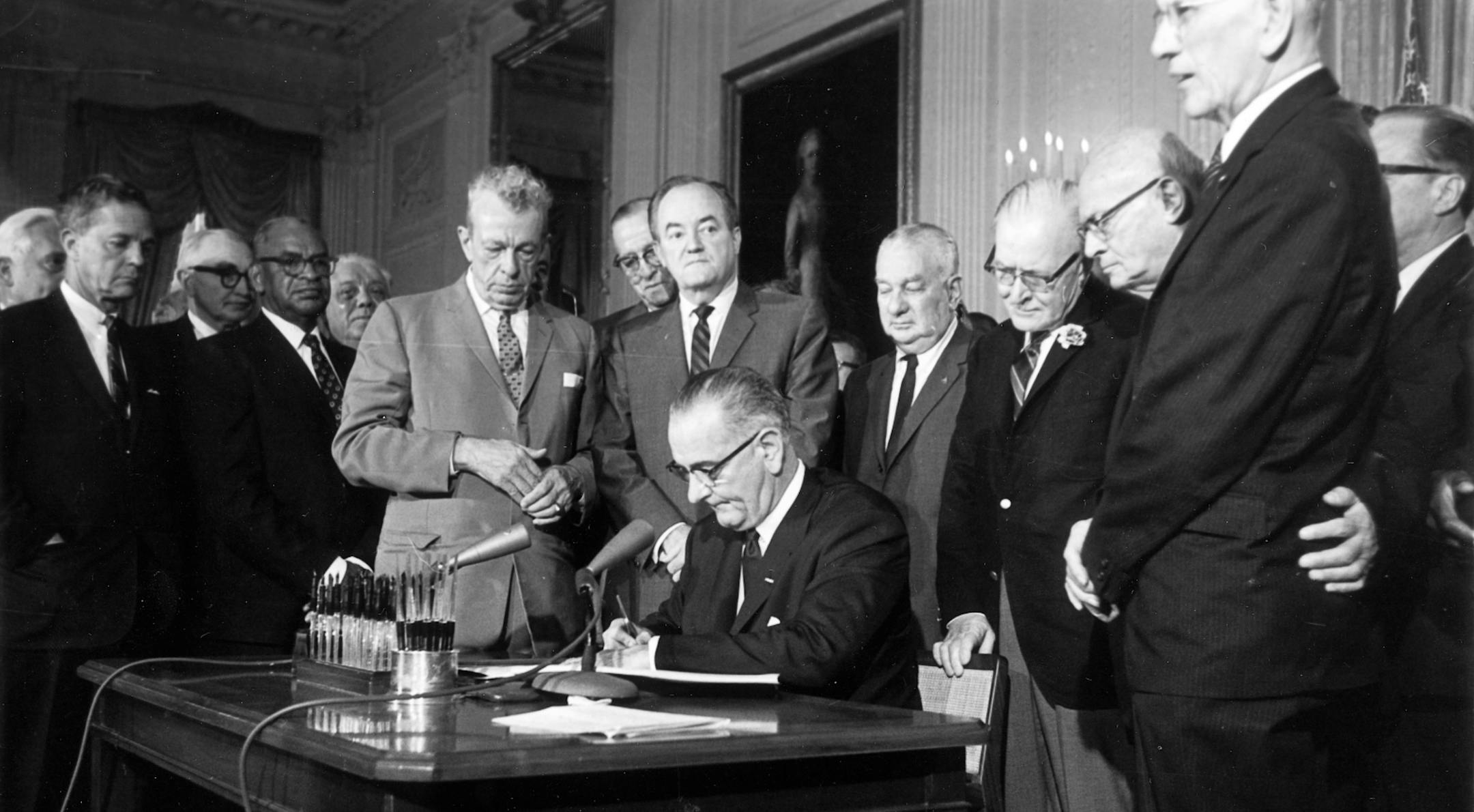
Fifty years ago this Tuesday, on June 10, 1964, the U.S. Senate voted to end a filibuster that had gone on for 54 days, blocking an up-or-down vote on a civil-rights bill. The Senate had never overcome a civil-rights filibuster before. It had been 37 years since cloture, the forced ending of debate, had occurred on any issue.
Among the votes for cloture was that of California Sen. Clair Engle. He had been hospitalized with a brain tumor that would soon lead to his death. Engle came to the Senate floor from his hospital bed, unable to walk or speak but determined to vote for something he thought important and overdue.
He was pushed slowly in his wheelchair to the space in front of the clerk calling the roll. When the clerk called "Mr. Engle of California," the ailing lawmaker weakly raised his hand, pointed to his eye, and the clerk announced, "Mr. Engle votes Aye."
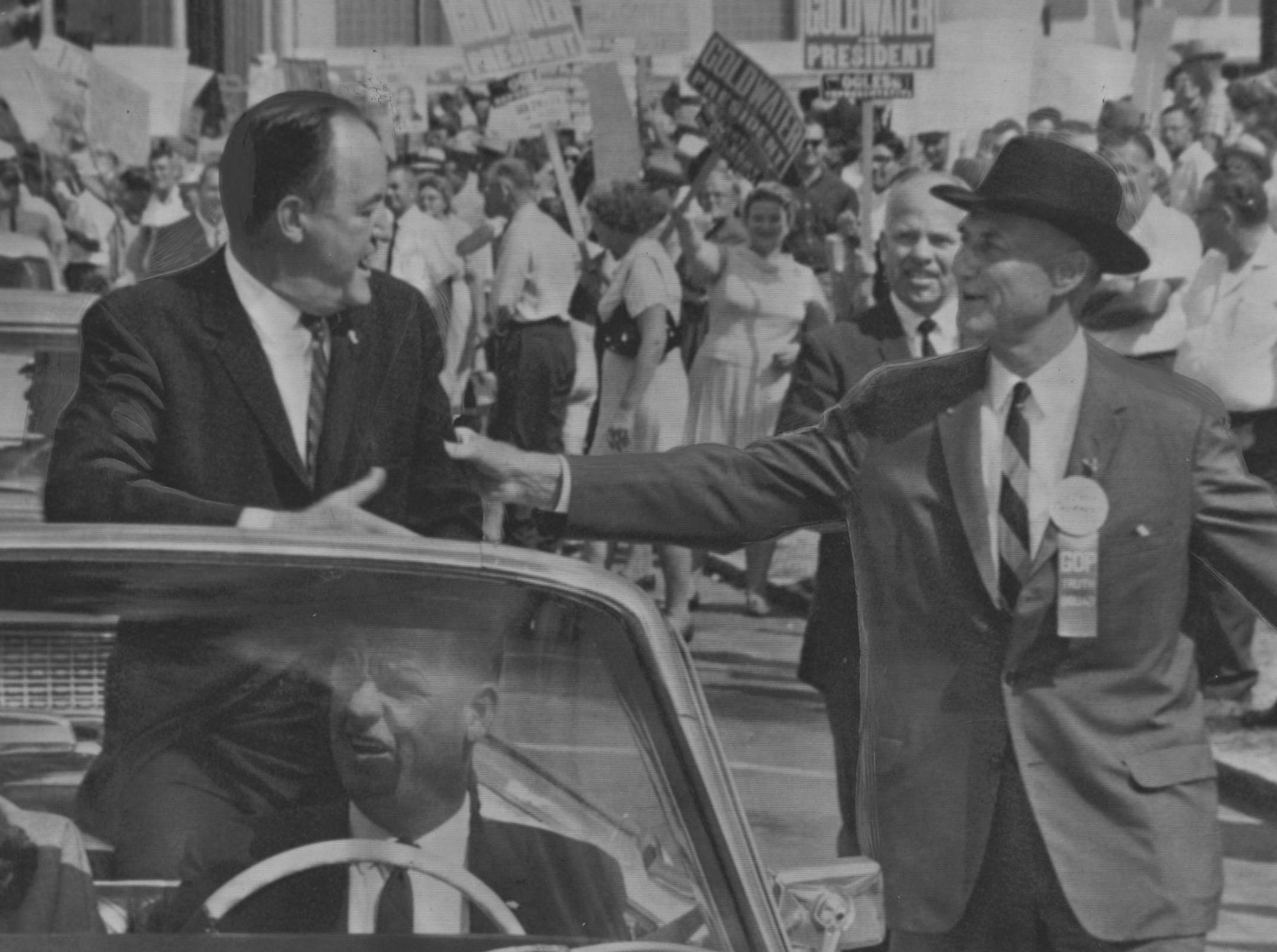
The floor manager for the bill was Minnesota Sen. Hubert Humphrey. He had been anathema to Southern senators and many of their constituents ever since his 1948 speech at the Democratic National Convention. Still only mayor of Minneapolis, he had called on our country to "get out of the shadow of states' rights and walk forthrightly into the bright sunshine of human rights." He was booed, and Dixiecrat Democrats led by South Carolina Gov. Strom Thurmond walked out.
Once in the Senate, Humphrey had found acceptance among even some of the more conservative senators, who came to admire his bright and creative mind, however liberal it was.
Though he remained suspect for a few, most could not resist his exuberant love of the legislative process across many issues. He held no grudges, never sought to get even, never spoke harshly about anyone. Eleanor Roosevelt once said that Humphrey had "a spark of greatness." Others also saw that he really cared about people, from a farmer in northern Minnesota to a queen in her castle.
The filibuster had long been the weapon of choice for the South, and it was even harder to overcome in those days than it is today. In 1957 and 1960, then-Majority Leader Lyndon Johnson (who was president by 1964) sanitized (some say "gutted") civil-rights bills to get the votes for passage.
Many thought such a watered-down result was inevitable again in 1964. Humphrey and his allies did not.