

BEIJING – As I headed to China's capital city, the headlines were testament to the tests the country faces internally — and presents internationally — as it tries to build on its remarkable economic, diplomatic and military rise.
"I.M.F. Designates China's Renminbi Global Currency," read the Dec. 1 New York Times headline, with the subheadline "Beijing's Rising Clout" amplifying China's economic emergence. But right next to that front-page story was a picture of a Beijing bicyclist obscured by smog. The headline "Critical Conditions" suggested the downside of China's rise.
After our flight landed, a blustery cold front freed the city from the latest "airpocalypse." (Well, at least until week's end, when a first-ever air pollution "Red Alert" closed schools and some offending factories.) Despite the smog in Beijing, the clouds covering Guiyang and the rain shrouding Shanghai, journalists found some clarity after dozens of discussions during a 10-day reporting trip that was sponsored by the Hong Kong-based China-United States Exchange Foundation.
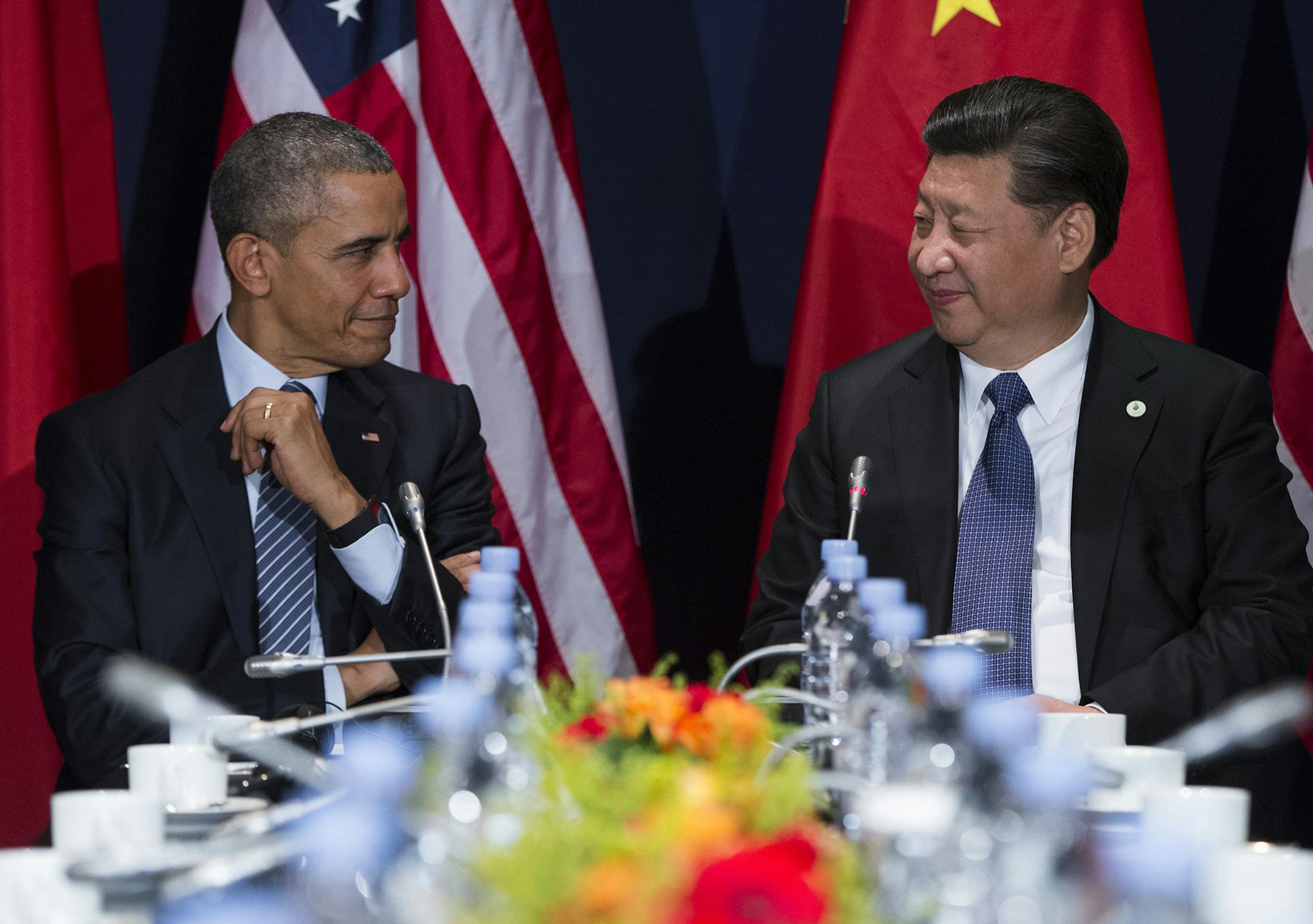
It's clear, for instance, that Chinese leaders are well aware that the threats to its international standing aren't just geopolitical, but domestic. The issues include corruption and air quality, which might have motivated China to ink a relatively aggressive agreement at the recent U.N. climate change conference in Paris.
Internationally, it's equally apparent, and important, that Chinese leaders are determined to establish what's often termed a new model of major power relations in order to avoid the historical pattern of armed conflict between established and rising powers.
The Obama administration is aware of this dynamic, too, and thus pronounced a "pivot" (rebranded as a "rebalancing") toward Asia.
Most Chinese see the pivot "as the United States worried about China's rise," said Paul Haenle, director of the Carnegie-Tsinghua Center for Global Policy in Beijing. While Haenle generally agreed with the move, the messaging made the Chinese uneasy, he said. "The way we rolled it out in kind of a highhanded fashion I think led to the reactions you saw in China. … We should have just done it."
The proposed 12-nation Trans-Pacific Partnership free-trade agreement, which does not include China, also was viewed by some through a political prism. "President Obama has positioned this deal as a geopolitical play vis-à-vis China, which I think is unfortunate because they have a good economic case to make," said Eric X. Li, founder and managing director of Chengwei Capital in Shanghai.


