

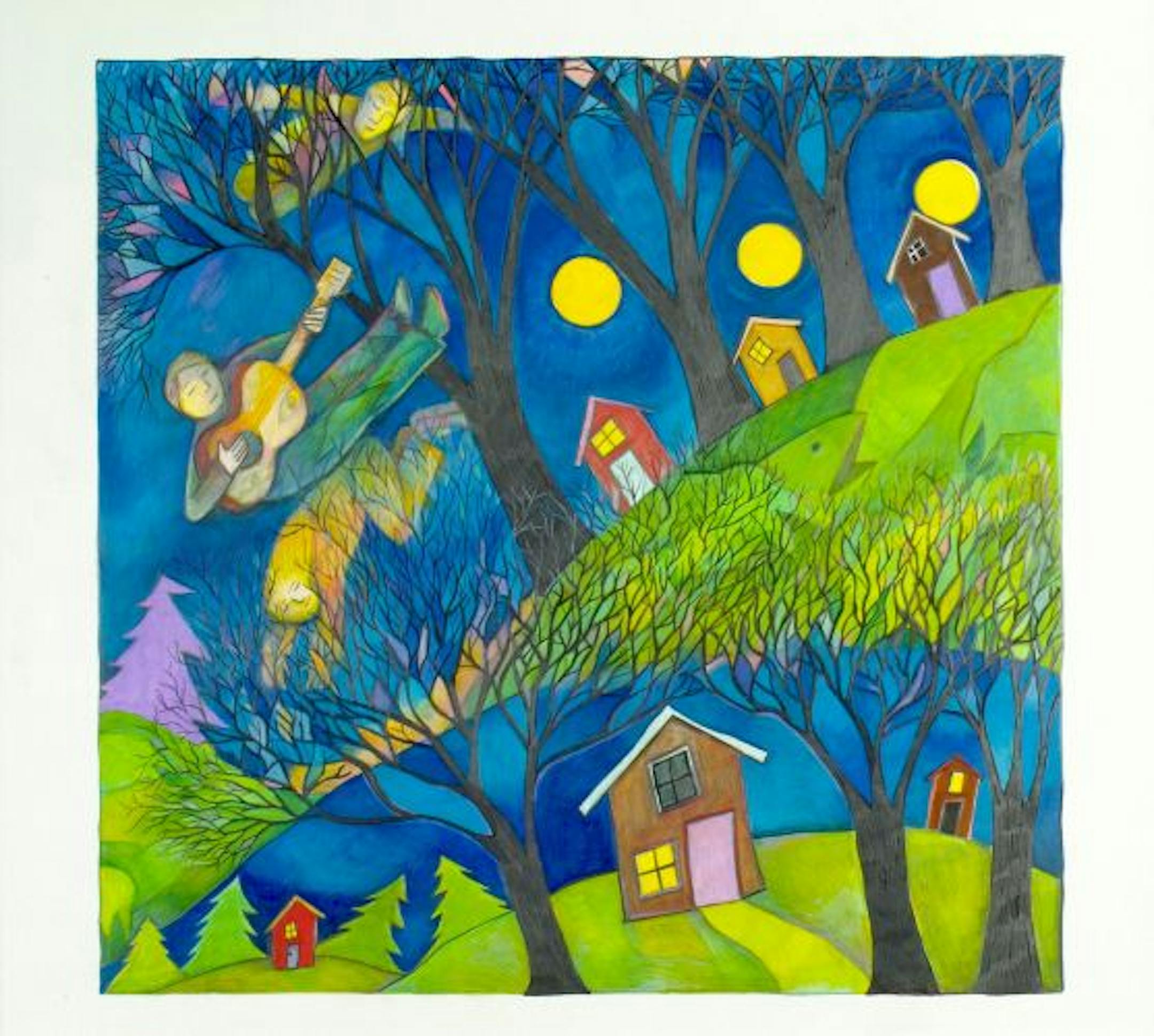
Artists have secret lives. This is especially true of those who do commercial projects on deadline -- graphic artists, type designers and book illustrators, for example.
A new show, "Beyond the Book: The Fine Art of Book Illustrators," opening today at the Bloomington Theatre and Art Center, offers a peek at the private creativity of seven Midwestern book illustrators: Derek Anderson, Leslie Bowman, Nancy Carlson, Stephen Gammell, Beth Peck, Lauren Stringer and Mike Wohnoutka. The show includes one illustration by each artist, plus a dozen or more examples of their other work, which ranges from playful, cartoon-like images to abstractions, portraits and landscapes.
Art is art, of course, but there has long been a hierarchy in which illustration was considered less noble, grand or important than "fine art." Illustration was a job; fine art was a calling. Illustrators got published in books and magazines; artists got shows in galleries and museums.
Such stereotypes linger, but they are eroding, especially in Minnesota, which is a nationally known center of book illustration. Successful books by some of the show's artists have garnered national awards and sold millions of copies worldwide.
"When I was a fine art student in college, we thought illustrators were sellouts. Now we don't know what the future will hold," said Carlson, who has produced dozens of colorful kids' books starring animals with very human personalities.
Carlson, who teaches children's literature illustration at Minneapolis College of Art and Design, organized the show with St. Paul artist Stephen Gammell, the dean of Twin Cities book illustrators.
Gammell, who is self-taught, glides into abstraction when not turning out the wispy, sometimes spooky looking illustrations for which he is best known. His more than 50 books include "Song and Dance Man," for which he won a 1988 Caldecott Medal, the Nobel Prize of children's lit. The Bloomington exhibit is the first at which he has ever shown his abstract work.
"Once you're known for a certain look or style, you get stuck with that public image," said Gammell, a reluctant talker who prefers to let his drawings speak for him. "We artists make art; some of it goes for books, some of it for other things. I don't like to categorize. It's just different branches from the same vine."


