

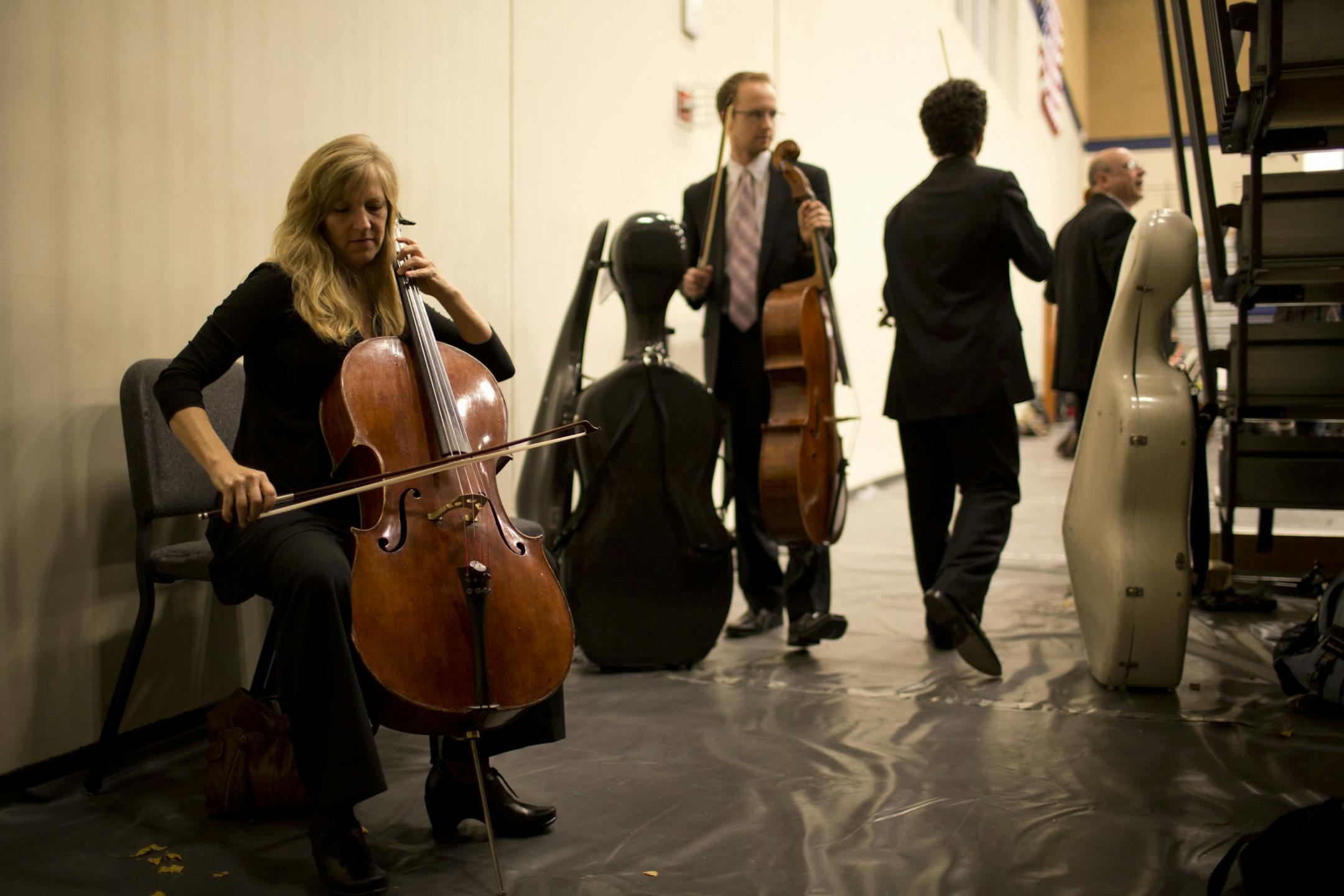
We musicians of the St. Paul Chamber Orchestra express our profound gratitude to our community for its overwhelming support in light of the difficulties we face in contract negotiations with our interim management. Your letters and standing ovations buoy us through this extremely challenging time. Thank you.
Now, management and the board (the Society) has locked us out, and we want you to know why.
The leadership claims that it has sacrificed its share, and that it's time for us to do our part, yet it fails to acknowledge that we've accepted reductions in compensation, saving our orchestra more than $2 million over the past 10 years. It claims to negotiate in a collaborative manner, yet it has rejected outright, without compromise, our concessionary, money-saving and revenue-raising proposals. It insists that our deficit be erased through additional musician salary cuts (33 percent from our current base salary, not 15 percent), demanding an additional $4.5 million to be taken from us over the next three years. It demands the authority to be able to cut the number of musicians, perhaps from 34 to 28, and to terminate any musician involuntarily whenever it chooses to do so.
At the same time, certain board members, along with other arts partners, raised more than $50 million toward building a new concert hall. And nearly $3 million has been found to buy out 16 musicians identified as 55 years and older.
Clearly, it's not that there isn't enough money, but that our leaders intend it for other purposes.
Now, management and board members have made loud and clear their main objective in these negotiations: to strip musicians of all rights and protections as players in the St. Paul Chamber Orchestra.
Among their demands: the power to terminate a musician at any time, to eliminate our 403(b) plan and/or health benefits whenever they choose; to deny us the freedom to elect all of our own representatives on committees deciding artistic matters, including auditions, selection of artistic partners and working conditions.
We musicians live and work to express and communicate great music of the ages to our audiences. For management to impose such dire conditions would suffocate us as individuals and artists and degrade our ensemble. Management fails to comprehend that, in order to play music, we must be free, secure. What musician would choose to play in an ensemble that is oppressed and fearful? What patron would pay to hear such an ensemble?


