

MANKATO – Local leaders from across greater Minnesota listened closely Thursday as gubernatorial candidates presented plans to tackle their cities' most pressing needs, including dwindling state aid and a shortage of workers and child-care providers.
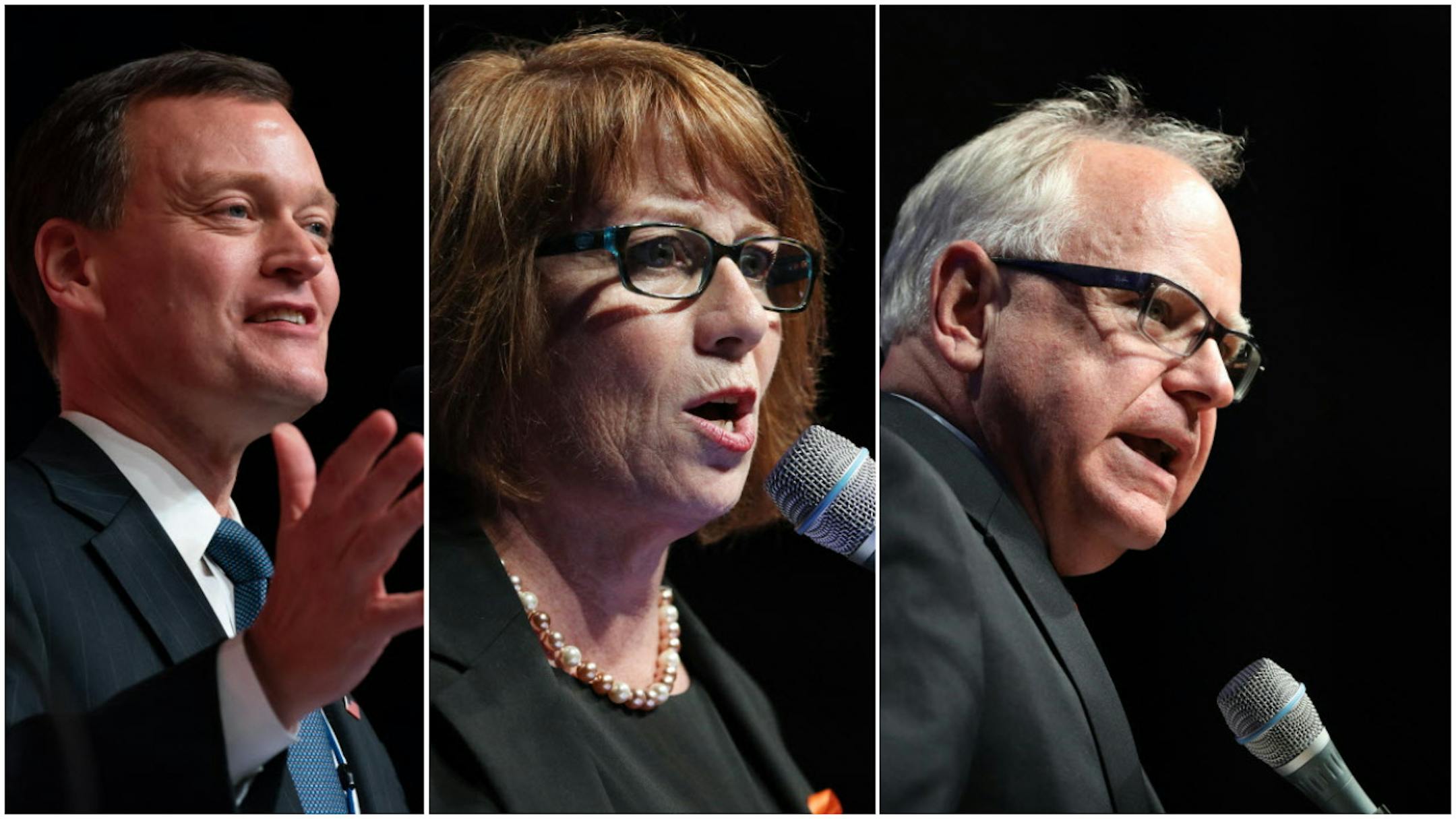
Three of the five major candidates in the governor's race participated, addressing the idea of a rural-urban divide — and what unites the state — at a forum in Mankato.
DFL-endorsed candidate and state Rep. Erin Murphy, Minnesota Attorney General Lori Swanson and U.S. Rep. Tim Walz are in a heated battle to be the DFL's pick in the Aug. 14 primary election. On the Republican side, Hennepin County Commissioner and GOP endorsee Jeff Johnson is competing with former Gov. Tim Pawlenty. Swanson and Pawlenty did not attend.
"What can they do for the greater area in Minnesota? That's what I'd like to see," Janice Sheets, an Eden Valley City Council member, said before the event. "They're just deadlocked all the time. They need to work together."
Elected officials and staff from many Minnesota cities gathered in Mankato this week for a conference that included the forum. City officials are interested in how candidates would govern, said Bradley Peterson, executive director of the Coalition of Greater Minnesota Cities, one of three organizations that hosted the debate.
"You have what is clearly a pretty negative atmosphere between the current governor and Legislature," Peterson said, referring to disagreements between DFL Gov. Mark Dayton and the GOP-dominated House and Senate. This year Dayton vetoed much of the work of the legislative session after lawmakers sent him a massive bill that included dozens of items he objected to.
People want a candidate who can bring people together to solve problems, Peterson said. Those problems range from aging water treatment systems to the lack of child care, he said.
Earlier in the day, Walz announced a plan he called "One Minnesota" to boost funding for transportation, affordable housing and Local Government Aid, as well as invest $300 million in high-speed internet access by expanding broadband service. The plan includes providing block grants funded mostly by the state to cities and neighborhoods to boost economic development. Walz had no cost estimate for his plan, but he said it probably would take raising taxes and that he would support a gas tax increase.


