

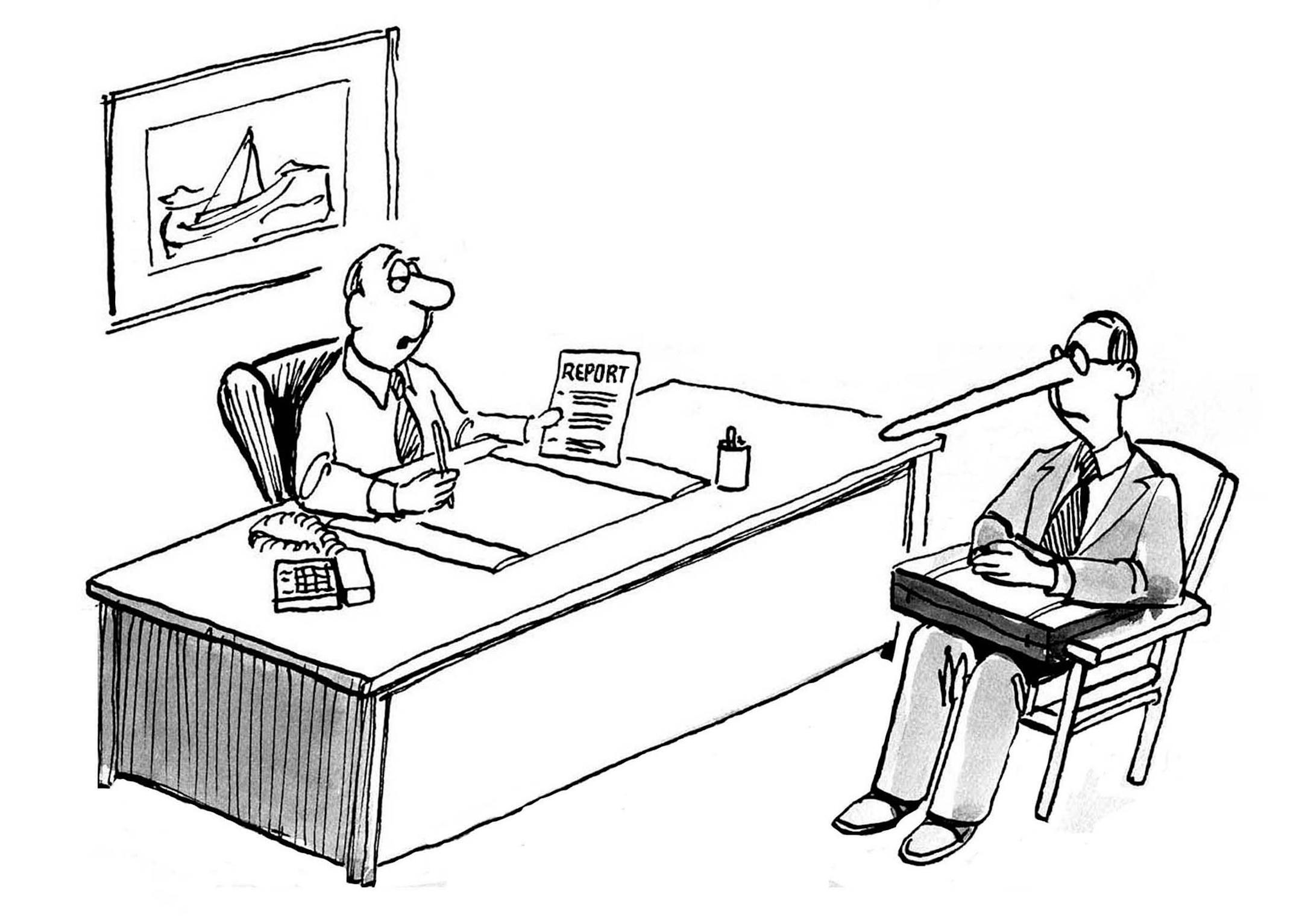
Unfortunately, being asked to lie remains in the top 10 of ethical dilemmas employees have had to face in the workplace. Your dilemma is compounded, however, when the request is from your boss — the individual upon whom your livelihood depends. You are now staring down a lose-lose scenario.
Any professional who is paying attention is fully aware of the culpability for their actions on the job today. And, they know they can no longer rely upon the safety net "My boss told me to do it." Employees have no immunity against unethical activity in the workplace and, if asked, they will have to testify in the courtroom, under oath, whatever they did, heard, knew or saw.
In a perfect world, of course an employee would say "no" to an unethical request of any kind. But, we don't live in a perfect world. That same employee would be the first to tell you when the request is from the individual you report to, "it ain't that easy."
I have yet to hear a defensible reason to ask an employee to lie for the boss. Likewise, I have yet to hear an employee satisfactorily explain why he or she absolutely had to do so. Even the "telephone white lie" can be circumvented by the clever word "unavailable," followed by an offer to pass on the message. Remember the adage: If you tell a lot of white lies, you soon become color blind.
All lies are intentionally deceptive messages — explicitly intended to mislead. There are two primary ways to lie: to conceal and to falsify. By concealing, the liar withholds information without actually saying anything untrue. When falsifying (including exaggerating), the liar not only withholds information, but also misleads by presenting false information as if it were true.
A lie is only a short-term fix anyhow — followed closely by cover up and clean up. And, it's a lot of work. President Abraham Lincoln once said: "I would make a terrible liar because I have a terrible memory!"
Does it matter if you lie?
It matters big time — because you have compromised your personal integrity and put your professional reputation in jeopardy. Lying also undermines trust and trust is what forms the basis of our professional relationships. When trust takes a hit, so does constructive communication.



