

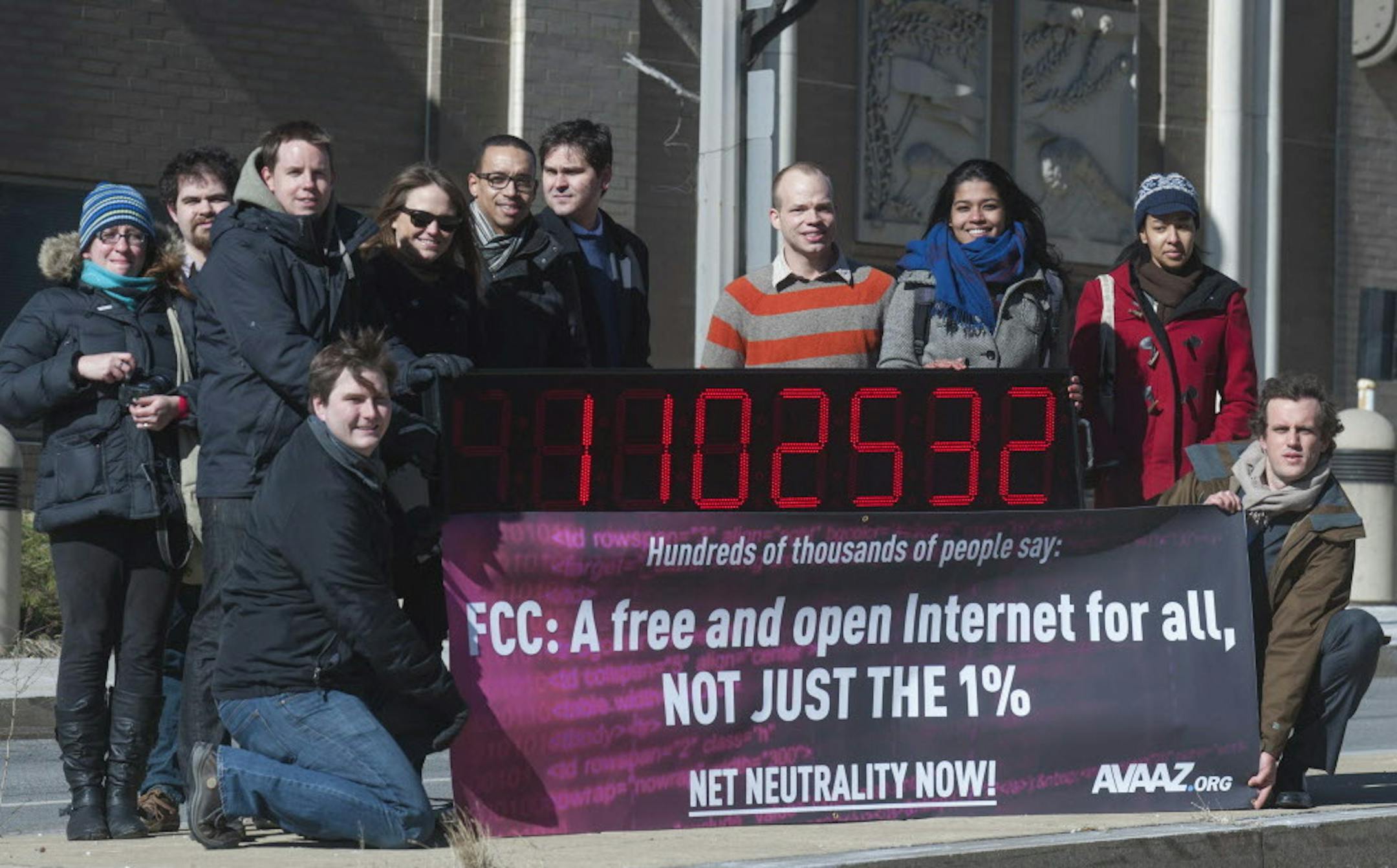
Like most small-business owners, I'm not a fan of big government. Free markets and a tough-but-fair competitive landscape in which the most agile and innovative players come out on top have allowed my company to thrive. So I'm the first to admit the irony of finding myself on the same side of a political issue as one of Minnesota's more liberal U.S. senators and a large government agency to boot.
I'm referring to the issue of an "open Internet,'' or "net neutrality," and Sen. Al Franken's stance that the "Internet should be an open marketplace where everyone can participate on equal footing," as he wrote in an open letter to the Federal Communications Commission back in January after a federal appeals court struck down the FCC's rules for net neutrality.
I hope political leaders on the other side of the aisle also can put aside their ideological differences and work with Franken and others in Washington pushing for enforceable net neutrality rules.
"Net neutrality" is a phrase originally coined by Columbia University media law professor Tim Wu, which he defined as the principle that Internet service providers (ISPs) and governments should treat all data on the Internet equally.
Net neutrality is akin to our current roadway system, where everyone has access to the same roads and speed limits, with the exception of the occasional toll road. Now imagine a different system in which the only free route goes down winding back country roads, has detours and a speed limit of 45 mph. A direct route for this same trip using the freeway system and a speed limit of 70 mph is available — but only for a significant fee.
If you spend any amount of time digging into the issue, you'll quickly discover that there are many wrinkles and flimsy counterarguments about "attempts at rent seeking by content providers who want the ISPs to pay the tab for future network upgrades." Or at least that's the spin being generated by those who are pushing for a closed Internet, in which big corporations (think Comcast, Verizon and AT&T) will play a big hand in deciding the "trip" your data takes over the Internet.
The problem with a closed Internet is glaringly clear for the millions of small and medium-sized businesses around the world: they will be at a technical disadvantage when competing with larger organizations that have deeper pockets.
And lest you conclude that my argument sounds like sour grapes from a small-business owner, please remember that the equal playing field of the Internet created the sites most people use today, like Google and Facebook.
![Tom Salonek, President/Owner of Intertech in Eagan MN., on 5/30/31.] Bruce Bisping/Star Tribune bbisping@startribune.com Tom Salonek/source. ORG XMIT: MIN1305301628490626](https://arc.stimg.co/startribunemedia/VTTK6BCIV6D6EE7ZXHCMSLCWCI.jpg?&w=1080)


