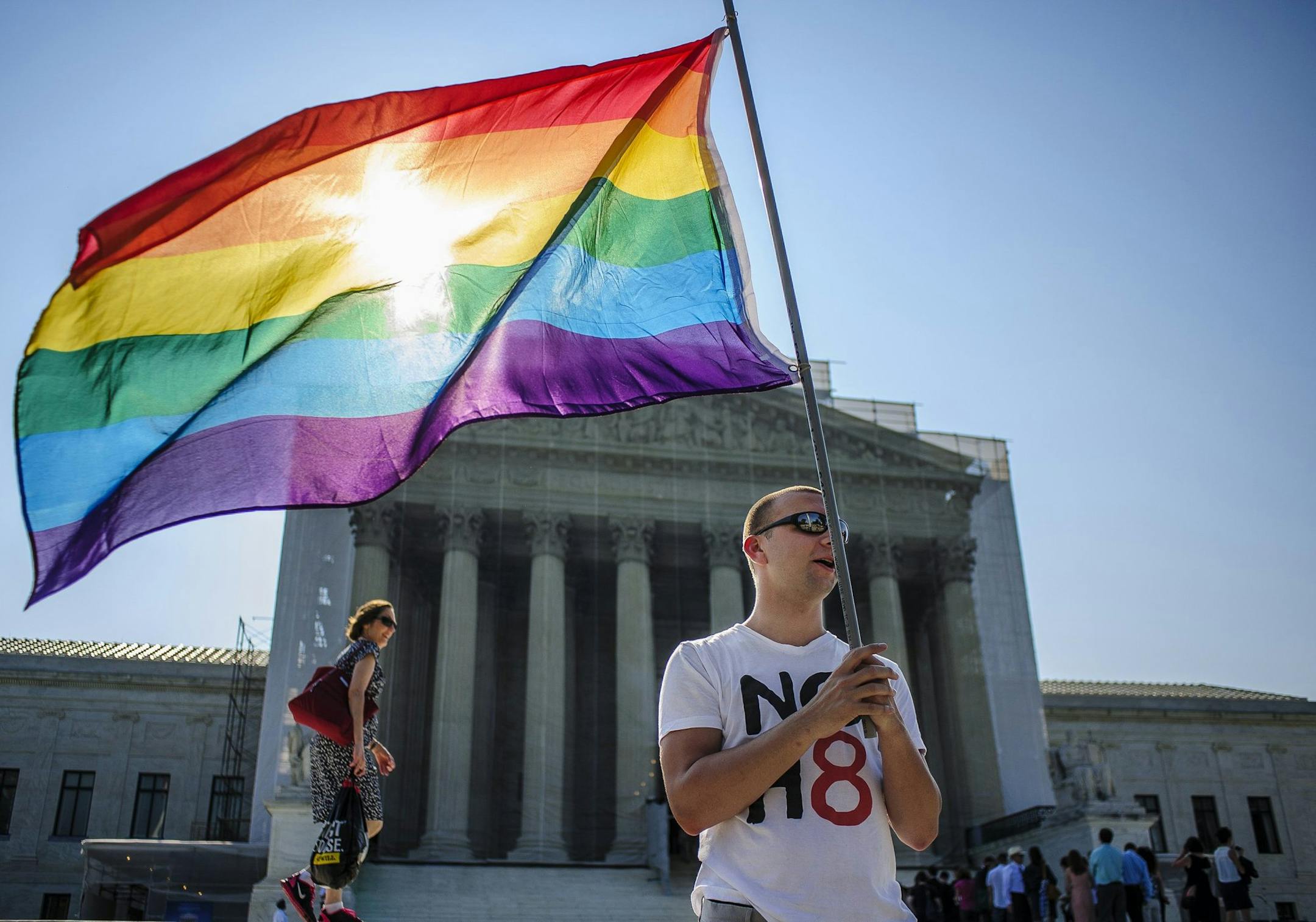
The U.S. Supreme Court ruling in June that struck down a key part of the Defense of Marriage Act (DOMA), coupled with the legalization of same-sex marriage in Minnesota, will have far-reaching effects here and in other states that recognize same-sex unions.
With the Minnesota law taking effect Aug. 1, businesses should thoroughly review their benefits policies to ensure that their programs are up to date and inclusive to all legally married couples.
Specifically, the Supreme Court ruling provides that individuals who are defined to be legally married by a state must be granted access to federal benefits that previously were available only to married couples made up of one man and one woman. The court found that the opposite-sex-only definition of marriage was unconstitutional because it deprived lawfully married same-sex couples equal protection under the Fifth Amendment of the Constitution.
In the coming weeks, employers should evaluate their H.R. policies because Minnesota residents will soon have access to a variety of benefits, including the right to file joint income tax returns and obtain spousal benefits from Social Security. To ensure compliance with the new laws, employers should focus on these H.R. policies:
Health care coverage
All employer-sponsored self-insured coverage continues to be governed by ERISA (the Employment Retirement Income Security Act). However, the court's ruling now requires that plans offering spousal coverage in states recognizing same-sex unions provide coverage for same-sex married partners. Businesses need to provide same-sex married couples with an opportunity to enroll or change benefits election options in health plans, including health flexible spending accounts.
Tax reporting of health coverage for same-sex married couples will also change in states that recognize same-sex marriage. The value of health coverage provided to a same-sex spouse will not be treated as imputed income reported on a W-2, but will instead be pretax. Coverage provided to same-sex or heterosexual domestic partners who are not married will continue to be on an after-tax basis.
Retirement benefits
Many retirement benefits, such as a 401(k) plan or a pension, are subject to the Internal Revenue Code and ERISA. The court's decision means that employers must provide the same retirement benefits to same-sex spouses that are provided to opposite-sex spouses. Employers also will be required to recognize same-sex spouses for purposes of determining surviving-spouse annuities and death benefits.
In addition, plans must provide a qualified joint and survivor annuity, and a qualified pre-retirement survivor annuity, to a participant with a same-sex spouse.