

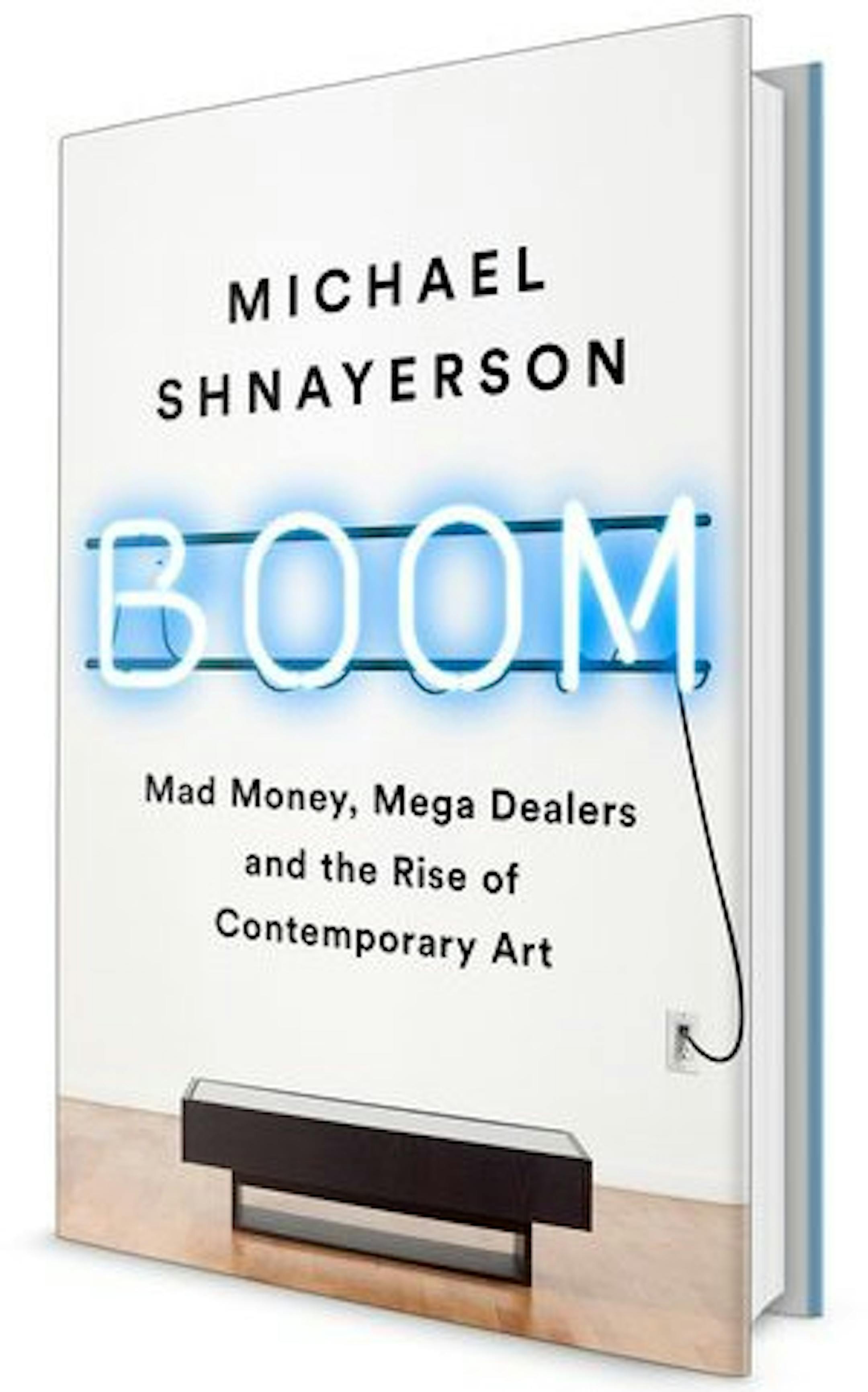
'Boom: Mad Money, Mega Dealers and the Rise of Contemporary Art'
Michael Shnayerson, PublicAffairs, 450 pages, $30. In 1960, Peggy Guggenheim deplored the state of the U.S. art market, saying it had become too much of a business, raising prices for art that would only ever be stored in a vault instead of enjoyed. Guggenheim died in 1979, narrowly missing the stratospheric rise in the stocklike sale of art, and, with it, that of the man who would become its most exceptional stockbroker: Larry Gagosian, a gallerist whose dominion would come to span the globe. Gagosian is the grandest and, apparently, the highest earning, of the mega-dealers who gate-keep the grounds of contemporary art, deciding which museum, collection or egregiously wealthy client can get what and at what price. In "Boom," Michael Shnayerson, a contributing editor at Vanity Fair, tells the story of Gagosian and his high-end peers, and how their finds have risen so much in value. "Boom" posits that the arc of the art market in the late 20th and early 21st centuries has been yanked away from art and toward the market. And then it digs into the whys — or tries to — and whos. A shrewd self-taught operator, Gagosian is an irresistible character in search of his own bildungsroman. There's a dark, sour suspicion at the heart of this history: that, for all the talk of the fabulous and the sublime, this world spins on spin. Shnayerson quotes the artist Peter Doig, who had a piece sell for $28.8 million at auction in 2017, saying there's no such thing as a "contemporary masterpiece." It's all marketing.
NEW YORK TIMES


