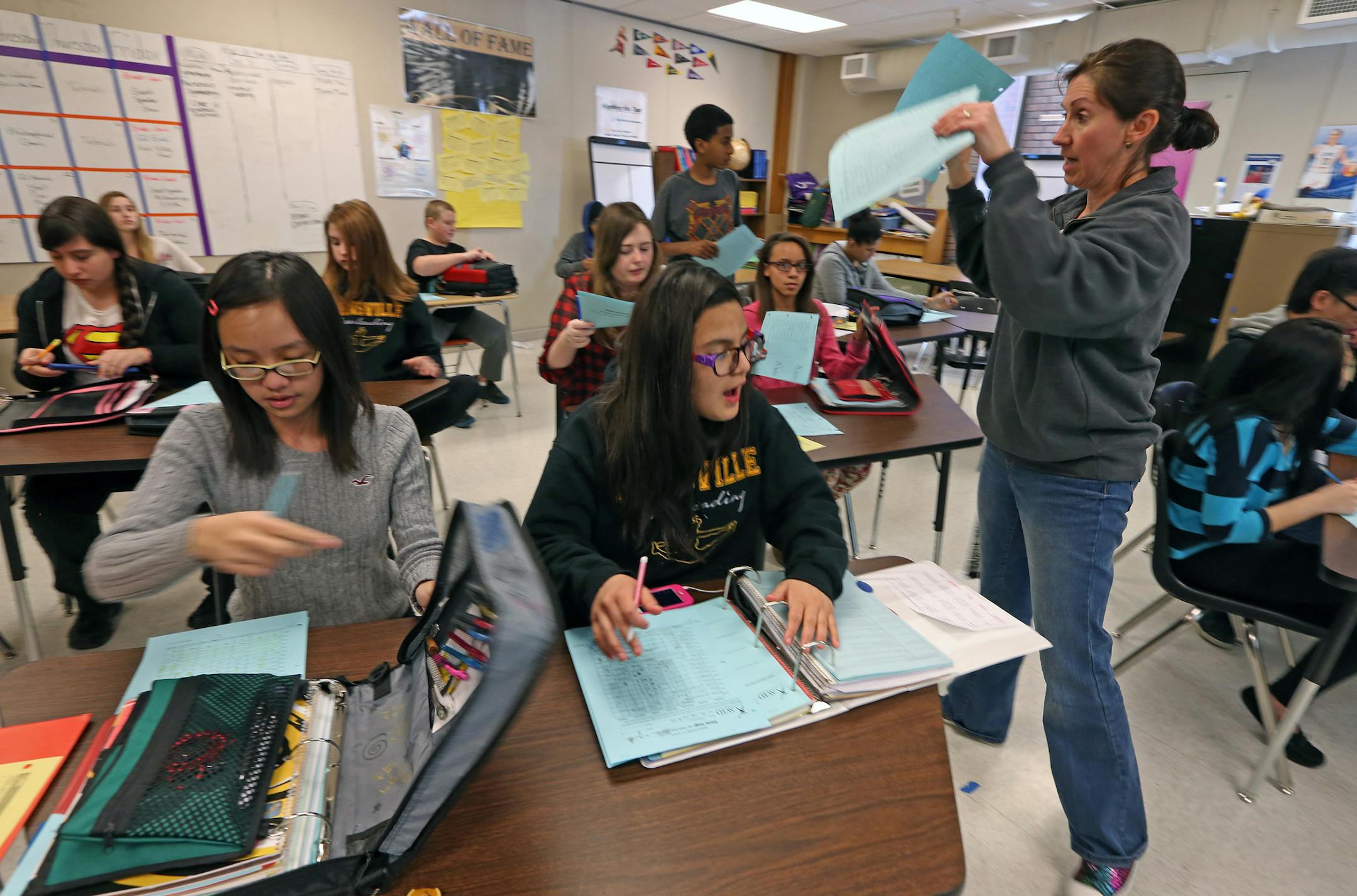
With years of collaborative efforts failing to make a dent in the racial imbalance between the Lakeville and Burnsville-Eagan-Savage school districts, changes in state law are allowing them to shift more of their focus onto the achievement gap between white and nonwhite students.
The collaboration also will be subject to closer state scrutiny and will be required to demonstrate measurable results.
A new integration plan aims to encourage students to interact more often through summer academic programs and better train teachers and staff in how to connect with an increasingly diverse student body. It's the third such plan the districts have created together since Burnsville was first identified as "racially isolated" by the Department of Education in 2006.
Because the two adjacent districts have more than a 20 percentage-point difference in their percentage of students of color, both are eligible to receive additional state funding if they band together to address integration issues.
Over the eight years that the districts have worked together as a Multi-District Collaborative Council, that disparity has increased, growing from 21 percentage points to 28. Lakeville now has 16 percent students of color and Burnsville has 44 percent. That's despite programs such as new magnet schools that were designed to get students from one district to voluntarily enroll in the other.
This time, however, the plans will receive more oversight from the Department of Education. Thanks to legislation passed last year, Minnesota districts receiving integration funding face more scrutiny than ever, as do their integration plans.
"In the past I will acknowledge that these plans were not heavily scrutinized," said Rose Hermodson, Assistant Commissioner at the Minnesota Department of Education. "There was not the evaluation aspect that was ever really implemented … and we are clearly going to do more in relation to holding districts accountable."
If the plans do not produce measurable results, the state may eventually withhold funding and implement strategies that they choose, said Rep. Carlos Mariani, DFL-St. Paul, who previously served as chairman of the E-12 Education Policy Committee.