

Sorrel, the vibrant broad-leafed herb, is peeping up in my backyard, one of the season's first greens. This herb is the North Country's answer to lemon. Though less astringent than the citrus, it serves the same purpose of heightening flavors, and it adds a lovely accent to dishes of eggs, chicken and lamb. Whisk it into cream soups, sauces, mayonnaise and dips. It's also fabulous with fish.
A cousin of buckwheat and rhubarb, sorrel is a hardy perennial, undaunted by the cold, growing continuously from April through frost. Its distinctive tart taste is due to oxalic acid, which is also present in black tea and spinach.
Like spinach, sorrel is tender and mild when the plant is young (early spring), but turns slightly bitter as the season progresses. Cooking helps to dampen its bite while it also reduces the volume. Adding a few leaves of spinach or chives adds a brighter color. Local sorrel is just now coming into our co-ops, supermarkets, spring farmers markets and our backyards.
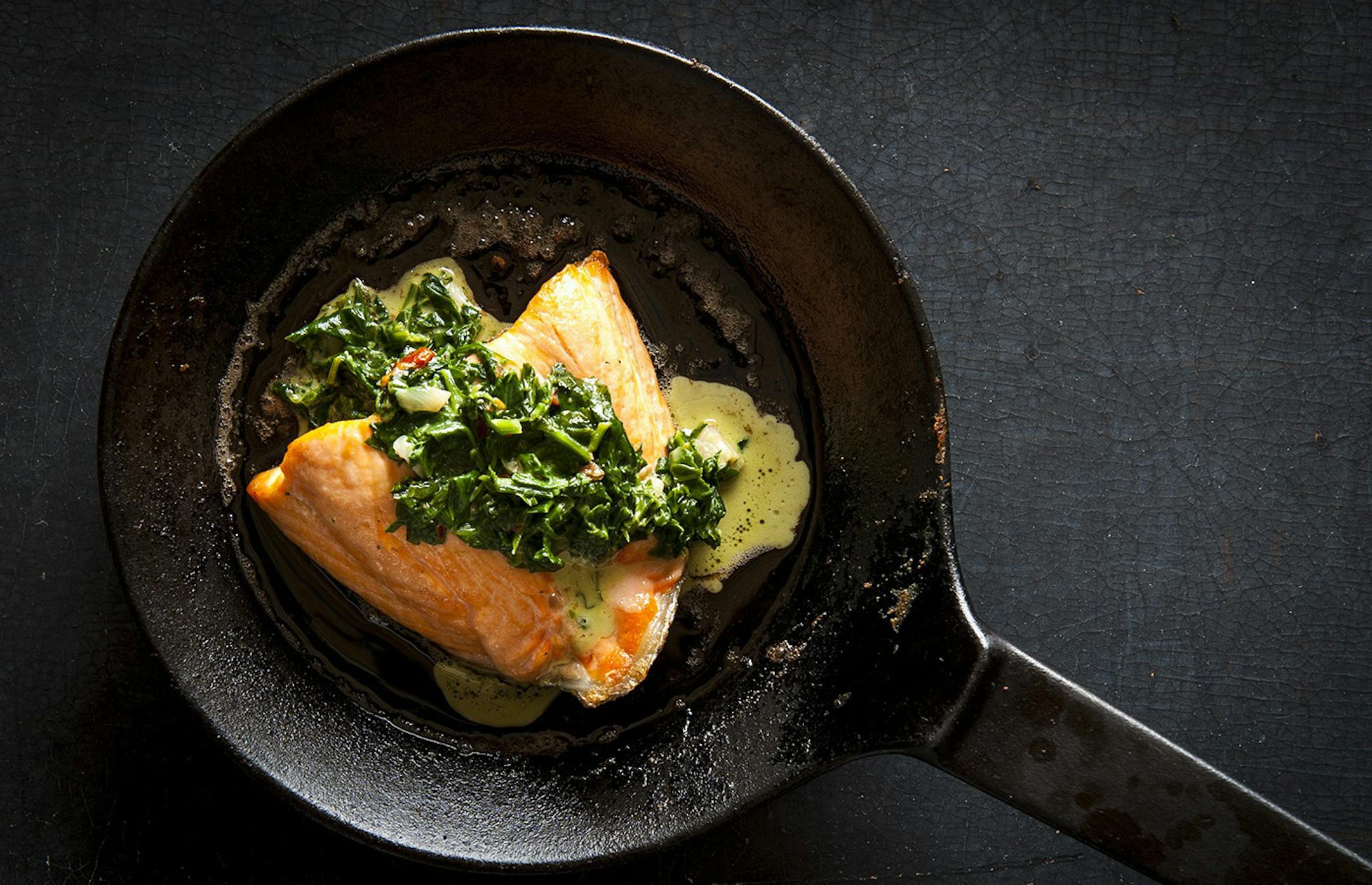
Sorrel's exuberant color and tangy flavor are a perfect complement to fish, especially salmon. Right now, farm-raised salmon is readily available, before the season for wild salmon begins in May. Atlantic salmon, raised sustainably by environmentally conscious farmers, are delicious.
The only trick to cooking salmon is not to overcook it. I like to start it in a hot pan, then finish it in a hot oven and serve the pretty pink salmon with the brilliant contrasting green sorrel sauce.
If you can't find fresh sorrel, substitute fresh spinach in this recipe and add a generous squirt of fresh lemon juice before serving. The sassy notes of sorrel help slap me out of my wintry doldrums. Now is the time to spring into this green.
Simple Sorrel Sauce for Fish
Makes about 1 1/2 cups.
Note: This sauce is also delicious on chicken breasts and steak. If you prefer a smoother texture, purée the mixture in a food processor or blender. If sorrel isn't available, substitute equal amounts of spinach for the sorrel and add a generous squeeze of fresh lemon juice before serving. From Beth Dooley.


