
Bright side of a nervous breakdown

An overachiever who eventually found himself in "a dark place" finds much to be happy about now. Here are his tips for getting out of a funk.

Chicago Tribune
March 17, 2012 at 4:38PM
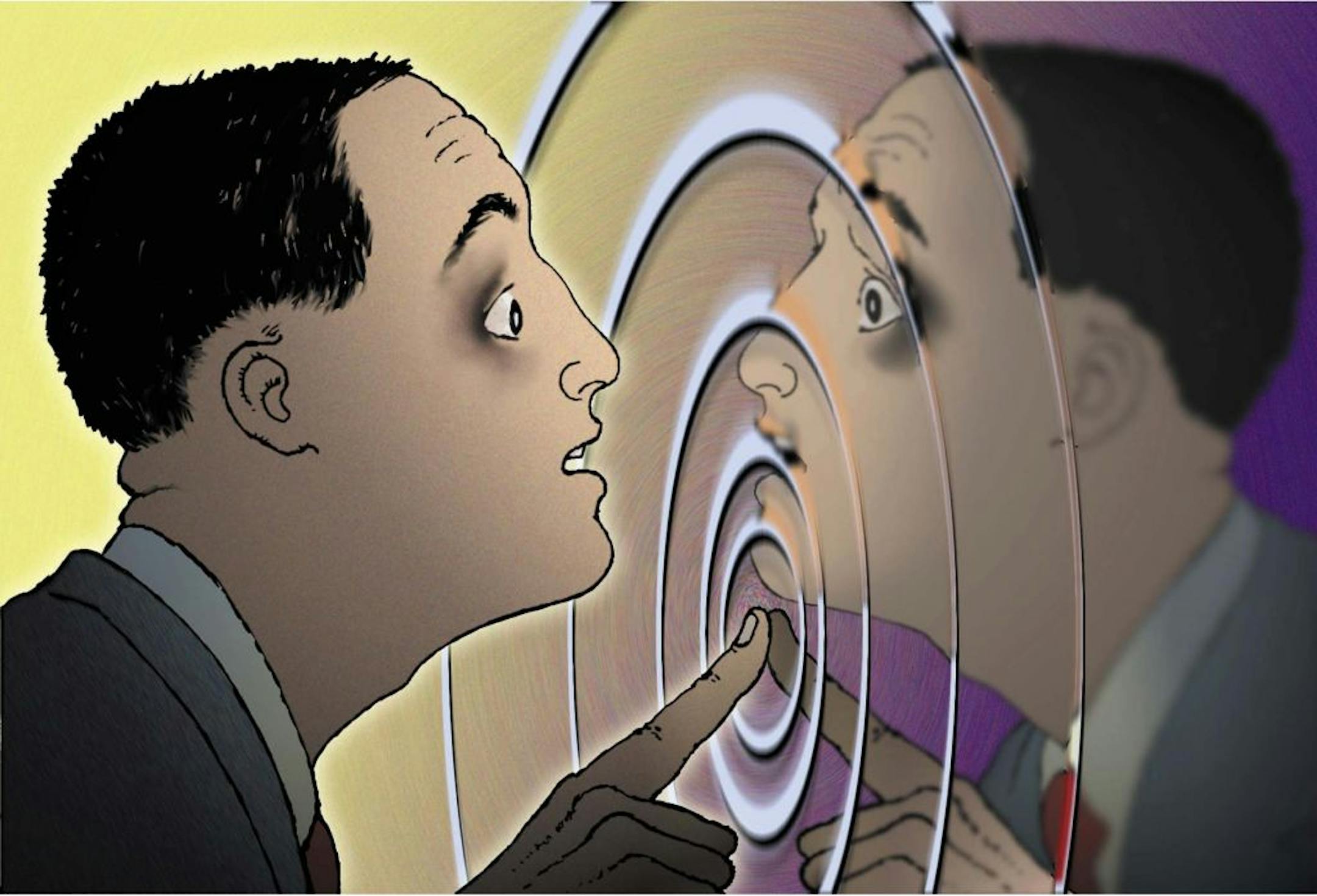
300 dpi 4 col x 5.25 in / 196x133 mm / 667x454 pixels John Roberge color illustration of a mentally distressed man touching a reflection of himself. Talahassee Democrat 2002 <p>
KEYWORDS: depression health mental illness analysis psychotherapy psychiatric psychoanalysis self image esteem illustration depresion salud enfermedad psiquiatria psicoanalisis imagen propio amor mismo ilustracion reflection grabado contributed ta roberge 2002
300 dpi 4 col x 5.25 in / 196x133 mm / 667x454 pixels John Roberge color illustration of a mentally distressed man touching a reflection of himself. Talahassee Democrat 2002 KEYWORDS: depression health mental illness analysis psychotherapy psychiatric psychoanalysis self image esteem illustration depresion salud enfermedad psiquiatria psicoanalisis imagen propio amor mismo ilustracion reflection grabado contributed ta roberge 2002 (Krt/The Minnesota Star Tribune)

Having a nervous breakdown isn't on many people's wish lists, but for Todd Patkin, it was just what the doctor ordered.

"It was the most wonderful experience -- after the fact," said Patkin, author of "Finding Happiness: One Man's Quest to Beat Depression and Anxiety and -- Finally -- Let the Sunshine In." "I wouldn't wish it on my worst enemy, but when you feel enough pain, then you make change."

Prone to depression and anxiety from the time he was a young child, Patkin said he managed to cope by staying busy and being an overachiever. But for him, the turning point happened at age 36, during the height of his career.

"I'd fractured my foot and I was addicted to exercise, and I couldn't exercise anymore," he said. "Then my wife and I suffered from infertility issues -- we have one son, Joshua, but we wanted more children. But we suffered a miscarriage, which was devastating."

Patkin said that with the pain of that loss and the problems with his foot -- one doctor even warned that he might never walk again -- he went to a "dark place."

"And I didn't have the endorphins of exercise to help me out of it," he said. "I mean, I had this beautiful wife, a successful career, a son I loved more than anything, and I didn't care if I lived or died at one point."

Patkin said that after two months of despair, the right doctor finally gave him hope.

"I finally said, 'Enough is enough! You have the woman of your dreams, the most wonderful son, you have money, you're healthy and you wanted to kill yourself for two days -- what is going on?' So I got to the right psychiatrist, and began to lead a different life."

Patkin said the first step to changing the tide was learning to love himself unconditionally, which wasn't easy.

"My wife is from Venezuela and she was born with all this unconditional love," he said. "We aren't wired that way in America. You have to think of it as giving the same love and kindness to yourself that you'd give to your spouse or your child. The fix is simple, but it can be really hard to do."

If you're struggling with similar life woes, don't wait to hit rock bottom. Here are Patkin's tips on avoiding that breakdown and finding happiness:

Exercise. "I truly believe the single most important thing is exercise. It's a natural antidepressant. Even 20 minutes of walking. It gets the endorphins going, helps with sleep. That's really important."

Turn off the news. "We need to feed our minds as well as our bodies, so if someone only watches the news headlines, it can create fear and anxiety in your brain, which is what we are trying to rewire. I want you to spend at least 20 minutes a day listening to something motivational -- a different angle on why life is beautiful to help you look at things differently."

Remember that it's not always about you. "In high school, I was bullied by a girl. She made my life miserable. Later in life, I ran into her, and I asked, 'Why did you do that to me?' She said she was so insecure and unhappy with herself that she picked three people and decided to destroy them. She has three little boys now, and she said she realizes that what she did was awful and that she was so sorry. We have to know it's not us. The whole time I took it personally, but it had nothing to do with me."

Be present in your relationships. "I spent so much time with my son being there physically and not personally. We need to stop thinking about that promotion, or that speech in a week -- so we can really be with our [loved ones] when we are with them."

Focus on what's working. "For the one thing we do wrong, we do 100 things right, yet we only focus on what we did wrong. This might make us successful but also extremely neurotic. We are human. You'll always make at least one mistake. Yet we shoot for perfectionism. I don't know too many happy perfectionists. If you can master the way your mind works, life is amazing. And when you can't, your brain can destroy you."

about the writer

about the writer

JEN WEIGEL

More from Minnesota Star Tribune

See More
card image
J. SCOTT APPLEWHITE, ASSOCIATED PRESS/The Minnesota Star Tribune

The "winners" have all been Turkeys, no matter the honor's name.

In this photo taken Monday, March 6, 2017, in San Francisco, released confidential files by The University of California of a sexual misconduct case, like this one against UC Santa Cruz Latin Studies professor Hector Perla is shown. Perla was accused of raping a student during a wine-tasting outing in June 2015. Some of the files are so heavily redacted that on many pages no words are visible. Perla is one of 113 UC employees found to have violated the system's sexual misconduct policies in rece