
Bridge work on Hwy. 169 has drivers at wit's end

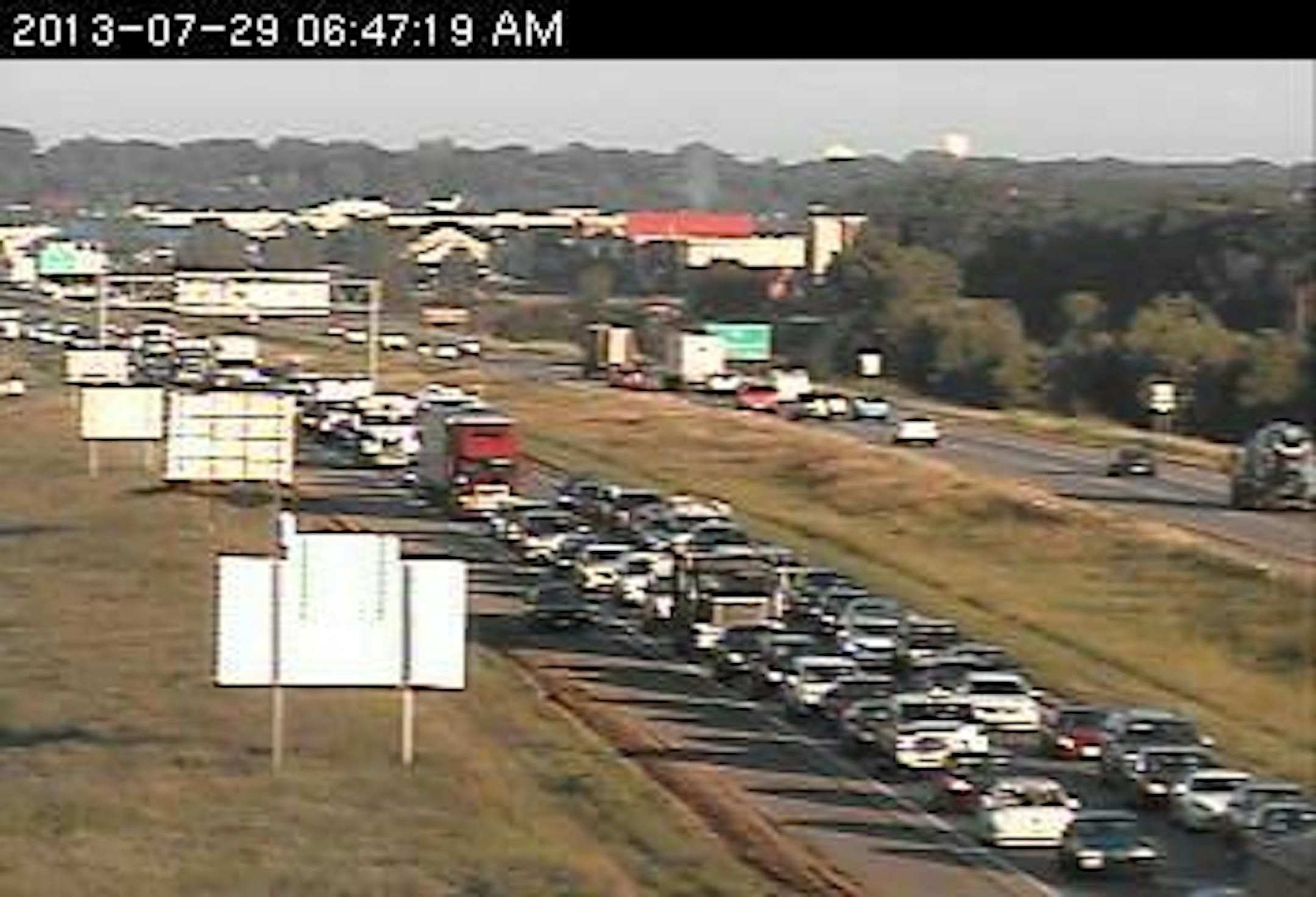
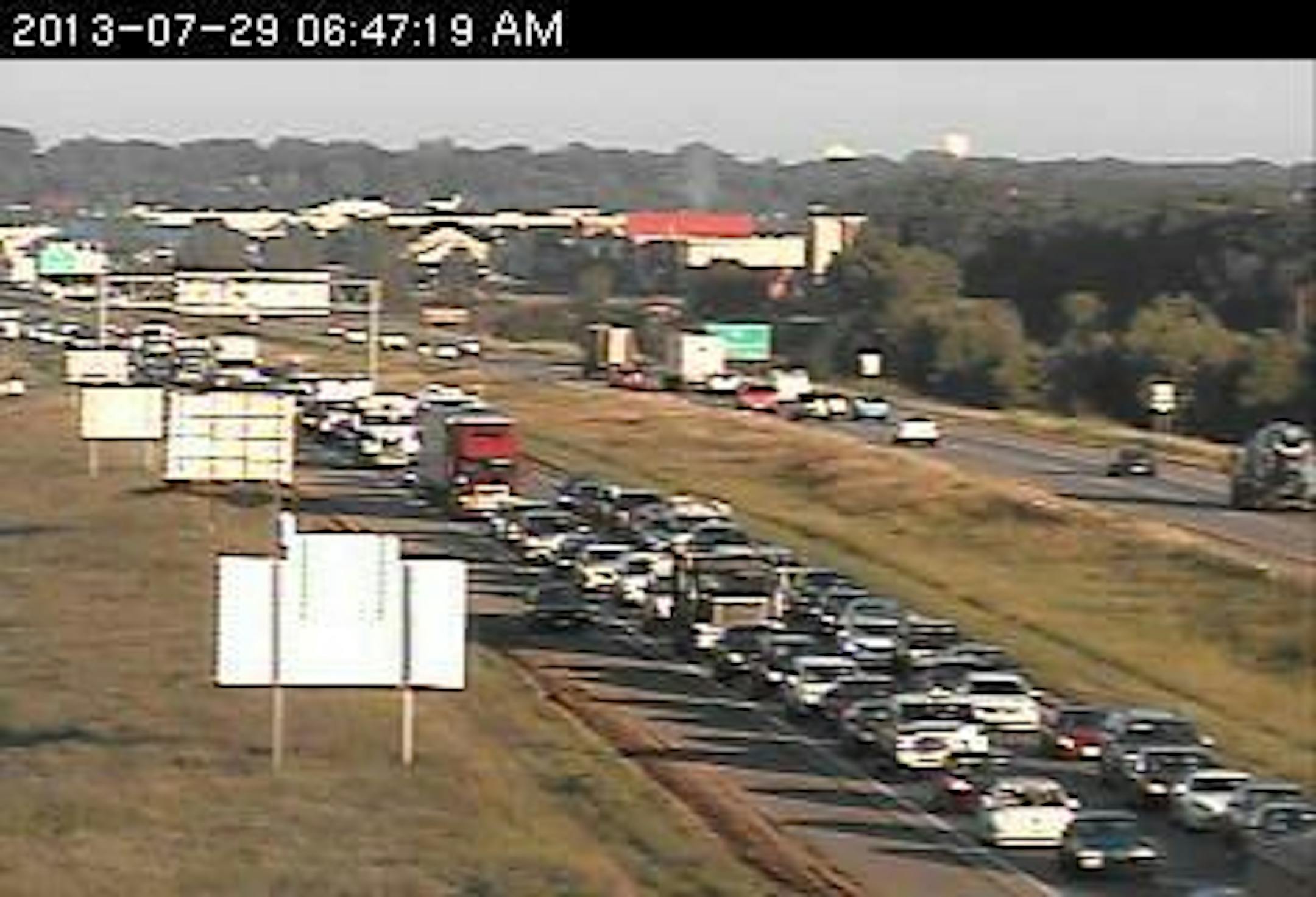
If the gridlock conditions that developed during Monday's morning rush hour on Hwy. 169 in Shakopee are any indication of what commuters will endure while MnDOT repairs the Bloomington Ferry Bridge, it's going to be a long long month.

July 30, 2013 at 10:24AM
(The Minnesota Star Tribune)

If the gridlock conditions that developed during Monday's morning rush hour on Hwy. 169 in Shakopee are any indication of what commuters will endure while MnDOT repairs the Bloomington Ferry Bridge, it's going to be a long long month.

But at least it will be only for a month instead of 12 weeks as one plan considered by MnDOT would have had it. By shutting down the southbound lanes for two weeks to make the fixes and followed by closures on the northbound lanes for two weeks, crews will be able to shave eight weeks of the project, said Kirsten Klein, a MnDOT spokeswoman.

That might not be any consolation to drivers who spent 30 to 40 minutes stuck in the traffic jam that developed between 6:30 and 9 a.m. and stretched from Old Shakopee Road to well beyond Canterbury Road. It also had drivers on westbound Hwy. 13 at a standstill.

"Thanks for making my Monday even better," tweeted driver Rebecca Lane. "I found fine CDs in my car from 1998. I have time to listen to 25 years of music now."

But most commuters were not joyfully singing as they sat helplessly on the highway that will be down to a single lane until the end of next month.

"1 hour spent on 169 and not yet to Bloomington Ferry Bridge. Really?" tweeted Gene Sieve. "This is the best you could do?"

Considering the bridge needs its joints repaired and fixes to the shoulders and drainage system, the answer is yes, says Klein.

MnDOT could have closed one northbound lane and one southbound lane at a time, but that would take longer and would have extended the project an additional eight weeks.With projects such as this, it takes longer to work on one lane at a time because equipment has to be moved, construction zones altered and additional time is needed for concrete to cure.

A few readers asked why work can't be done 24/7 to speed things along. That would add a hefty sum to the $5.5 million being spent and bring extra noise to the area. MnDOT does have crews working extended hours to ensure the project is completed within the four-week deadline. As I mentioned in Monday's column, the contractor has incentive to meet deadlines since they pay for each day they have lanes closed.

In the meantime, Klein suggests that drivers use three alternate routes to cross the Minnesota River: Hwy. 101, Hwy. 41 and I-35W. She also said things might improve by mid week as drivers use other routes, alter their work hours or if their employer allows it to work from home.

"We are asking people to be patient," she said. "We know it's going to be slow. We are sorry. bear with us. It has to get done."

about the writer

about the writer

Tim Harlow

Reporter

Tim Harlow covers traffic and transportation issues in the Minneapolis-St. Paul area, and likes to get out of the office, even during rush hour. He also covers the suburbs in northern Hennepin and all of Anoka counties, plus breaking news and weather.

See Moreicon

More from No Section

See More
FILE -- A rent deposit slot at an apartment complex in Tucker, Ga., on July 21, 2020. As an eviction crisis has seemed increasingly likely this summer, everyone in the housing market has made the same plea to Washington: Send money — lots of it — that would keep renters in their homes and landlords afloat. (Melissa Golden/The New York Times) ORG XMIT: XNYT58
Melissa Golden/The New York Times

It’s too soon to tell how much the immigration crackdown is to blame.