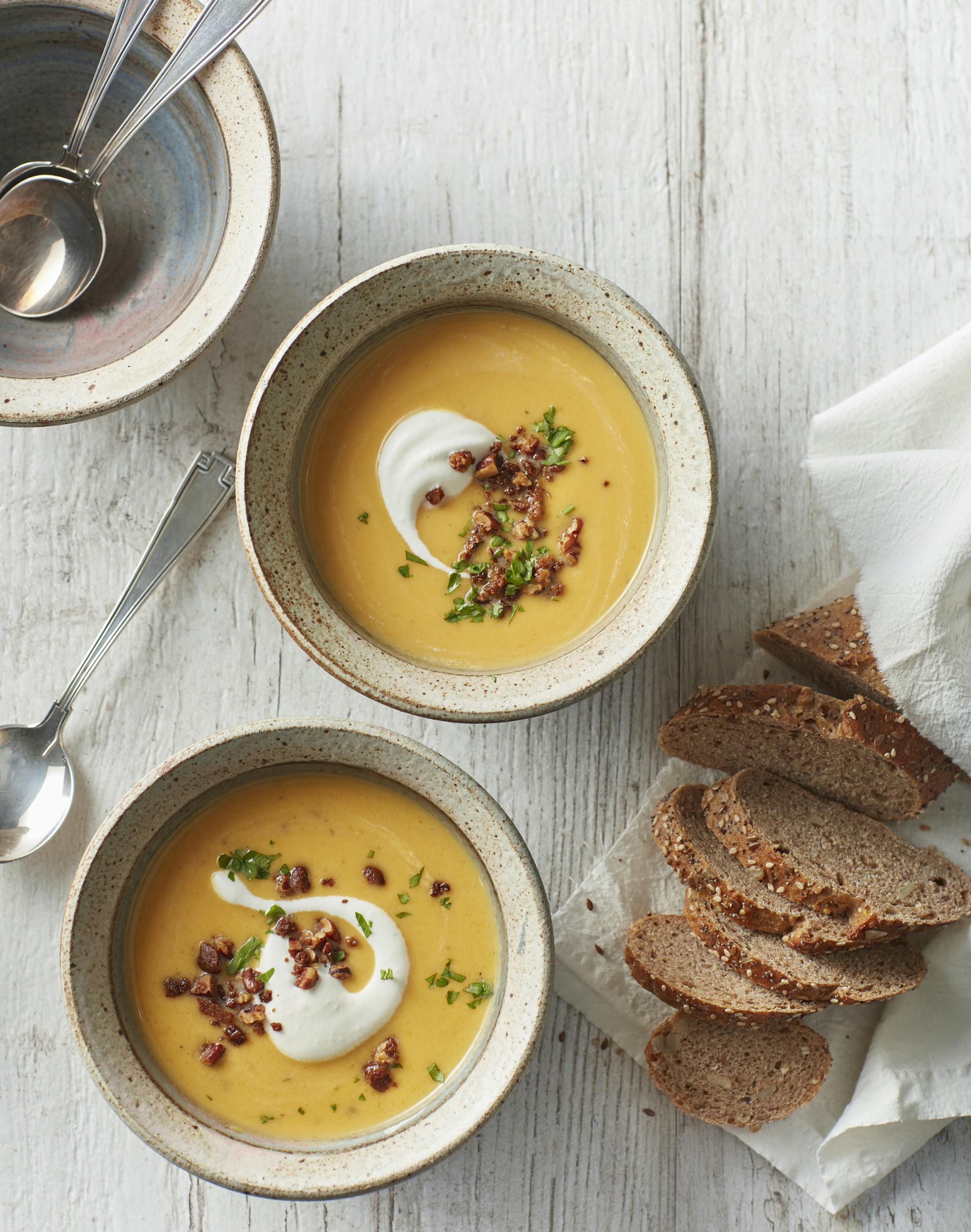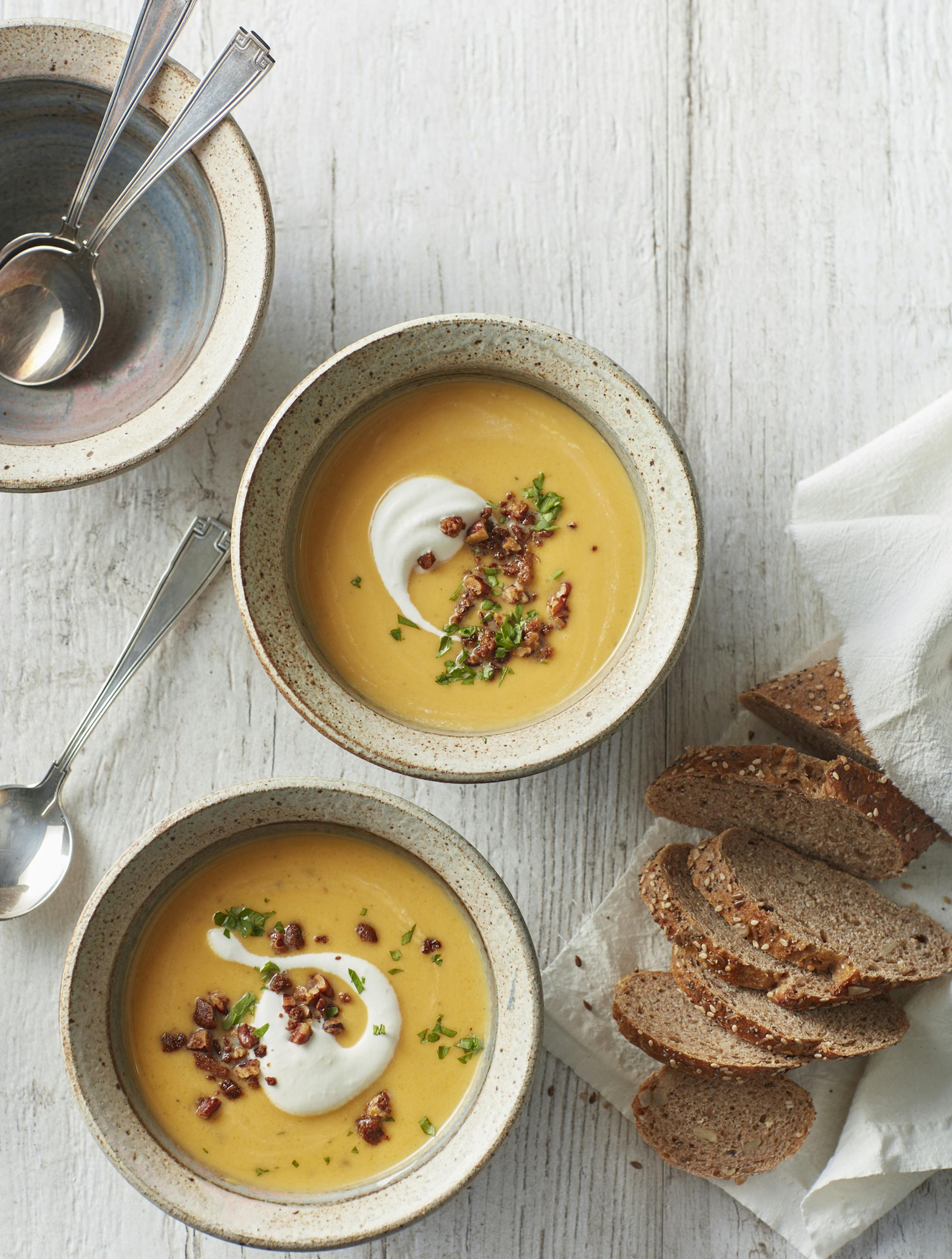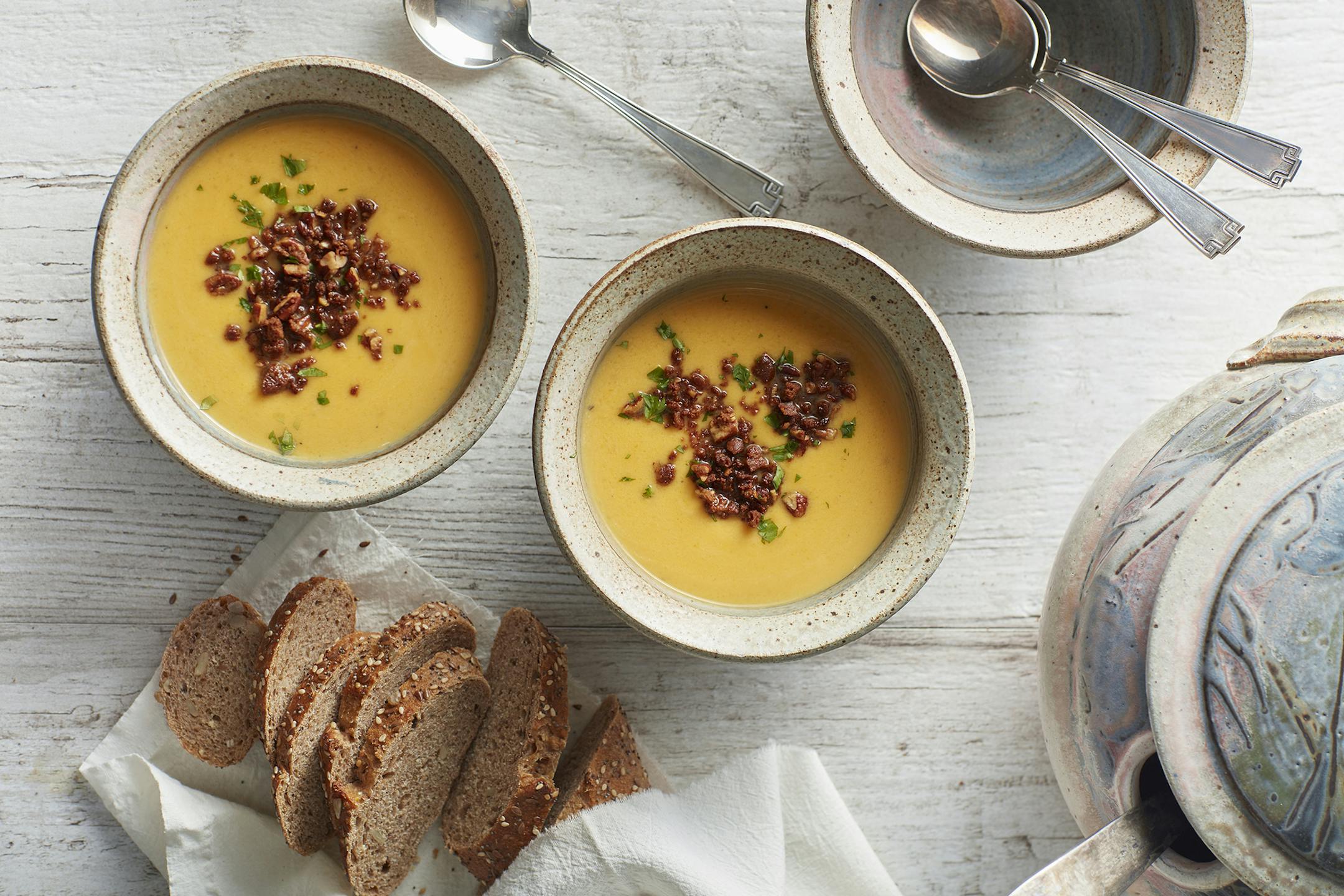
After weeks of excess, you may be ready to settle into a new eating pattern for a new year, one that's a little lighter and whole lot easier. Nothing fits that description better than soup.
It's tailor-made for winter meals, comfort in a bowl, love on a spoon, satisfaction simmering on the stove. All that, and it comes together so easily. Whether you make it all from scratch, starting from the stock, or you purchase stock and a few other ingredients for a quick and easy meal, soup never fails.
In a perfect world, everyone would make stock from scratch. Homemade stock can turn a simple soup, stew or sauce into something special. It has a deep, rich flavor and, in the case of beef or chicken stock, plenty of gelatin, which adds critical body to sauces and soups. The good news is that stock is much easier to make than you might think, especially when you use either a slow cooker or pressure cooker.
Of course, a stock pot is the tried and true piece of equipment for this task, and it works just as well today as it did a hundred years ago, but there are some advantages to upgrading to a more modern method. In the case of the slow cooker, you can put all your ingredients in, turn it on and let it simmer away all day (or overnight) without needing any attention. A stock that's cooked for eight hours is going to have pulled all the flavor possible from the ingredients, resulting in deep flavor.
Another method — a pressure cooker (or the more recent Instant Pot-style cooker) creates steam in a sealed chamber, which drives the boiling point temperature higher than you would get on the stove. The result for both is that the method extracts more flavor from the meat and vegetables and breaks down any connective tissues more effectively. It also does this in a fraction of the time it would take using more traditional methods.
There are endless options when it comes to the type of stocks you can make. Beef, chicken, pork, lamb, fish and vegetable are all common varieties. In my kitchen, I most often make chicken stock, which I find to be the most versatile.
Then I generally roast chicken and vegetables before cooking them in water. Roasted chicken stock has an even deeper flavor and color than unroasted stock, which means it can often be used in place of beef stock, if that's not available. The difference between the two is like that between a poached chicken breast and a roasted chicken breast. Poached can be lovely, but it's much more subtle than the robust flavor of roasted chicken.
One "secret" ingredient I use is a touch of soy sauce. It gives an added umami flavor which brings an extra dimension to the stock with almost no effort.