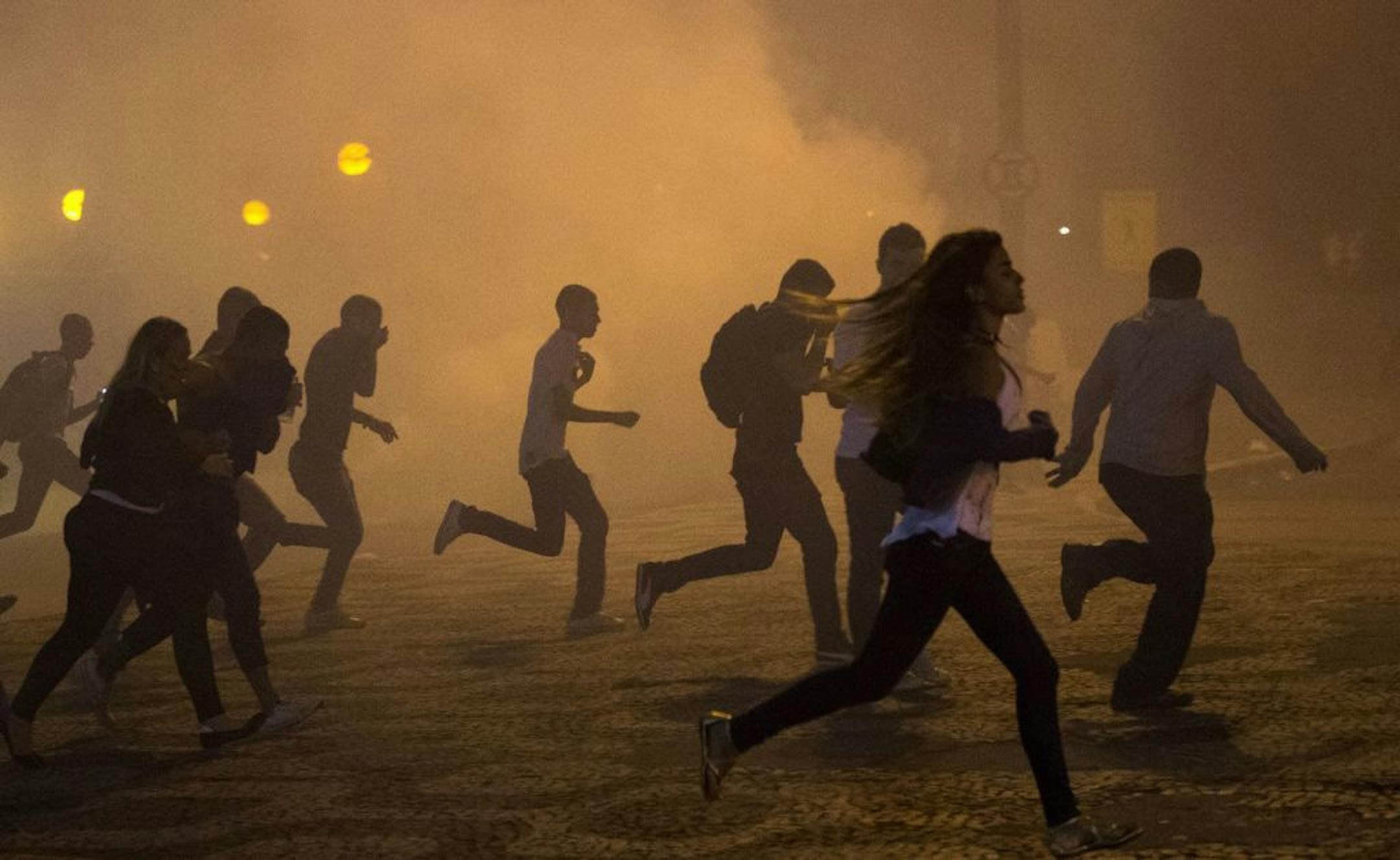
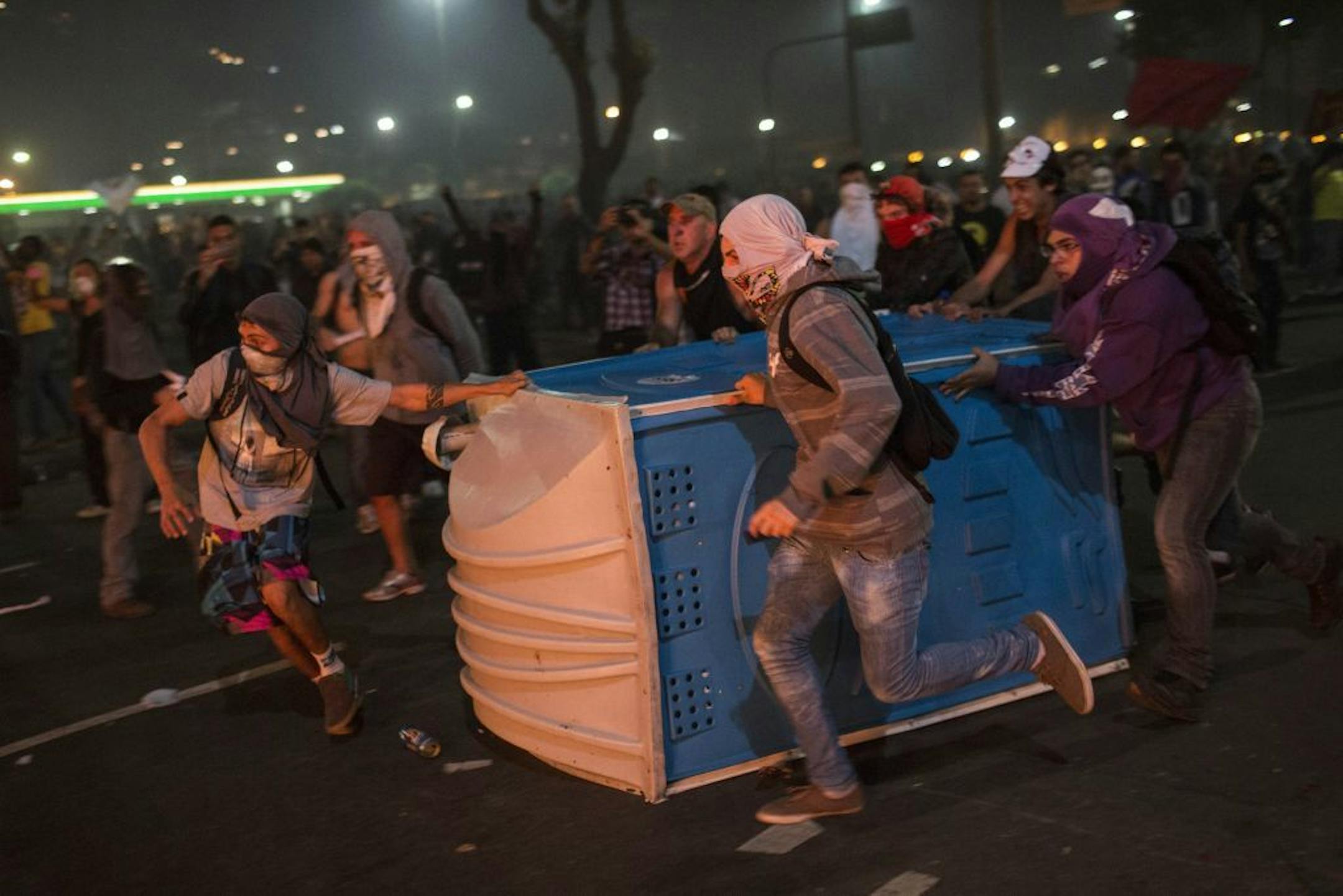
BRASILIA, Brazil — Brazilian President Dilma Rousseff ended her near-silence about days of massive, violent protests, saying in a prime-time TV broadcast Friday that peaceful demonstrations were part of a strong democracy but that violence could not be tolerated. She promised to improve public services and hold a dialogue with protest leaders.
But it remained unclear exactly who could represent the massive and decentralized groups of demonstrators taking to the streets, venting anger against woeful public services despite a high tax burden.
"I'm going to meet with the leaders of the peaceful protests, I want institutions that are more transparent, more resistant to wrongdoing," Rousseff said in reference to perceptions of deep corruption in Brazilian politics, which is emerging as a focal point of the protests. "It's citizenship and not economic power that must be heard first."
Though offering no details, Rousseff said that her government would create a national plan for public transportation in cities — a hike in bus and subway fares in many cities was the original complaint of the protests. She also reiterated her backing for a plan before congress to invest all oil revenue royalties in education and a promise she made earlier to bring in foreign doctors to areas that lack physicians.
The leader, a former Marxist rebel who fought against Brazil's 1964-1985 military regime and was imprisoned for three years and tortured by the junta, pointedly referred to earlier sacrifices made to free the nation from dictatorship.
"My generation fought a lot so that the voice of the streets could be heard," Rousseff said. "Many were persecuted, tortured and many died for this. The voice of the street must be heard and respected and it can't be confused with the noise and truculence of some troublemakers."
She'd been widely criticized for being all but invisible amid the protests and failing to engage with the people who were demanding her government's attention.
Edvaldo Chaves, a 61-year-old doorman in Rio's upscale Flamengo neighborhood, said he found Friday's speech convincing.