

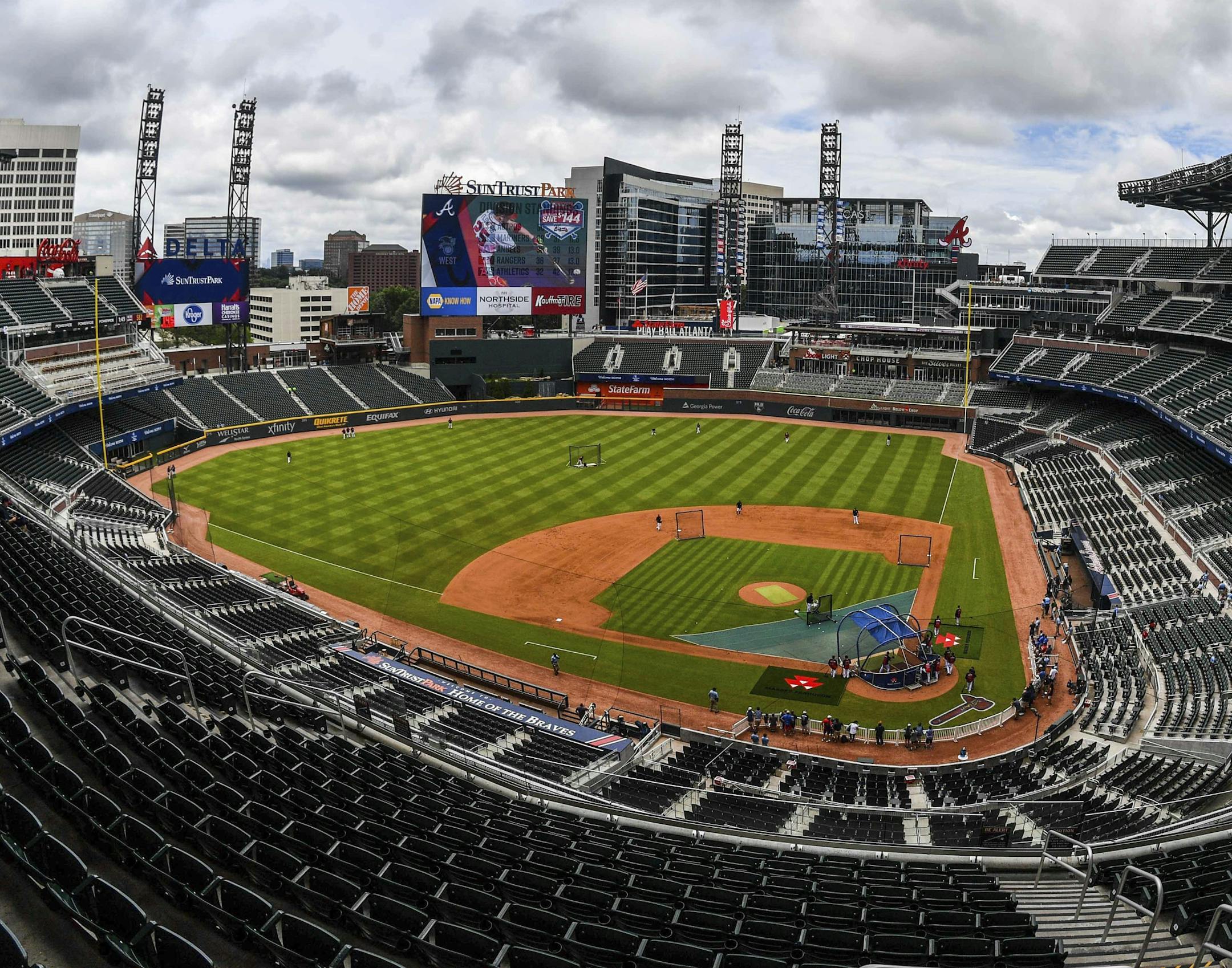
I caught my first glimpse of SunTrust Park, the sparkling new home of the Atlanta Braves, the same way, I suspect, that most baseball fans do: While inching along an interstate highway clogged with a horrific late-afternoon traffic jam.
Of all the new experiences and features baked into baseball's first new stadium in five years, this is one that hits you first: Few other parks require as much forethought about transportation and parking as one situated at the intersection of Interstates 75 and 285, among the most congested thoroughfares in the country. Weeknight games begin at 7:35, a half-hour later than at most stadiums, as a concession to the difficulty fans should expect to encounter reaching the suburban ballfield, located 10 miles northwest of downtown Atlanta.
There is some irony in the fact that one of Turner Field's biggest drawbacks was its distance from MARTA, Atlanta's rail line; SunTrust Park, which rose out of acres of land that was empty fields just two years ago, essentially dispenses with public transportation altogether, and requires that parking be purchased in advance for most lots within walking distance.
Braves baseball won't be an impulse buy for most fans, in other words.
The effort is worth it, though, because once you arrive, you are immersed in a baseball-themed village that MLB Commissioner Rob Manfred declared, upon touring the $1.1 billion project, "a model for other organizations." Just as Camden Yards begat a generation of modern stadiums that evoke traditional venues and values, SunTrust Park figures to encourage teams to think a lot bigger, and consider new revenue streams, when designing new homes.
It's called "The Battery Atlanta," and it's essentially a small city with a ballpark at its heart. More than a dozen restaurants and sports bars line the streets of the 10-city-block development outside the park's gates. There's a theater across the way, already booked with concerts. An Omni Hotel is under construction, with balcony views of the playing field, and an office complex looms in right field. There's shopping sprinkled throughout, including a Braves team store, of course, but also clothing boutiques and accessory shops.
And more than 500 apartments occupy much of the complex, with the Braves as landlords, hoping to draw young professionals with rents running from $1,200 a month to three times that.
The ballpark itself is beautiful, too, of course, and probably will seem familiar. It was designed by Populus, the architects who blueprinted Target Field and more than half of the other current MLB parks over the past 30 years, and who have the form down to a science by now. The seating bowl, dug into the ground so all four decks feel intimately close to the field, has a capacity of 41,149, with unobstructed views everywhere. Important for these times: Its Wi-Fi service handles big crowds with little strain.


