

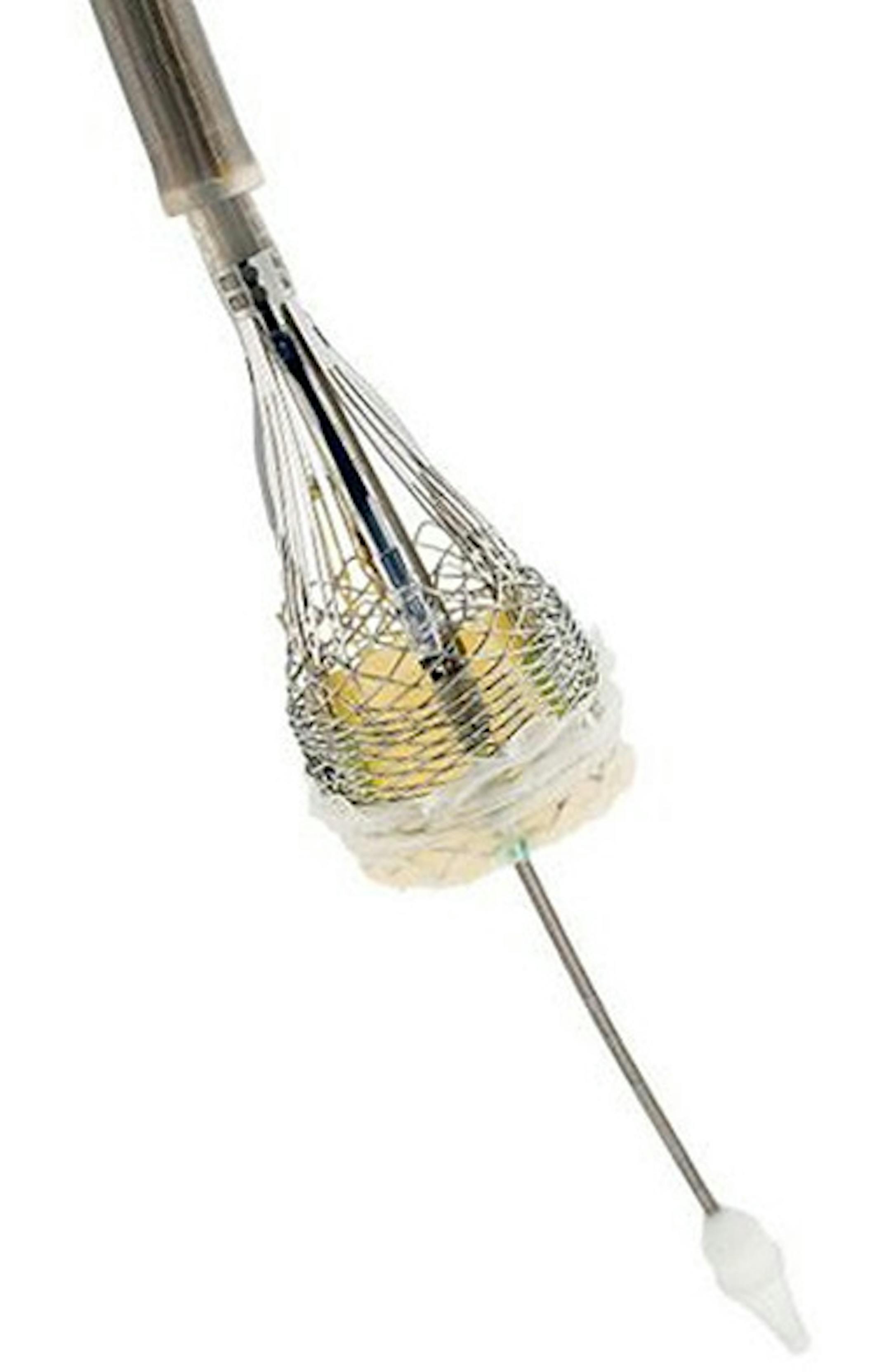
Medical device maker Boston Scientific watched 9 percent of its stock value vanish in two days as company executives acknowledged that a new problem with their Lotus Edge minimally invasive aortic heart-valve system could lead to materially lower revenue growth through 2020.
Boston Scientific, which has major operations in Minnesota, has been working for years to become the third company to get U.S. approval for a new kind of artificial heart valve that doesn't require open-chest surgery. But on Wednesday, company executives said final testing of the deployment system for the Lotus Edge valve had uncovered issues that will indefinitely delay its plans to submit the device for Food and Drug Administration approval.
It was not the first such setback for the Lotus system. In February, the company voluntarily recalled the device from Europe, where it is approved, and from clinical testing in the U.S. following reports of problems deploying the device in the heart. In one case, a patient died following an attempt to implant a second valve after the first attempt failed.
On Wednesday, Boston Scientific Chief Executive Mike Mahoney said the company has resolved the issue that caused that problem. But final-stage testing of the improved system revealed what he called "some unexpected validation challenges which will require additional attention."
"This issue relates to how the valve attaches to the delivery system and how the delivery system controls each step of valve deployment," a company spokeswoman later said in an e-mail. "The valve itself is performing very well, but the sophisticated mechanisms that provide the enhanced control of Lotus Edge — namely repositioning and retrievability — have proven to be challenging to manage as we scale up manufacturing."
In a conference call Wednesday, interventional cardiology division President Kevin Ballinger said the deployment system gives doctors more control over placement of the device during a procedure, but it is also the source of the design complexity.
The next step is to continue "analyzing these results to understand what led to the surprises and what we can do to put controls on it. "It's really all hands on deck on the engineering side, as you can imagine," Ballinger told one analyst. "It is frustrating and disappointing, because the eagerness of physicians to have this product in their repertoires is real."
Boston Scientific had planned to submit its final paperwork for approval to the FDA by January; now, it is not clear when, or if, the device will be submitted.


