

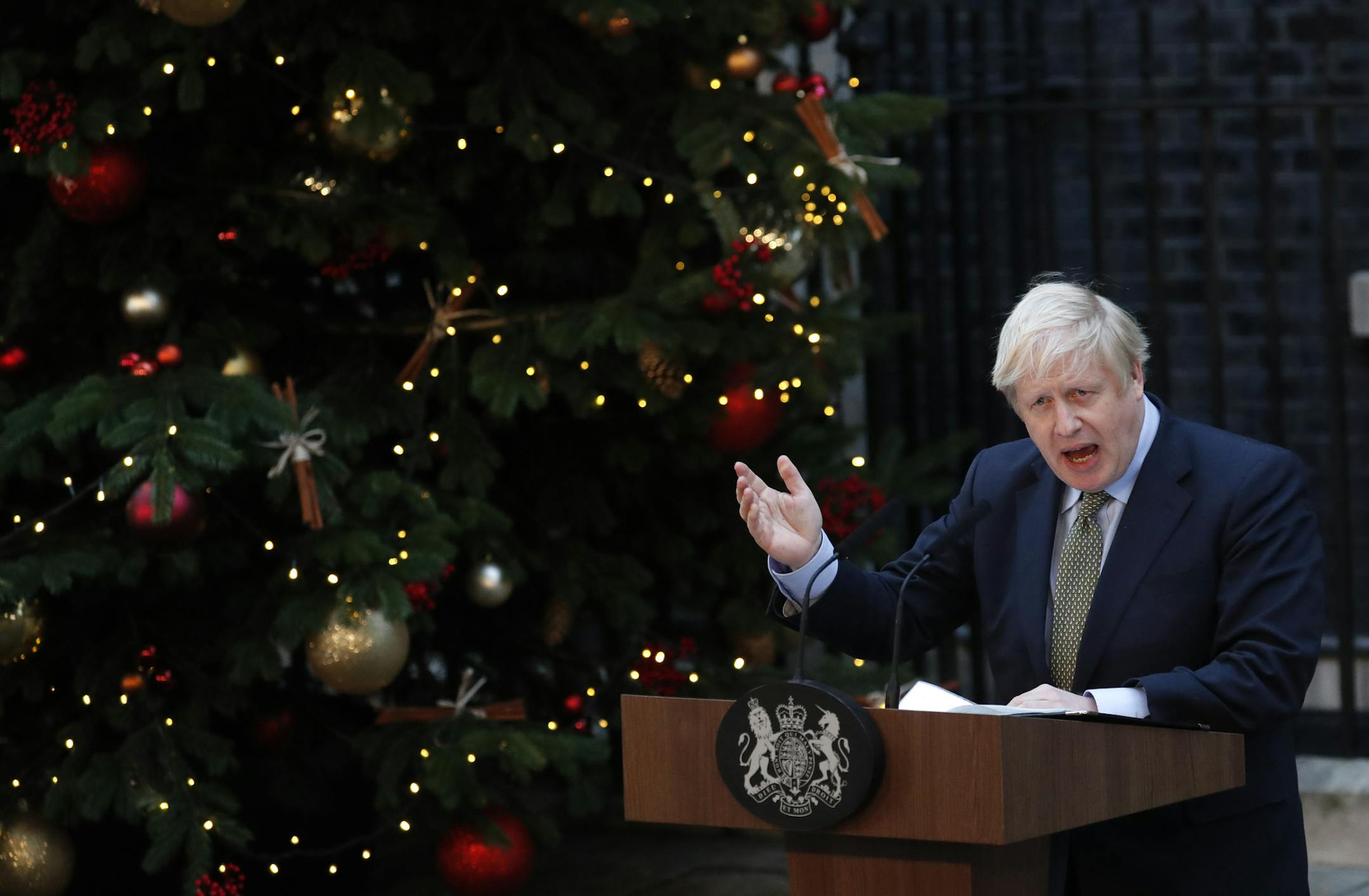
Britain's election Thursday was the most unpredictable in years — yet in the end the result was crushingly one-sided. Boris Johnson's Conservative Party won the largest Tory margin since the days of Margaret Thatcher. Labour, meanwhile, suffered its worst result since the 1930s.
Johnson, who went into the vote at risk of being one of Britain's shortest-serving prime ministers, is now all-powerful.
The immediate consequence is that, for the first time since the referendum of 2016, it is clear that Britain will leave the European Union. By the end of January it will be out — though Brexit will still be far from "done," as Johnson promises. But the Tories' triumph also shows something else: that a profound realignment in British politics has taken place.
Johnson's victory saw the Conservatives taking territory that Labour had held for nearly a century. The party of the rich buried Labour under the votes of working-class northerners and Midlanders.
After a decade of governments struggling with weak or nonexistent majorities, Britain now has a prime minister with immense personal authority and a free rein in Parliament. Like Thatcher and Tony Blair, who also enjoyed large majorities, Johnson has the chance to set Britain on a new course — but only if his government can also grapple with some truly daunting tasks.
The Conservatives marched into constituencies long seen as Labour strongholds — Blyth Valley, an ex-mining community in the northeast where Tories have for generations been the enemy; Wrexham, Labour turf for more than 80 years; Great Grimsby, a struggling northern port held by Labour since World War II.
The "red wall" of Labour constituencies, which stretched unbroken from north Wales to Yorkshire, was demolished.
Johnson was lucky in his opponent. Jeremy Corbyn, Labour's leader, was shunned by voters, who doubted his promises on the economy, rejected his embrace of dictators and terrorists and were unconvinced by his claims to reject anti-Semitism.


