

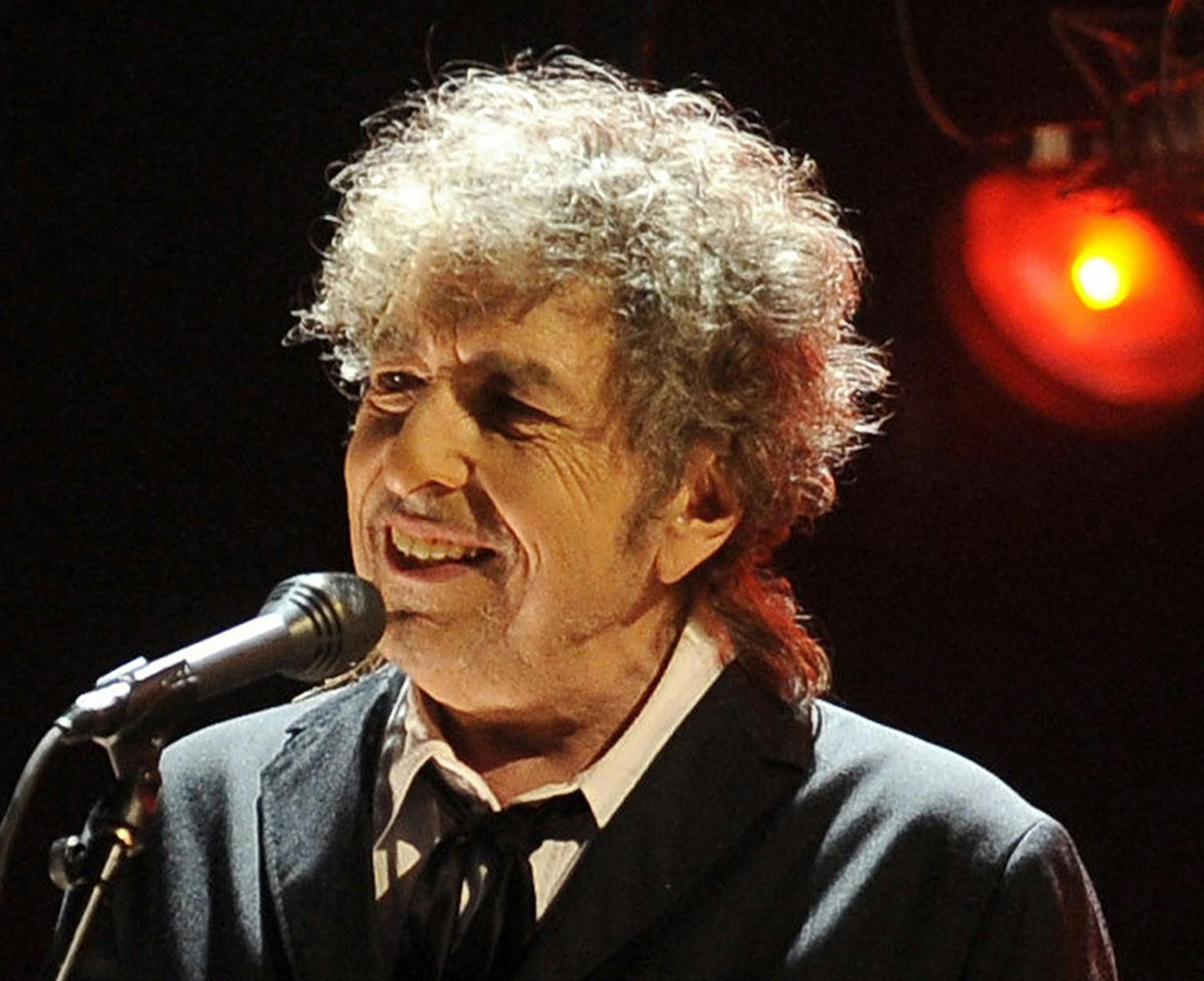
Bob Dylan has surpassed Walt Whitman as the defining American artist, celebrating the capacity for self-invention as the highest form of freedom.
"He not busy being born is busy dying," Dylan sang, in "It's All Right, Ma (I'm Only Bleeding)."
Reinventer of folk music, voice of the 1960s, blues singer, rock star, born-again Christian, champion of gospel, country singer, old-style crooner and now winner of the Nobel Prize for Literature, Dylan has found a million different ways to say the same thing.
I have been to just one Bob Dylan concert, about a decade ago. He concluded with his 1965 masterpiece, "Like A Rolling Stone," whose brutal lyrics seem to exult in the suffering of someone brought low. The song starts with a sneer: "Once upon a time you dressed so fine/You threw the bums a dime in your prime/didn't you?" The first stanza ends: "Now you don't talk so loud/Now you don't seem so proud/About having to be scrounging for your next meal."
Dylan said in an interview that the song originated in a "long piece of vomit," beginning with "steady hatred directed at some place that was honest" and ending with a kind of revenge, captured in the famous chorus: "How does it feel/To be on your own/With no direction home/Like a complete unknown/Like a rolling stone?"
In concert, however, the song was turned upside down. As people sang the chorus along with Dylan, they were exhilarated. Far from laid low, they were unchained. As Dylan sang it, "Like A Rolling Stone" had become a declaration of independence.
But of course, that declaration was there all along. Even in 1965, the chorus was a cry of defiance: "When you ain't got nothing, you got nothing to lose."
If "Like A Rolling Stone" is Dylan's "Hamlet," "Desolation Row" is his "King Lear." It's a fever dream, or a love letter, about an unruly procession of humanity — Cinderella, Ophelia, Einstein, the good Samaritan, the tightrope walker, a jealous monk, the blind commissioner, insurance men, Dr. Filth and his nurse (who "keeps the cards that read 'Have Mercy on His Soul' ").


