

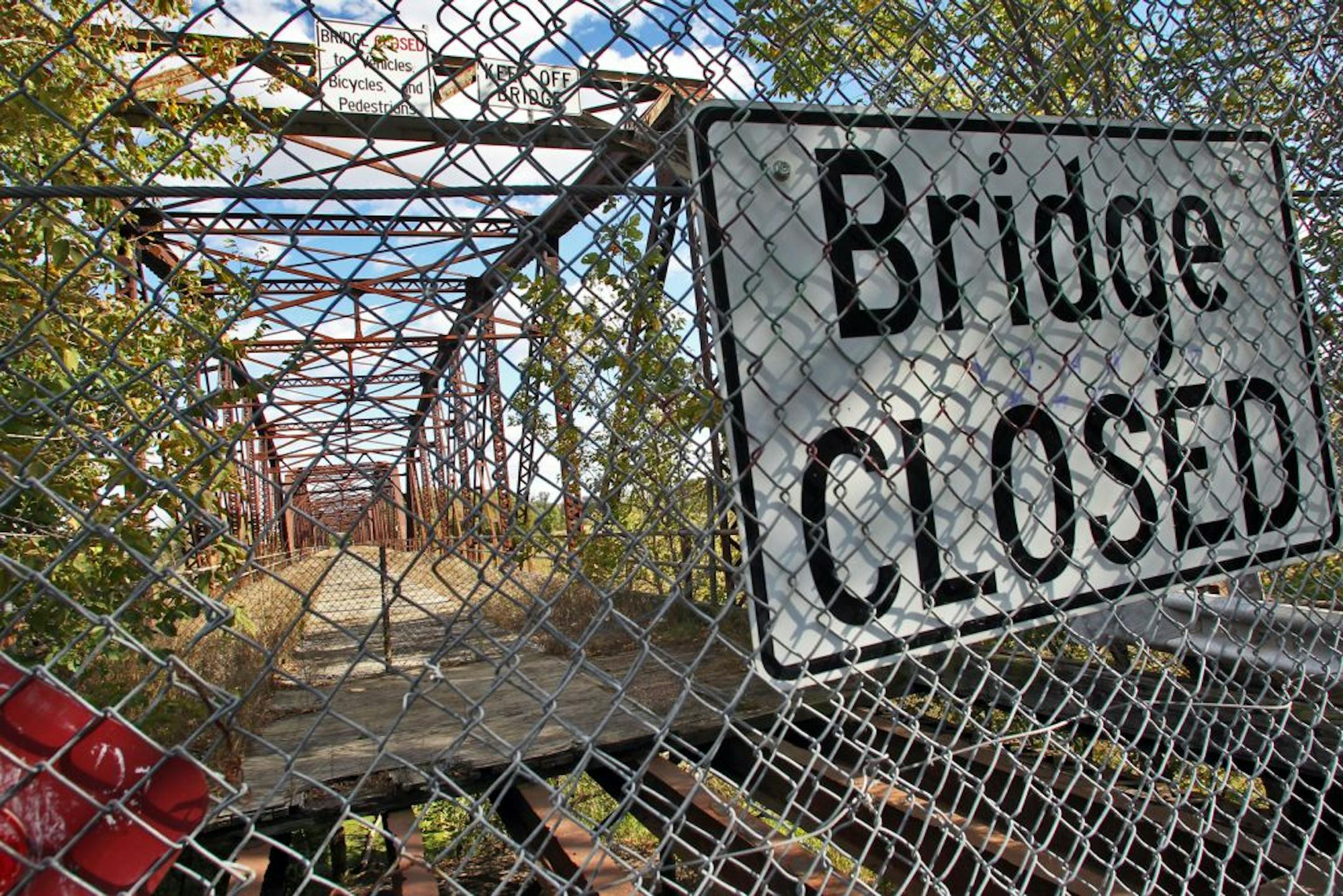
Talks between Bloomington and the U.S. Fish and Wildlife Service over transferring ownership of the historic Old Cedar Avenue Bridge to the feds are being suspended, and the city plans to make a formal request to demolish and replace the bridge.
While the moves look like another poke in the eye to preservationists, wildlife enthusiasts and bikers who want the bridge saved, the city's intention to pursue replacement may be a strategic one that would force a decision to renovate.
Though the 1920 bridge has been deemed historically significant, meaning it must be preserved, city officials say they have never received a formal declaration of that in writing.
Karl Keel, the city's public works director, said if the City Council runs through its options and picks a preferred location for a new bridge, it would push federal authorities to issue an official opinion on what the city can and cannot do. Keel discussed the issue with council members this week.
"We never actually got a determination on whether a renovation project would be approved," he said. "The feds would have to determine that."
If federal authorities ordered the city not to raze the bridge, city officials' only choices would be to do nothing or to support a renovation that could cost $10 million or more. Replacing the bridge would cost less than half that amount.
Bloomington has owned the black camelback steel-truss bridge since 1981, when the state gave it to the reluctant city. But the bridge is falling apart and has been closed to all traffic since 2002. The city already has about $7 million banked for the bridge from several sources, including state and federal money.
The Old Cedar Avenue Bridge crosses Long Meadow Lake in the Minnesota Valley National Wildlife Refuge and is considered a critical link to biking and walking trails in Hennepin and Dakota counties. Nature lovers want it reopened because of the visibility it offers of the lake, a major stopover for migrating birds and waterfowl.


