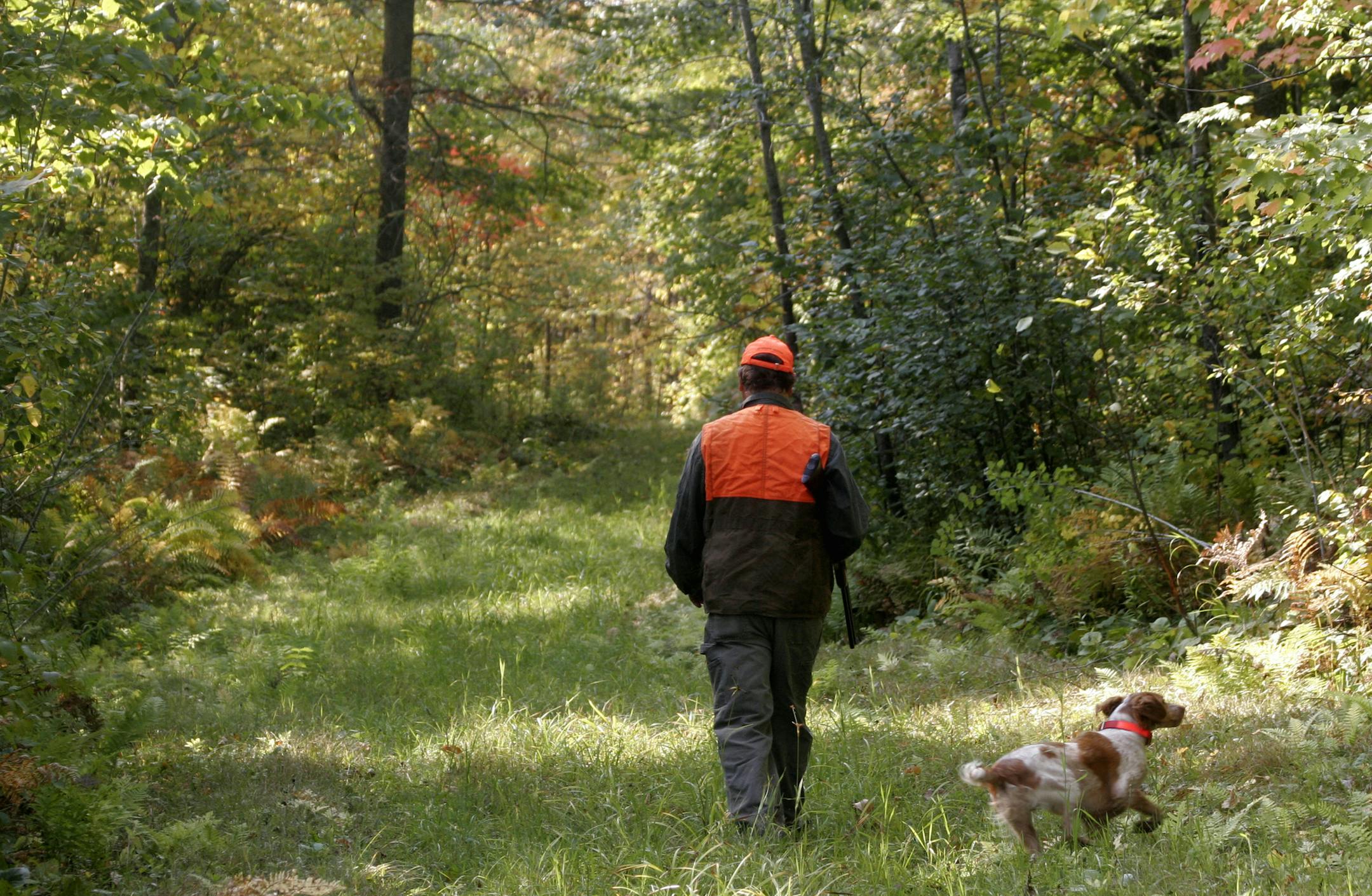
Grouse hunters are wearing it in the woods now. Pheasant hunters will slip it on starting next weekend. And deer hunters will pull it out of closets next month.¶ Blaze-orange clothing has become ubiquitous during hunting season, and for good reason: It's the law, and it saves lives.
Nearly 14 people a year were killed in firearms-related hunting accidents in Minnesota between 1961 and 1970, and an average of 95 hunters per year were injured. But over the past decade, an average of two hunters per year have been killed and 23 have been injured in hunting accidents — a dramatic improvement, though one accident is one too many as far as hunters and hunter safety advocates are concerned.
Officials credit firearms safety education programs and the use of blaze-orange clothing as two major factors for safer hunting seasons.
"It's both," said Mike Hammer, Minnesota Department of Natural Resources education program coordinator. "The vast majority of hunters now have had hunter education, and blaze orange definitely comes into play, too."
If someone is accidentally shot now, it's usually because they are out of sight of the shooter or they accidentally shoot themselves. Of the 18 firearms accidents last year, 10 were self-inflicted wounds.
"When the eye sees blaze orange, you can't accidentally see a grouse or deer antler," said Ken Soring, DNR enforcement chief. "There is no game species that has blaze orange."
The requirement is recent. In 1986, the law required blaze orange or red be worn during the firearms deer season. Beginning in 1994, red was dropped and only blaze-orange clothing was legal during the firearms deer season. The law requires "the visible portion of the person's cap and outer clothing above the waist, excluding sleeves and gloves, is blaze orange."
It wasn't until 1996 that a law was passed requiring small-game hunters to wear "at least one article of clothing above the waist" that is blaze orange outside the deer season.